Activity
Mon
Wed
Fri
Sun
Nov
Dec
Jan
Feb
Mar
Apr
May
Jun
Jul
Aug
Sep
What is this?
Less
More
0th Law of Physiology (CEUs)
1.6k
Free
CSCS Accelerator Community
236
Free
52 contributions to CSCS Accelerator Community

Jun 18 •
CSCS Daily Practice Question #73
In a cycling effort lasting 2 minutes at high intensity, which energy system transition occurs? A. Initial phosphagen contribution shifts to fast glycolysis, then toward oxidative metabolism B. Phosphagen system sustains the entire effort C. Oxidative system exclusively from start to finish Answer in the poll, then explain your rationale below in the comments! I'll follow up with my breakdown of the question after enough people have responded. From Chapter Chapter 3: Bioenergetics of Exercise and Training DCO Code: 1.E2 NOTE: Image is for illustration purposes, not needed to answer the question.
Poll
17 members have voted


0 likes • Jun 18
While all energy systems operate simultaneously from the start of exercise, the primary metabolic dominance shifts chronologically from the phosphagen system for immediate energy, to fast glycolysis for the bulk of the high-intensity duration, and increasingly toward the oxidative system as the two-minute mark approaches.
Jun 18 •
CSCS Daily Practice Question #72
What is the primary training adaptation that allows trained athletes to maintain a higher lactate threshold compared to untrained individuals? A. Increased oxidative capacity and mitochondrial density, allowing greater aerobic carbohydrate and fat oxidation at higher intensities B. Greater creatine phosphate stores C. Increased glycogen storage in muscle Answer in the poll, then explain your rationale below in the comments! I'll follow up with my breakdown of the question after enough people have responded. From Chapter Chapter 3: Bioenergetics of Exercise and Training DCO Code: 1.E1 NOTE: Image is for illustration purposes, not needed to answer the question.
Poll
16 members have voted
0 likes • Jun 18
A higher lactate threshold is driven by increased mitochondrial density and oxidative enzymes, which allow trained athletes to clear lactate efficiently and meet high energy demands aerobically before relying heavily on anaerobic glycolysis.
Jun 18 •
CSCS Daily Practice Question #71
Why does muscle glycogen depletion become limiting during prolonged, moderate-intensity endurance activities? A. Glycogen is toxic to muscle cells when concentrated B. Glycogen cannot be oxidized without simultaneous fat oxidation C. Glycogen stores are finite (~300-400 g total), and carbohydrate oxidation is the primary fuel source at this intensity Answer in the poll, then explain your rationale below in the comments! I'll follow up with my breakdown of the question after enough people have responded. From Chapter Chapter 3: Bioenergetics of Exercise and Training DCO Code: 1.E2 NOTE: Image is for illustration purposes, not needed to answer the question.
Poll
16 members have voted
0 likes • Jun 18
Carbohydrates are the body's preferred fuel source during moderate-intensity exercise, but because intramuscular glycogen stores are finite, their depletion creates a severe energy bottleneck that forces the body to rely on slower fat oxidation.
Jun 18 •
CSCS Practice Question #70
Why is lactate NOT responsible for causing metabolic acidosis during high-intensity exercise? A. Lactate is immediately cleared from the blood into the liver B. Lactate is alkaline and buffers the acid produced by ATP breakdown C. The lactate dehydrogenase reaction consumes protons, and ATP hydrolysis is the primary source of intracellular protons Answer in the poll, then explain your rationale below in the comments! I'll follow up with my breakdown of the question after enough people have responded. From Chapter Chapter 3: Bioenergetics of Exercise and Training DCO Code: 1.E2 NOTE: Image is for illustration purposes, not needed to answer the question.
Poll
14 members have voted
0 likes • Jun 18
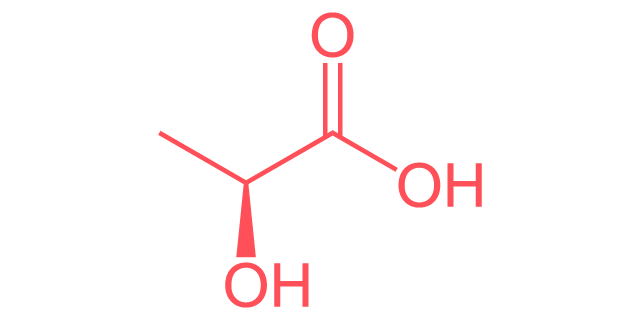
Metabolic acidosis is caused by hydrogen ions (H+) released during rapid ATP splitting, whereas the lactate dehydrogenase reaction actually consumes a proton to form lactate, meaning lactate production temporarily buffers rather than causes the drop in muscle pH.
Jun 18 •
CSCS Daily Practice Question #69
SCENARIO: During a maximal isometric contraction, an athlete's quad generates peak force. If the motor neurons supplying the quadriceps could increase their firing frequency by 50%, what change in force output would you expect? A. Force would remain unchanged because maximum crossbridge overlap has already been achieved B. Force would decrease because faster firing rates cause muscle fatigue C. Force would increase significantly due to summation of successive twitches and greater crossbridge cycling Answer in the poll, then explain your rationale below in the comments! I'll follow up with my breakdown of the question after enough people have responded. From Chapter 1: Structure and Function of Body Systems DCO Code: 1.B2
Poll
15 members have voted
0 likes • Jun 18
Increasing the firing frequency of motor neurons causes successive twitches to summate (add together) before the muscle can fully relax, resulting in a higher, sustained force output known as tetanus. Option A is incorrect because force output is determined by both motor unit recruitment and firing rate (rate coding), meaning a higher frequency can still drive greater tension even if initial crossbridge recruitment is high. Option B is incorrect because acute force production increases with higher firing rates prior to the eventual onset of metabolic fatigue.
1-10 of 52

@ricardo-cardenas-7368
USSF Regional Referee & Mentor | NSCA-CPT | Preparing for the CSCS exam this November.
Active 106d ago
Joined Feb 6, 2026
Powered by