Activity
Mon
Wed
Fri
Sun
Aug
Sep
Oct
Nov
Dec
Jan
Feb
Mar
Apr
May
Jun
Jul
What is this?
Less
More
Owned by Reynold
Medschool for AI Leverage. Build systems that reduce burnout, save time and money Stop prompting, start building
Escape lifetime dieting and weightloss shots! Learn Dr.Rey's MGB system to create your own key to unlocking personal health and inner peace.
Memberships
The YouTube Blueprint Pro
80 members • $99/month
Better Chords Academy
1k members • Free
The YouTube Blueprint
2.4k members • Free
Luke's AI Group
2.3k members • Free
AI Automation Society
424.8k members • Free
AI n8n Automation Collective
2.8k members • Free
AI Online Educators & Coaches
3k members • Free
One Webinar Away Challenge
42 members • Free
Affiliate Income Method
900 members • $39
4 contributions to The AI Medical Society

29d •
Query alert‼️
Hello everyone, This is Arika, and I am a student who just started Grade 11 in the Medical Science stream. When I came home after my first day, I was scrolling through social media and came across a video discussing the realities of the medical profession. It talked about how becoming a doctor may be less rewarding in the future due to the increasing number of graduates, changes in healthcare systems, and advancements in technology. Since I had literally just started my journey in this field today, the video caught me off guard and left me feeling quite uncertain about what the future might look like. I know one video doesn't tell the whole story, which is why I wanted to hear from people who are actually living this profession. If you're willing to share, I would be grateful to know your perspective on the reality of medicine today. Based on your experience, which medical specialties offer a good balance of work-life, income, long-term career stability, and adaptability to future technological changes? And if you could give one piece of advice to someone who is just starting out, what would it be? I completely understand if you're busy or choose not to reply. Even taking the time to read this message means a lot to me. Thank you for your time and guidance. Best regards, Arika

1 like • 22d
Hey Arika, welcome to the community. Don't let a social media algorithm wreck your first day of Grade 11. The video you saw is right about one thing: the old way of practicing medicine is dying. But that doesn’t mean the profession is finished. It just means it's changing. By the time you actually finish your residency, which will be well into the late 2030s, the value of a doctor won't come from memorizing textbooks. AI will easily handle data retrieval, drug interactions, and basic diagnostics. The future belongs to the "Chief Medical Navigator." Your job will be to manage the technology, interpret the complex data, and handle the high-stakes human elements. If you want long-term career stability, good income, and a solid lifestyle, you need to look for specialties defined by three things: real-time crisis management, complex physical procedures, or intense human empathy. Fields like anesthesiology (this is my specialty so I may be biased lol) and emergency medicine are incredibly future-proof because they require split-second human judgment and immediate physical action when a patient is crashing. Tech will assist with the monitoring, but a human has to steer the ship. Similarly, surgical and interventional specialties remain secure because the physical variance of the human body is highly resistant to pure automation. On the flip side, fields like psychiatry or palliative care will always require deep, human to human connection. A robot can map out a treatment plan, but it cannot guide a patient through a life-altering diagnosis. My advice to you right now is simple: don't just study medicine, study where medicine is going. The doctors who are going to get crushed in the future are the ones who try to practice the old-fashioned way. The ones who will thrive and find the most reward are the clinicians who learn how to leverage technology rather than fear it. You're starting at a wild time, but it’s the best time to build a modern medical career. Stick with it.
May 30 •
AI for cases and chart reviews
I use AI to help analyze charts and case chronology. The technology is evolving...AI has trouble with handwriting, with pdf's of different types and with finding the importance and relationship of events to each other- systems biology. It has evolved a lot in one year.
0 likes • Jun 2
Hi Serena :-). What is your current tech stack? Let's see what we can do to improve the results your getting, there is a lot of open source solutions and optimizations that are not always well advertised. Handwriting actually was one of the first things machine learning and AI scientists used as training data to show the power of neural networks. I used to play around with those handwriting datasets on NVIDIA's learning platform quite a bit
May 21 •
🔥 START HERE — Know Your Burnout Profile
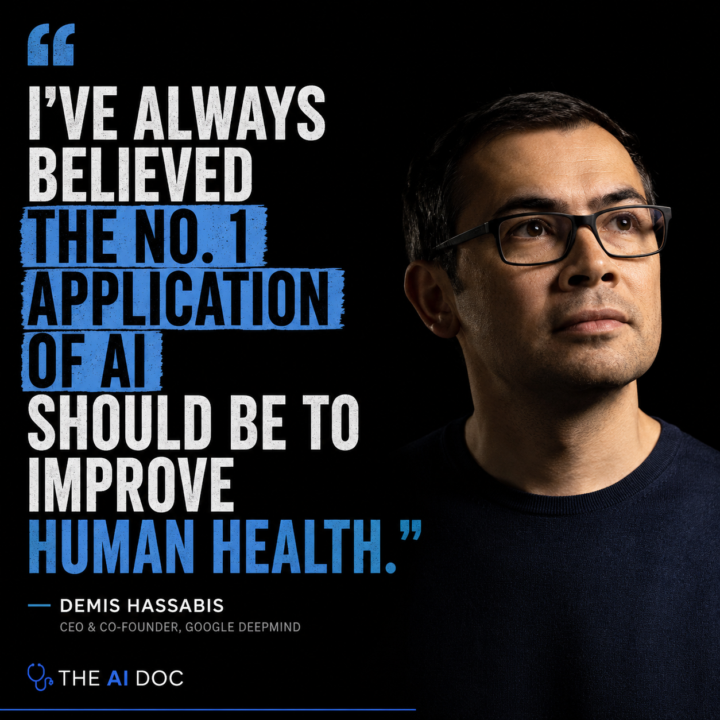
Before you do anything else in this community, take this assessment. I built a burnout assessment that maps you across 9 dimensions — not just "are you burned out yes/no." Things like moral injury, autonomy erosion, and administrative burden that don't look like the burnout you see talked about online, but quietly change how you work/practice and how long your career lasts. It's only 18 questions and takes less than 5 minutes. It's Free. 👉 theaidoc.ai/burnout.html If you find it useful feel free to share it with others, because the greatest use of AI is easing suffering and improving the health of others and THAT INCLUDES YOURSELF! When you're done, screenshot your badge and post it below. I'll go first.
2 likes • May 21
My Burnout Assessment results! I started this community way before I got this result, but it's making a lot of sense to me now lol.
Mar 16 •
None of this was in the job description.
The inbox. The prior auth. The chart you still owe from Tuesday. The vendor who wants a meeting. The insurance company asking for peer-to-peer at 7am. The person at the front desk who just quit. None of this was in the job description. You spent years learning medicine. Then you got here — and discovered that medicine is maybe 40% of the job. The rest is fighting systems, managing people, and doing work that has nothing to do with why you chose this. That's what this community is about. Each week I'll drop one Rx — a single, 15-minute fix for something that's quietly eating your time or money. No coding. No tech background. Just a specific prescription you can fill between patients. Before the first one drops: what's draining you most right now — time, money, or just the mental weight of it all? Drop it below. That's what we build first.
0 likes • Apr 19
@Kaveri Rangappa Yes, let me get to work on that! You are so right :-). Are you a medic?
1-4 of 4

Active 16d ago
Joined Mar 16, 2026
Florida
Powered by