Activity
Mon
Wed
Fri
Sun
Nov
Dec
Jan
Feb
Mar
Apr
May
Jun
Jul
Aug
Sep
What is this?
Less
More
Owned by Rae
Nurse Impact Collective is the community where purpose-driven nurses turn their passion into profit, freedom, and lasting impact--together.
CareCFA Community
19
Free
THE SKOOL HUB
5.6k
5.0
$10/m
Fit Dad Community
30
Free
Tools For Motivation Community
2.7k
Free
Art Explorers Club
103
Free
Soul Driven Success
51
Free
GC
Growthworks Community
23.9k
Free
𝗡𝗨𝗥𝗦𝗘𝗣𝗥𝗘𝗡𝗘𝗨𝗥 𝘓𝘈𝘉 🌴🛹🍄🌈
751
$9/m
4 contributions to ELVEN CONRAD SMITH

Oct '25 •
🚭 Smoking, Diabetes & PAD — The Deadly Trio You Can Prevent
Every cigarette. Every high blood sugar. Every missed check-up. They all leave a mark you can’t see — until it’s almost too late. When smoking and diabetes come together, they don’t just raise your blood pressure… they choke your circulation. Your arteries narrow. Your legs ache when walking. Wounds stop healing. That’s Peripheral Artery Disease (PAD) — and it’s one of the leading causes of amputation and death among diabetics. 💔 Here’s what the research says: - Smokers are 3–4x more likely to develop PAD. - Diabetes adds 2–3x more risk on top of that. - Together, they multiply the danger — not just to your legs, but to your heart and brain. But here’s the hope 💚: The moment you stop smoking, your body starts to heal. Your circulation improves. Your oxygen levels rise. Your blood flow returns. Every cigarette not smoked is a victory. Every foot check, blood sugar test, or walk around the block is a small act of limb preservation. 🩺 PAD can start silently — so know the signs: - Leg pain or cramps when walking - Numbness, tingling, or cold feet - Sores that don’t heal - Pale or discolored toes 👉 If you or someone you love has diabetes and smokes, this message could save their limbs — or their life. Ask for an ABI test. Talk to your provider. The earlier we detect it, the more we can do. Let’s make awareness personal. Tag a friend, a patient, or a loved one who’s been trying to quit — and remind them that their next decision could change everything.
Sep '25 •
September is PAD Awareness Month: What You Need to Know
When you think about your health, chances are you don’t think much about your circulation. But the truth is, the health of your arteries plays a huge role in how well your body works. One condition that often goes undetected is Peripheral Artery Disease (PAD). PAD happens when the arteries that carry blood to your legs and feet become narrowed or blocked by plaque buildup. Think of it as “traffic congestion” in your blood vessels—the flow slows down, and your muscles and skin don’t get the oxygen they need. PAD Awareness Month, observed every September, shines a spotlight on this serious but often overlooked condition. Why PAD Matters PAD affects more than 12 million people in the United States. The scary part? Many don’t even know they have it. That’s because PAD can be silent for years, or its early symptoms—like leg pain when walking—are often mistaken for normal aging. But PAD isn’t just about leg discomfort. It’s a red flag that your arteries are unhealthy, and if your leg arteries are clogged, there’s a higher chance your heart and brain arteries are, too. This raises your risk of heart attack and stroke. For people with diabetes, the stakes are even higher. Diabetes speeds up artery damage and hides warning signs, which makes PAD more dangerous and harder to catch early. Warning Signs of PAD PAD can affect each person differently, but some common symptoms include: - Leg pain, cramping, or fatigue when walking that goes away with rest - Cold feet or toes compared to the rest of your body - Wounds or sores on your feet that don’t heal quickly - Numbness or tingling in the legs - Shiny or discolored skin on your legs or feet If these sound familiar, it’s important not to ignore them. The Good News: PAD is Preventable and Treatable The goal of PAD Awareness Month is not just to educate, but to empower. There are steps you can take to lower your risk and protect your circulation: - Get active. Walking is one of the best ways to improve blood flow. - Quit smoking. Smoking is the leading cause of artery narrowing. - Manage your numbers. Keep blood sugar, blood pressure, and cholesterol under control. - Check your feet daily. Small cuts or sores can quickly become serious without good blood flow. - Talk to your doctor. A simple test called an Ankle-Brachial Index (ABI) can screen for PAD.
1 like • Sep '25
@Elven Smith The Compound Effect! You’re stacking multiple positive actions! Well done!
Aug '25 •
The Hidden Connection Between Diabetes and Peripheral Artery Disease (PAD)
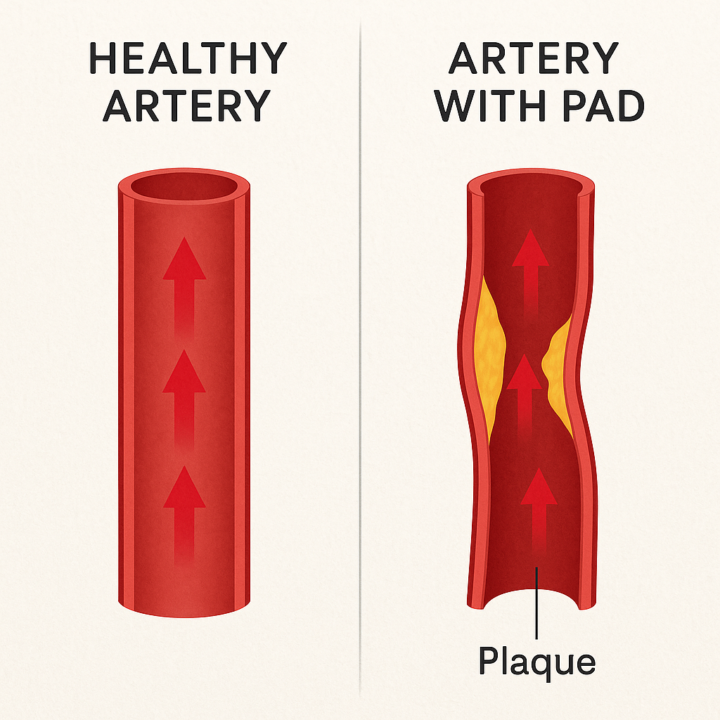
When most people think about diabetes, the first thing that comes to mind is “high blood sugar.” And while that’s true, the impact of diabetes goes much deeper than sugar levels alone. Diabetes affects the entire body—your heart, kidneys, eyes, nerves, and especially your circulation. One of the most serious complications many people don’t know about is Peripheral Artery Disease (PAD). PAD is a condition where the arteries that carry blood to your legs and feet become narrowed or blocked. For someone with diabetes, the risk of developing PAD is much higher—and when the two conditions combine, they can lead to life-changing consequences if not addressed early. Let’s break it down in clear, simple language so you can understand what’s happening in the body, what signs to look out for, and what steps you can take to protect yourself or your loved ones. What Exactly Is PAD? Your arteries are like highways for your blood. They carry oxygen and nutrients to every part of your body. Over time, factors like high cholesterol, smoking, high blood pressure, or diabetes can cause plaque (a sticky mix of fat and calcium) to build up inside the artery walls. When this happens in the arteries leading to your legs and feet, blood has a harder time getting through. That’s PAD. Think of it like a garden hose that’s clogged with dirt. The water (blood) still tries to flow, but the pressure drops, and not enough gets to the flowers (your muscles, skin, and tissues). Without good circulation, your body struggles to repair itself. How Diabetes Makes PAD Worse For people living with diabetes, the risk of PAD is much higher for several reasons: 1. High blood sugar damages blood vessels. Over time, sugar acts like sandpaper inside your arteries, making the walls rough and sticky. This speeds up plaque buildup. 2. Nerve damage hides the warning signs. Diabetes often causes nerve damage (neuropathy), which means you may not feel pain from PAD as strongly. This makes it easier to miss early warning signs. 3. Poor healing increases complications. Cuts, scrapes, or blisters on the feet may heal very slowly, or not at all, because blood flow is limited.
1 like • Aug '25
@Elven Smith I’m so sorry to hear about your Dad 😔. I can see your passion to help people and especially children fight this disease. We will continue to fight this 💯
Aug '25 •
Grateful
I Am so Happy and Grateful to be part of ELVEN’s Community and I’m looking forward to learn and serve 💯❤️🙏🙏🙏
1
0
1-4 of 4
@rae-llasos-1884
👨👩👧 Husband + Dad 🩺 Nurse on mission, entrepreneur with purpose ⚡ Turning vision into impact
Active 11d ago
Joined Aug 27, 2025