Activity
Mon
Wed
Fri
Sun
Aug
Sep
Oct
Nov
Dec
Jan
Feb
Mar
Apr
May
Jun
What is this?
Less
More
Memberships
The Big Brain Club
266 members • $2/month
4 contributions to The Big Brain Club

Mar '25 •
Paul
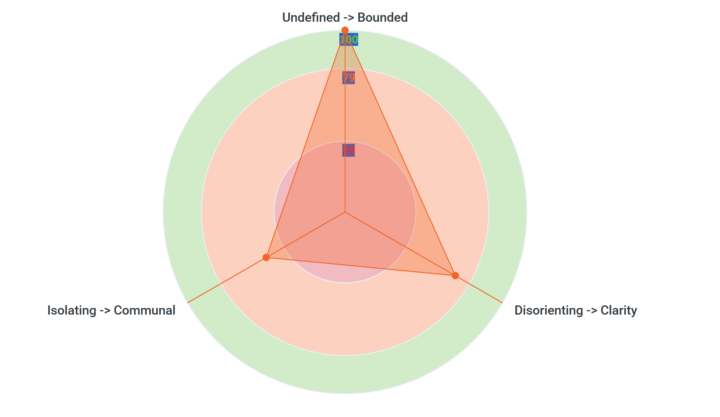
Origin: I separated from employment with JNJ after 27 years (35 years in medical devices), after a career in R&D, Business Development, Pipeline development. Current State: Happy with no longer being dependent on a dysfunctional employer, but thankful for the experiences, benefits, and financial freedom that employer enabled. I didn't realize what a burden that employment had become to me until it was removed - I truly believe retiring now will add 10 years to my life. Desired Future State: Full freedom to do what I want with consulting (doing some of that already in places I have interest), pursuing improved health, and being a fully-present support to my kids, my parents, and others. Why: This is what I pursued a planned path for so many years - to be able to make my own way.

Mar '25 •
New Community Challenge: Day 4
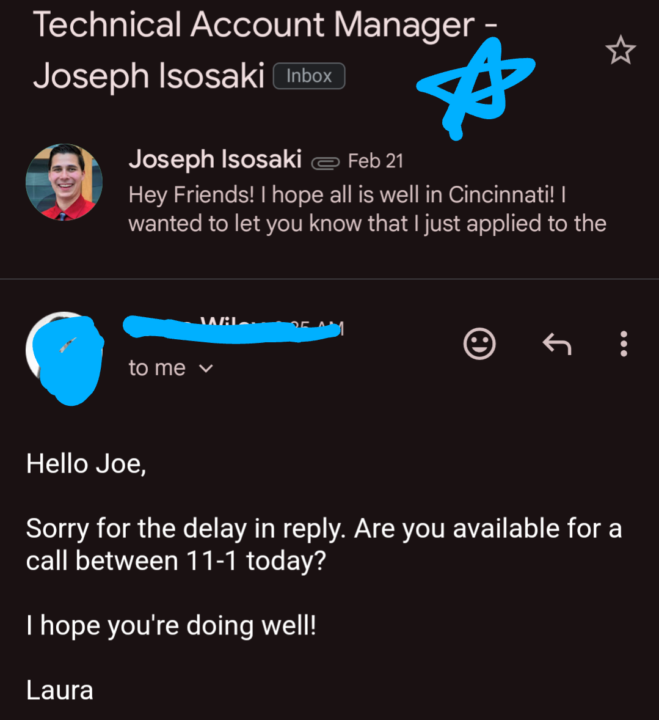
Hit me with your toughest interview question in the comments... .. and I'll record my answers below. I'm "In Review" tracking towards an interview so help me warm up for the big day!!! Update Day 4: I have an interview today for the Kinetic Vision Role... here's a sneak peak at my prep.. https://www.loom.com/share/27953bdb2c36402d934dc350807e9b91?sid=c0785af2-fa75-4917-99d8-3eac5da71afe Update Day 3: I landed an interview for Technical Account Manager Kinetic Vision Update Day 2: Here's the link to the role... https://careers.abbvie.com/en/job/associate-director-strategy-and-innovation-hybrid-in-north-chicago-il-jid-12605 Hit harder on the questions and followups from Looms. Thanks y'all I'm so pumped about these opportunities! Let's get it!
1 like • Mar '25
@Joseph Isosaki One other variation I've seen of this question is "what are your weaknesses, and how are you addressing them?". That brings the question back to action - are you the sort of person that sees a need and acts. I've found that question requires some self-reflection - or maybe is an opportunity. If someone asks you "what are your weaknesses", and you can say "they are a, b, and c, and here's how I'm addressing them", that positions you as a really impressive candidate!
1 like • Mar '25
One other type of difficult question is more domain-oriented - the kind of question like "how do you see X changing this industry or product domain"? Those can be difficult, because the interviewer likely knows a lot more about it than you. They are likely just trying to see if you are interested in or have studied that industry or product area, and if you are able to discuss what you know and don't know.
Feb '25 •
Day 70
Many of the roles that I'm applying to indicate a need for... "Influence without Formal Authority". In the early stages of our career, especially when we're technical, we're often taught to stay in line and execute based on the needs of whatever our boss says. Yet, as we ascend in an organization, we find that all those rules were just at the convenience of incompetent middle management. To challenge the status quote and push the business in a new direction we have to captivate new coalitions... Encouraging them to think differently So how do you Influence Without Formal Authority?
2 likes • Feb '25
To your last question, I think you grow in that skill by figuring out how understand the goals / interests of partner orgs, and then reframe both of your interests to the common goal of the overall company. You don't say "here's what I want", you say "here's what our company and our business needs - how can we work together to meet that critical need?". On your question on the net 90 (I know that's an obscure but critical reference), I took multiple paths. Going to net 90 (or as some companies have, to net 120!) is fundamentally unfair - it is IMHO against the J&J credo, and attempting to improve J&J cash flow on the backs of suppliers. I worked hard to build trust and common interests with supplier, and this undercut that goal because it was presented to them as "we're big, you're little, so take it or leave it". So, I took several tacks: - In some cases, i was able to convince finance that we had a contract or other reason to allow shorter payment terms. My finance partners were fine with it as long as I could justify it to their management. - In other cases, I was able to renew an existing Master Services Agreement or the like to preserve their previous payment terms. - I was usually purchasing services rather than materials, so in many cases I was able to work with the supplier to let them raise their prices to mitigate the impact. And, what do you know - that was a win-win, because Finance didn't care if we paid more - they just cared that they could say we were paying at net90. I'm probably outing myself on some of these things, but part of my role was to find ways around the BS to get the job done. I would have gotten in trouble if I had admitted to doing some of these things, but I would have gotten MORE in trouble by losing suppliers and not getting the job done. Anyway, thanks for raising the question and letting me weigh in!
1 like • Feb '25
Good thoughts, Joe. I think what it comes down to is that incentives matter - in work as in everything else. What I found was that organizations have their goals that they are rewarded on ("improve cash flow by going to net90 purchasing terms"). They believe (and in many ways are) doing the right thing - its just that the metric is sometimes myopic and siloed. So, you have to understand their objectives well enough to figure out how they can meet their incentives, but at the same time do what's best for the company and customer in the bigger picture. And in this example, I don't know that finance didn't CARE about spending more money - it just wasn't what they were INCENTED to worry about, so they didn't. I wish I was better at it, but again, much of the leadership things you do such a great job talking about are IMHO actually pretty simple - like the fact that people respond to incentives. Anyway, thanks for the conversation.
1 like • Feb '25
Hey, Joe! I've got lots of these after interviewing hundreds of people over my career in entry-to-senior engineering roles. My bias as an interviewer: if I'm hiring an electrical engineer, I'm not just hiring someone to design circuits - I'm hiring someone to learn and grow and help drive my my business. I would encourage people to learn about the business they are interviewing with, and then ask insightful questions that show you are thoughtful and interested. They don't expect you to know about their business, but insightful questions about their customer, or how they differentiate their products from competitors, shows this insight and interest. Flip side of that - don't pretend to know things you don't. One interview that I will always remember is for an entry-level engineering role in our early Robotics program (maybe 2015). This young person tried so hard to tell me all about surgical robotics, and their view on the market needs, etc. The problem was they were so certain and sure of themselves - but they were 100% wrong. And, I had just gotten done explaining that I had been leading the BD and technical work with our outside research partner for 4+ years. They didn't get the job - not because I expected a 23-year-old new graduate to understand the market and all the associated nuances - I would have been fine with someone who knew very little about the market. But, I needed people who could separate fact from opinion, ask insightful questions and gather data, and contribute to a team collectively searching for the right answers. Not someone who was so sure of themselves and didn't want to test their thoughts (or someone who wasn't self-aware enough to realize the person interviewing them might have perspectives that could inform their opinions). I'm sure someone told them "you've got to be confident and impress them with your knowledge" - that is decent general advice, but not in that situation. Maybe the advice out of that situation is "ask questions". Even if you are 100% on your perspective, maybe ask the interviewer "here's my perspective - how do you see it the same or differently?"
1-4 of 4

Active 131d ago
Joined Nov 16, 2024
Powered by