Activity
Mon
Wed
Fri
Sun
Aug
Sep
Oct
Nov
Dec
Jan
Feb
Mar
Apr
May
Jun
What is this?
Less
More
Owned by Omar
A community where Kung Fu becomes a way of life.
Memberships
Prompt Models Studio
3.1k members • Free
Adonis Gang
182.2k members • Free
4 contributions to Kung-fu Warriors Community
11h •
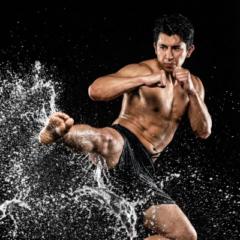
Kung Fu and the Mind-Body Connection
When you practice Kung Fu, you are not only training your body. You are also training your mind. In many Chinese philosophies, such as Taoism and Chan Buddhism, it is taught that true mastery does not lie in external strength, but in internal harmony. The Tao speaks of the natural balance of things, of flowing without resistance, while Chan reminds us of the importance of mindfulness in every moment. Each posture, each breath, and each movement forces you to be present. Little by little, you learn to listen to your body, control your energy (Qi), and remain calm even when things become difficult. However, many people practice automatically, repeating movements without awareness, thus losing the essence of the art. For example, during a basic forms practice, imagine that you are performing a slow sequence of strikes and blocks. Before beginning, you pause for a moment, close your eyes, and take a deep breath, feeling how the air fills your abdomen. As you start moving, you focus on how your body weight shifts from one leg to the other, on the alignment of your arms, and on the flow of your breathing. Each strike is not just a mechanical gesture, but a conscious extension of your energy. If your mind wanders, you gently return to the sensation of your breath and the flow of Qi through your body. In this way, you turn a simple exercise into a practice of mindfulness and internal control. That is one of the greatest teachings of Kung Fu: when your mind and body work together, you become stronger, more aware, and more confident. It is not just about technique, but about understanding. Do not seek only to perform the perfect movement. Feel the movement, breathe, and stay present. Allow your practice to be a path of self-discovery, not just physical skill. See you at the next training session. Omar Kung Fu for Life
0
0
Nov '25 •
🐉 5 Things You (Probably) Didn’t Know About Kung Fu
1️⃣ Kung Fu doesn’t just mean “martial arts.”The word “功夫 (Gōngfū)” actually means “time and effort to master something.”So a chef, an artist, or even a student can have good Kung Fu! 2️⃣ It’s older than most countries.Some forms of Kung Fu date back more than 3,000 years, evolving from ancient military training and Taoist philosophy. 3️⃣ Every movement has meaning.Nothing in Kung Fu is random — each stance and strike represents balance between yin and yang, power and softness, mind and body. 4️⃣ Animal styles come from real observation.Tigers, cranes, snakes, and monkeys weren’t just imagination — ancient masters studied animals for years to mimic their spirit, precision, and survival instincts. 5️⃣ It’s a complete way of life.Kung Fu is not only about fighting — it’s about discipline, breathing, humility, and continuous self-improvement.The real battle is always with yourself. 💬 Question for you:Which Kung Fu animal style would you love to learn first — Tiger 🐅, Crane 🕊️, Snake 🐍, Leopard 🐆, or Dragon 🐉? 👇 Comment below and let’s see which style dominates our community!
0
0
Aug '25 •
🌟 Welcome to Kung Fu Fundamentals 1!
🥋 This is the beginning of your Kung Fu journey—not just to learn punches and stances, but to build strength, balance, and discipline that you’ll carry into everyday life. 💡 Remember: Kung Fu is not about perfection, it’s about progress. Every step, every try, every second you practice is already Kung Fu. 🔥 Share your challenges, wins, and questions with the community—we grow stronger together! ✨ Welcome to the path of Kung Fu!
1 like • Aug '25
Nice to Meet you and thank you for being part of the community- Soon you will receive the amazing updates
1 like • Aug '25
@Joyleen Greene Yes! This week will be updated! 👌
1-4 of 4
@omar-avina-4610
I’ve practiced Kung Fu my whole life, and the more I grow, the more I see it everywhere. In discipline, in patience, in our daily struggles.
Active 8h ago
Joined Oct 8, 2024
Toronto