Activity
Mon
Wed
Fri
Sun
Jul
Aug
Sep
Oct
Nov
Dec
Jan
Feb
Mar
Apr
May
What is this?
Less
More

Owned by Naphtali

Spark-Ed

23 members โ€ข Free

Spark-ED helps students graduate with a plan, a network, and a job offerโ€”not crippling debt, bridging the gap between education and career success

Memberships

Skoolers

183.7k members โ€ข Free

AI Automation Agency Hub

320.2k members โ€ข Free

Community Builders - Free

10.9k members โ€ข Free

125 contributions to Spark-Ed
Job Descriptions
Something worth saying plainly to every student and early career professional in job search mode right now: Most job descriptions are not requirements lists. They're wish lists. They're written by someone imagining their ideal candidate in a perfect world โ€” not defining the minimum bar required to get an interview or be considered seriously for a role. The research on this is consistent: candidates who apply despite not meeting every listed requirement get hired regularly. Candidates who self-eliminate based on a wish list never get the chance to make their case. Here's the practical filter I recommend: If you meet 60-70% of what's listed you are a viable candidate. Apply. Identify the 2-3 true non-negotiables the requirements named repeatedly or marked explicitly as required. Treat everything else as preferred and present the gaps as growth you're actively working toward. The confidence gap in job applications is especially pronounced among first-gen students and candidates from underrepresented backgrounds โ€” who tend to apply only when they meet nearly every requirement, while other candidates apply at 60%. That gap isn't about qualifications. It's about permission. You have it. Apply anyway. Let the hiring manager say no. Stop saying it for them.
0
0
Job Descriptions
There is more scholarship money available right now than you know what to do with.
The problem was never the money. It's the strategy. Every year, billions of dollars in scholarship funding goes unclaimed. Not because the students weren't qualified. Because nobody taught them where to look or how to apply. That's not a student problem โ€” that's a system problem. And it's fixable. Here's what the students who actually win scholarships do differently: They stop searching where everyone else is searching. "Scholarships for college students" on Google puts you in a pool of millions. The real money โ€” the less competitive money โ€” lives in local community foundations, professional associations, employer programs, and civic organizations. Smaller applicant pools. Same dollar amounts. Your city, your industry, your community all have funding attached to them that most students never find. They treat their identity as a funding strategy. First-generation student? That's a category. From a specific city or state? That's a category. Studying a particular field? Involved in a specific community? Every detail of your background unlocks a scholarship category most people don't know exists. Stop applying generically. Start applying specifically. They build one great essay and adapt it everywhere. The students who burn out after three applications are writing from scratch every time. The students who win are working from a master essay โ€” same core story, adjusted angle โ€” recycled strategically across dozens of applications. That's not cutting corners. That's working smart. The scholarship system rewards students who understand the game. So let's learn the game. What's one scholarship you've applied for โ€” or one you've been putting off? Drop it below ๐Ÿ‘‡ You might be closer than you think. ๐Ÿ”ฅ
0
0
There is more scholarship money available right now than you know what to do with.
Recruiters don't care what you studied.
They care what you can do. And right now, there's a massive gap between what your degree is teaching you and what employers are actually hiring for. Here are 5 skills that show up on every recruiter's shortlist โ€” and that most college programs never formally teach. 1. Real-world communication. Not essay writing. Not discussion posts. The ability to pitch an idea in a room, write an email that gets a response, and explain something complex to someone who doesn't have time to care. This is the #1 skill gap across every industry. And it's almost never on a syllabus. 2. AI literacy. Students who know how to use AI tools to work faster, research smarter, and produce better outputs are already pulling ahead. This isn't about replacing your skills โ€” it's about multiplying them. Most campuses aren't teaching this yet. Which means learning it now puts you ahead of your entire graduating class. 3. Project ownership. Not coursework. Not group projects where one person does everything. Proof that you can take something from zero to done. A campaign. A club you built. A side project. A community initiative. One real project on your resume is worth more than ten classes on the same topic. 4. Adaptability. The job you're applying for today might not exist in the same form in three years. Employers aren't just hiring for the role โ€” they're hiring for your ability to grow into what they need next. Show them you've already done that somewhere. 5. Networking with intention. Not collecting LinkedIn connections. Actually building relationships with people in rooms you want to be in. Most students wait until senior year. The ones who start freshman year have a completely different set of options at graduation. Your major is the container. These skills are what you fill it with. Which one on this list do you feel least prepared for right now? Drop it below ๐Ÿ‘‡ โ€” no judgment, just real talk. Let's build this together. ๐Ÿ”ฅ
0
0
Recruiters don't care what you studied.
"FAFSA Is Not a Financial Aid Strategy. It's Just the Starting Line."
It's the starting line. And most students treat it like the finish line. Then they graduate $40K in debt wondering what went wrong. Here's what actually went wrong: Nobody taught you that FAFSA is just the floor. The students who walk across that stage debt-free? They built on top of it. Federal aid, state grants, institutional money, private scholarships โ€” layered on top of each other strategically. That's called grant stacking, and it's the game most students don't even know exists. The schools with the best grant ratios aren't always the cheapest schools on the surface. Sometimes the "expensive" school gives you more free money than the affordable one. But you'd only know that if someone taught you how to read the data before you applied. And private scholarships? Most of them go unclaimed every single year. Not because students aren't smart enough. Because students assume they don't qualify โ€” and never try. One strong essay, recycled strategically across 10 applications, changes your entire financial picture. The students winning at college funding aren't luckier than you. They're just playing a different game. You can learn the game. That's literally why Spark-Ed exists. Drop in the comments ๐Ÿ‘‡ Did anyone ever teach you about grant stacking โ€” or is this the first time you're hearing this? Let's fix that.
0
0
Scholarship Tip
The most common scholarship essay mistake I see โ€” and it's costing students thousands every cycle. Most essays open with a broad statement about hardship, ambition, or passion. "Growing up, I faced many challenges..." "I have always dreamed of making a difference..." Scholarship committees read hundreds of essays per cycle. By the time they reach a statement like that โ€” they're already skimming. The reader is mentally halfway to the next application before the student's story has even begun. The essays that win open with a scene instead. One specific moment. One real detail. One image that puts the reader inside the applicant's world before they've decided whether to care. That structural shift โ€” from general to specific โ€” is the single highest-leverage change any student can make to any scholarship essay before the next deadline. For educators, advisors, and college access professionals working with students on applications right now โ€” this is the conversation worth having before they submit. The story is already there. It just needs to start in the right place. Your story is specific enough to win. Help your students trust it enough to tell it that way.
0
0
Scholarship Tip
1-10 of 125
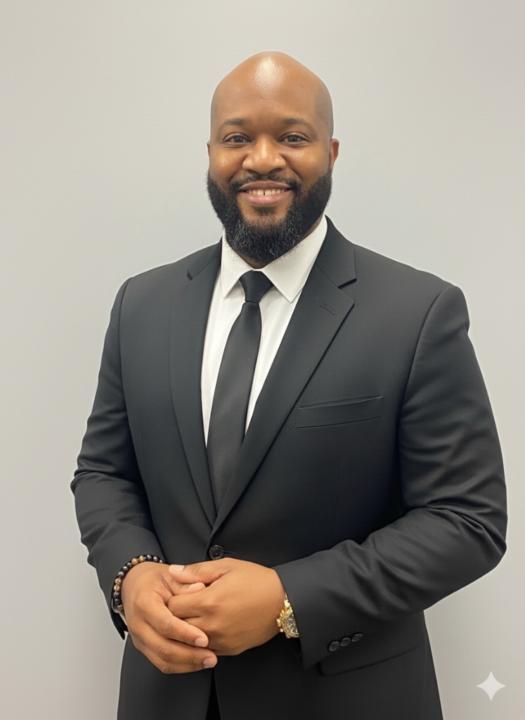
Naphtali Bryant
3
42points to level up
@naphtali-bryant-2954
Naphtali Bryant is a global speaker and educator helping students and leaders turn education into purpose-driven career success.

Active 6h ago
Joined Sep 11, 2025
Texas