Activity
Mon
Wed
Fri
Sun
Oct
Nov
Dec
Jan
Feb
Mar
Apr
May
Jun
Jul
Aug
What is this?
Less
More
9D Breathwork Community
47.3k members • Free
AGP Accelerator
195 members • Free
Agency Blueprint - Ethan Welby
3.1k members • Free
LinkedIn x WTS Mastery
18 members • Free
Muslim Maxxing | Community
147 members • Free
WavyWorld
51.4k members • Free
BNB Success Australia
1.6k members • Free
111 contributions to YouTuPreneurs - YT for Biz

Feb 12 •
Scraping for crumbs
Back in 2005, YouTube had 40 videos uploaded total. Not 40,000. Not 40 million. Forty. Today? YouTube prints $1 billion every 8 days. From all those videos being uploaded daily, only a handful are winning big. Snatching most of the attention. The rest? Scraping for crumbs. I saw this with my own channel a while back. I used to get 500-1,000 views per video pretty consistently. Then I took a break for a few months. When I came back, my videos weren't even hitting 50 views. Same person. Same expertise. Different game. It now takes 12-15 videos just to start seeing traction. A year ago? It took 3-4. Why? Because AI made it insanely easy to pump out content. YouTube had to get more careful about what it pushes. It needs more data on your channel before it trusts you enough to show your stuff to people. And it's only going to get worse. In 2026, there will be 10x more people uploading content than there are today. Which means it'll be 3-5x harder to start a channel. So what's the play? Most people are still playing the 2005 game, upload, pray for views, hope someone buys. The people winning now are playing a different game entirely: They know exactly who they're for. They build an ecosystem across platforms filtering leads and using YouTube longform to close high-ticket clients. That's the real game in 2026.
0 likes • Apr 1
@Dan Dinsio I don't necessarily think the algorithm is bad, it just surfaces the stuff people who watch content like you are watching But yes short form feed is terrible haha
Feb 23 •
Should I CRANK out more Shorts or Stick to Long-form?
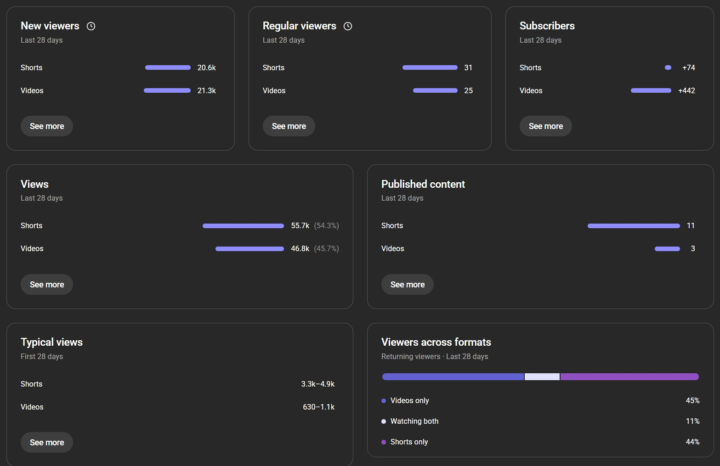
I get hit with this question every damn week. Most folks secretly hope I'll say: "Bro, do both. More content = more growth. Easy win." Sounds dope. But that's not what the data shows. We tested it on a client's channel for three months straight: Dropped 10–15 Shorts Only 3–5 long-form vids Guess what happened? Long-form pulled almost the same views as the Shorts... even though we posted 3 to 4x more Shorts. And long-form still kept up. But subs tell the real story: Shorts? Brought in like 75 new subs. Long-form? Almost 120. Fewer vids, more people sticking around. Subs ain't even the money metric tho. Leads. Clients. Actual bag. That's what counts. And long-form wasn't just "winning." It was smoking Shorts on conversions. Why? Because Shorts attract scrollers. Long-form attracts decision-makers. Shorts catch someone mid-scroll. Long-form catches someone mid-problem. That’s a different mindset. One mindset: "Entertain me for 15 seconds." The other: "Solve my nightmare right now." If you're selling serious sh*t on YouTube: consulting, services, high-ticket offers... attention should not be the goal, Intent is. Long-form filters for real intent hard. Someone drops 10 minutes watching you? They are not bored. They're sizing you up: > Do I trust this dude? > Does he get my pain? > Can he actually fix it? Trust stacks. Authority builds. But the likelihood of buying shoots up. Shorts can build brand buzz, sure. But if clients are your endgame? Posting Shorts can quietly shift your audience. You start pulling in fast-consume, fast-forget types. Then you stare at high views and flat sales wondering what went wrong. Ofc long-form is slower to produce. But it compounds like CRAZY. And it: Trains the algo to send you more intent-driven people. Trains your crowd to see you as the go-to expert. Trains trust that turns into checks. Peeps love Shorts 'cause they're quick and easy. But the real gut-check question: You tryna look busy AF... or actually build something that converts?
0
0
Feb 19 •
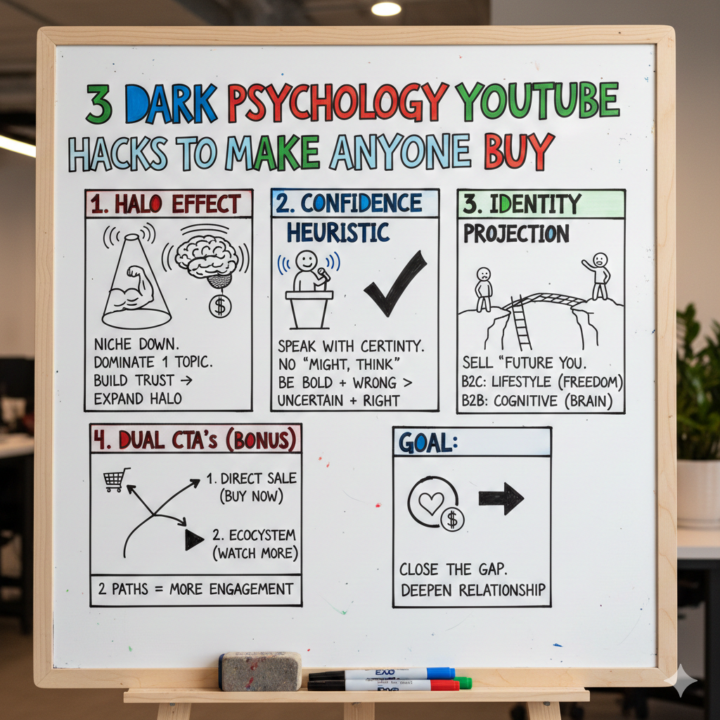
3 Dark Psychology YouTube Hacks to Make ANYONE Buy
I spent 3 hours analyzing why some peeps can sell almost anything with a single video. It’s not because they’re "smarter" than you. It’s because they understand 3 dark psychology hacks that hijack the human brain’s decision-making process. Before now, lots of folks thought sales was about features and benefits. In 2026, sales is all about Psychological Friction. Here are the 3 frameworks those winning on YouTube use to create desire: 1. The Halo Effect (Niche Down to Blow Up) If you try to be an expert on everything, you’re an authority on nothing. Master a tiny niche first. Once people trust you there, the "Halo" spreads to every other topic you touch. 2. The Confidence Heuristic (Certainty = Safety) Human brains are wired to follow certainty. It is better to be bold and wrong than uncertain and right. Avoid "I think" and "maybe." Speak with conviction to remove your customer's hesitation. 3. Identity Projection (The Pain Gap) Stop selling a product. Start selling a "Future Version" of your client. In B2C: Sell the escape (Lifestyle). In B2B: Sell the intellect (Cognitive clarity). The goal is to make the gap between who they are and who they could be feel painful. Buying from you is the only medicine. The "Bonus" Revenue Hack: The "Dual CTA." Never give a viewer just one choice. 👉 Ready now? Buy here. 👉 Not ready? Watch this deeper training. Keep them in your ecosystem until the "Halo Effect" takes hold.
1
0
Feb 17 •
16K views in 48 hours (without posting anything new)
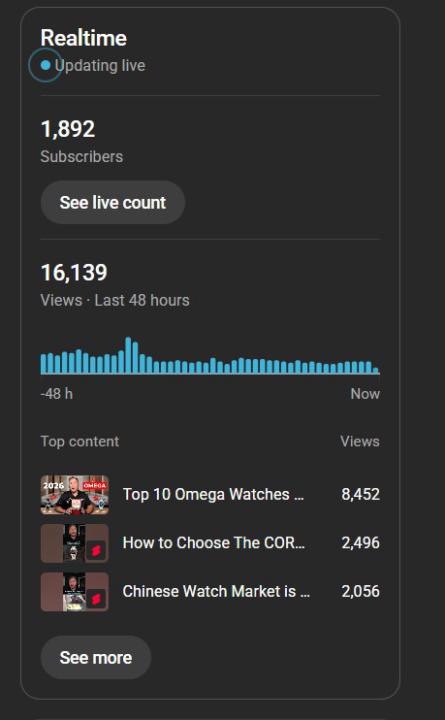
Recently Christian, a client had 1,892 subscribers on YouTube. There was a period of 48 hours where 16,000 people watched his videos. He didn't post anything new. All of it was old content. Videos from weeks ago. Just sitting there, working. This is why YouTube is so different from other platforms. It's not like ads where you spend more to make more. It's not like Instagram where you stop posting and your reach dies overnight. YouTube compounds. Unlike Instagram or Twitter where you're renting attention... The second you stop paying (with your time, with content), you stop getting results. On YouTube, you're buying attention. Once it's yours, it keeps working. Christian posts once or twice a week. Has been doing that for about four months. And now he's getting 10x his sub count discovering him within 2 days. Not scrolling past it but watching his content. The kind of people who spend $10K-$200K on stuff. Reason why I wonder at anyone who obsess over subscriber counts. Christian's got fewer than 2,000 subscribers, but he's reaching 16,000 hyper-targeted eyeballs in 48 hours. I'll take 16,000 of the right people over 100,000 random viewers any day. Because here's what actually matters: those 16,000 people didn't just stumble on his content. YouTube decided they needed to see it. The algorithm looked at their behavior and said "this person needs to watch Christian's videos." That's not reach. That's distribution. And distribution beats reach every single time. Most people are still playing the volume game. More posts, more content, more hustle. But the real game is consistency over a long enough timeline that the platform starts working for you instead of against you. Four months of showing up once or twice a week on YouTube. That's it. Not daily. Not grinding yourself into the ground. Just consistent enough that YouTube learns who your people are and keeps putting you in front of them. Even when you're sleeping. Even when you're not posting. Imagine if 16,000 of the right people saw your business every 48 hours.
0
0
Feb 9 •
How to sell $20k offers without saying a word on YouTube
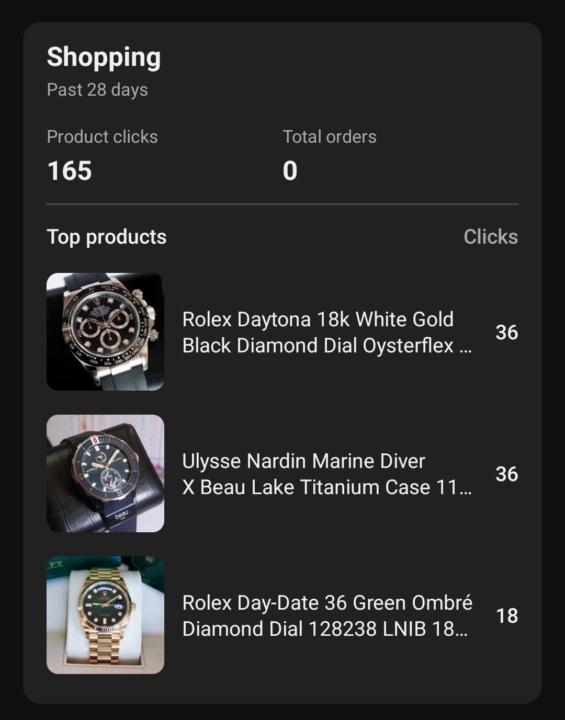
Most peeps still think YouTube is for views. Ad revenue. Subscribers. Maybe some “brand awareness.” But that’s not all… Let me show you something most people are completely ignoring. YouTube has a feature called Shopping. Almost nobody building a personal brand in the space is using it properly. One of our clients sells luxury watches. Not $29 products. We’re talking serious, premium pieces worth $4k, $40K… We uploaded his watches directly onto YouTube through the Shopping feature. We don't need an aggressive CTA. Because under the video? His watches are just… there. Quietly sitting. Clickable. The result? We’ve already seen over 160 product clicks from YouTube alone. Highly qualified people. Clicking on expensive watches. On purpose. Now think about that for a second. In luxury niches, a 3–5% conversion rate on warm clicks is normal. So if you run the math… Those passive clicks could easily translate into multiple high-ticket sales. And that’s not even counting: People who DM directly People who book through his link People who go through his funnel The Shopping clicks are just one layer. This is what most business owners miss. YouTube is not just a content platform. It’s a trust engine with built-in commerce. When someone watches 8–10 minutes of you… Sees how you think… Understands how you position your product… They don’t feel “sold.” They feel convinced. And when the product is sitting right below the video? The friction disappears. No chasing. No begging. No spammy follow-ups. That’s the real power. And this is why I keep saying: YouTube is not about going viral. It’s about attracting the right people and giving them the easiest possible path to act. Most business owners are still trying to “push” sales. Those winning are building systems that let buyers pull themselves forward.
0
0
1-10 of 111

@mihir
YouTube Strategist for 6, 7 and 8 Figure Entrepreneurs & Brands | I help you leverage YouTube to become an authority figure & scale MRR
Active 4h ago
Joined Dec 19, 2024
INFP
Malaysia