Activity
Mon
Wed
Fri
Sun
Aug
Sep
Oct
Nov
Dec
Jan
Feb
Mar
Apr
May
Jun
What is this?
Less
More
Memberships
Glow with Heather Peptides
508 members • Free
31 contributions to Glow with Heather Peptides

20d •
Epithalon: The "Sleep Reset" Peptide Everyone in the Longevity World Is Talking About 🌙
What is Epithalon (in plain English)? Epithalon (also spelled Epitalon) is a tiny peptide — just 4 amino acids long — originally developed by Russian scientist Dr. Vladimir Khavinson in the 1980s. It's a synthetic version of epithalamin, a substance naturally produced by your pineal gland. And if you don't know what your pineal gland is, you're about to find out why it matters so much after 40... **Meet your pineal gland: the body's sleep conductor � ** Deep in the center of your brain sits a pea-sized gland whose main job is producing melatonin — the hormone that tells your body "it's nighttime, power down." Here's the problem: the pineal gland calcifies and slows down as we age. By our 40s and 50s, natural melatonin production has dropped significantly. This is a huge reason why: 😵 You fall asleep fine but wake up at 3am staring at the ceiling 🌙 Sleep feels "lighter" than it did in your 30s ⏰ Your body clock feels off — tired at the wrong times, wired at bedtime 😩 Even 8 hours doesn't feel restorative anymore (And yes — perimenopause makes all of this worse. Estrogen and progesterone shifts pile right on top of declining melatonin. It's a double whammy.) How Epithalon works: 1️⃣ It supports the pineal gland itself. Rather than just dumping melatonin into your system (like a melatonin supplement does), research suggests Epithalon helps support the pineal gland's own ability to produce melatonin — working at the source rather than masking the symptom. 2️⃣ It helps normalize your circadian rhythm. Studies have shown Epithalon helps restore the natural day/night melatonin pattern — higher at night, lower in the morning. That's the rhythm that gives you deep, restorative sleep AND daytime alertness. 3️⃣ It activates telomerase. This is the famous part. Telomeres are the protective "caps" on the ends of your DNA — like the plastic tips on shoelaces. They shorten as we age. Epithalon has been shown in research to activate telomerase, the enzyme that helps maintain telomere length. This is why it's often called a "longevity peptide."

0 likes • 18d
I am wide awake when normal people sleep, so then I sleep in and ruin my work days! Always a struggle to get enough sleep, also. I need this peptide!!

May 12 •
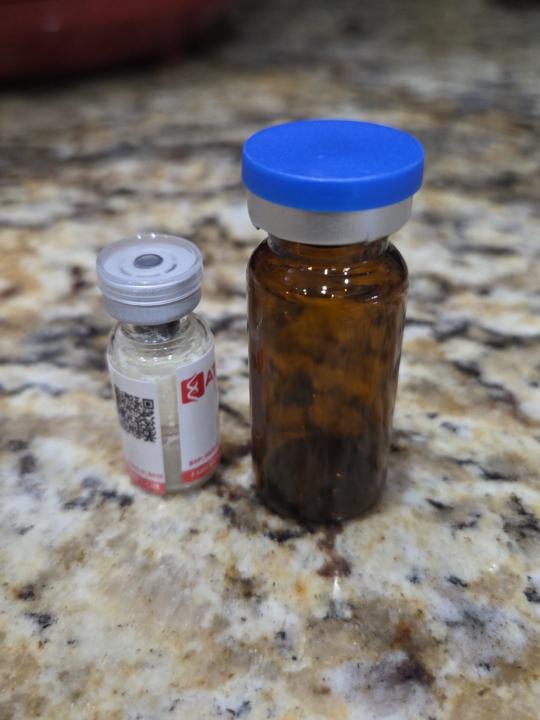
Help how do I open the vial!
I ordered NAD+ they gave me the extra vial to put it in, because the vial is too small to hold the bacwater!! What do I do
3 likes • May 14
I would do 7ml BAC for 700mg. That gives you 1mg:1unit for easy dosing.
1 like • May 25
@Heidi Lesko That was only 15. 1:1 means you need 25 units to equal 25mg 😉 But it never hurts to start lower, just to see how it feels. I accidentally 10X myself on GHK-cu... 30units instead of 3units. (So 10mg vs 1mg) Twice before I realized it!! Oops! That's why 1:1 is the easiest way to go!

May 15 •
Help with Reta 1st time
Beginner here want to start Reta how many bottles should I purchase? How long does one bottle last? Thank you!!!
1 like • May 17
Starting dose is 1mg, so it will be 10 doses unless you scoot up to 2mg. 10mg vial is the perfect starter size!
May 15 •
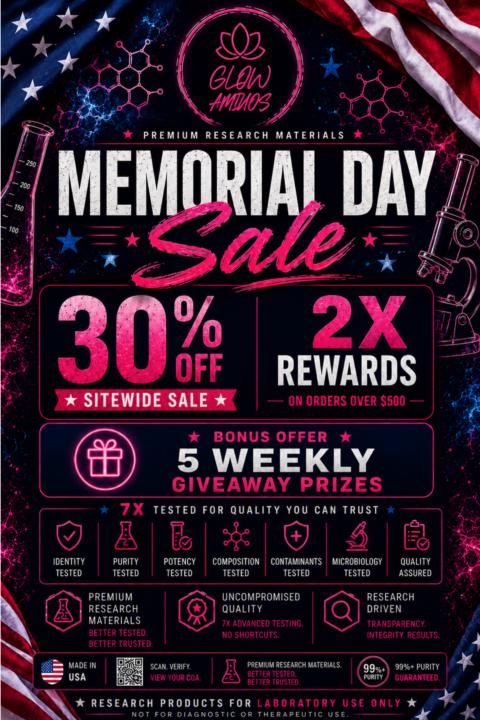
Glow Aminos SAVE 40% EARLY Memorial Day Sale
Use the discount code: glowlab for a stackable deal! 30% site wide and an additiional 10% with the glowlab discount code! https://glowaminos.com/shop/?coupon=Glowlab
1 like • May 16
WOW!!!
May 13 •
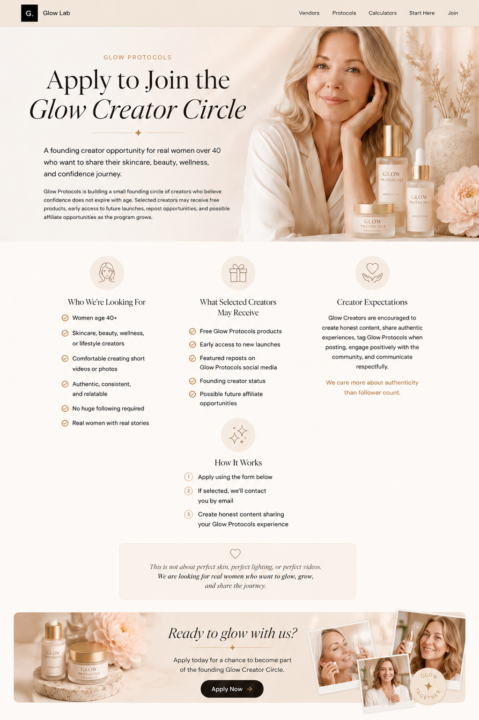
Apply to Join the Glow Creator Circle
Glow Creator Circle ✨ A private creator community for women 40+ who love beauty, skincare, wellness, confidence, and authentic storytelling. This is not about being a huge influencer or having a perfect feed. We’re looking for real women who want to glow, grow, and share their journey in a supportive, uplifting space. Selected creators may receive:• Early access to Glow Protocols products• Opportunities for product testing + feedback• Featured reposts on Glow Lab platforms• Founding creator perks as the community grows• Potential future affiliate opportunities We love:✔ Authenticity over perfection✔ Real-life beauty and wellness journeys✔ Women supporting women✔ Honest content and genuine experiences Whether you’re already creating content or just beginning to step into your confidence, you are welcome here. Glow differently. Glow together. ✨. Apply here👉 https://glowwithheather.com/creator-circle
0 likes • May 14
I would LOVE to apply but got intimidated halfway thru the application, lol
1 like • May 14
@Heather Zader it was really just the questions, lol. I'm not good selling myself!
1-10 of 31

@michelle-knight-9498
Texas Real Estate Broker and Loan Originator
Active 4d ago
Joined Apr 27, 2026
Houston, TX