Activity
Mon
Wed
Fri
Sun
Jun
Jul
Aug
Sep
Oct
Nov
Dec
Jan
Feb
Mar
Apr
May
What is this?
Less
More
Memberships
7 contributions to What Is Skool?

Jan '25 •
What’s Missing on Skool? Let’s Have Fun Being Creative! 🤯💡
Skool is already packed with some incredible and fun communities, but there’s always room for more creativity! Ever thought, “Why isn’t there a community for that?” Maybe something for impressive balloon animals, hosting unforgettable parties, DIY projects, or something totally unique? 💡 Let’s brainstorm together! What’s a hobby, skill, or interest that would make an amazing community? It doesn’t have to be something you’d start, just an idea of a community you’d love to join and pay $5-$7 (or more) a month for. ✨ How to Join the Fun: 1. Post your idea as a comment. (Only ONE community idea per comment please. Post as many as you want.) 2. See something you love? Use the reply button to add your thoughts and hype it up. Let’s build on each other’s ideas. ⤵️ Keep it Organized: Please reply directly to comments using the reply function so everything stays neat and together. 👇 Drop as many ideas as you can think of. Let’s make this the go-to thread for sparking new community inspiration on Skool! 🚀


🔥
1 like • 11d
Prayer Skool - Live With The Pope
Jan 30 •
Welcome to What is Skool? A Free Public Community
This community helps you understand what Skool is, how the platform works, and stay up to date with platform changes that affect how people use it. Sometimes I will highlight Skool communities that are worth checking out. These are shared as real examples of how people are using the platform and what different types of communities can look like in practice. So What is Skool? Skool is a community platform where people can discover or create communities. People use Skool to run communities that include content, discussions, events, and memberships in one place. Inside the Classroom, you will find three main resources: Skool Basics This walks through what Skool is, what Skoolers is, and how the Skool Games work. Skool Build Template This is a practical starter kit you get free access to just by joining the community. The build template includes a checklist, a questionnaire to help you think through your idea, and Canva templates you can use to set things up visually. Skool Clarity Call Feedback Real responses from community members about their ideas and the clarity they gained from clarity calls. This is something I recommend community owners do for their own members when starting out, no matter what their community is about. You can see what others have to say by joining the community for free. What will the content in here look like? You will see: - Resources and templates you can use. - Our latest Skool videos and podcast episodes. - Highlighted communities that are worth checking out. - Posts about new Skool features and platform changes. - Breakdowns of how different Skool communities are structured and what is working.
🔥
1 like • Mar 3
@Jessica Stapleton - To learn and share.
🔥
1 like • Mar 11
@Anja Ehrlichmann - Working on it.
Feb 17 •
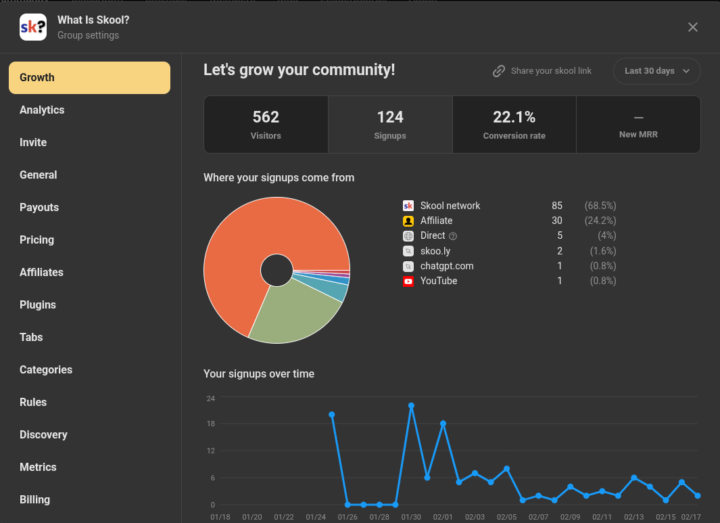
Check Your Group Settings! TRAFFIC SOURCES
I can't help it... I'll make a more in-depth post on this later... BUT I am so excited! 🥳 Christmas in February!
🔥
2 likes • Mar 4
Is that only for pro accounts?
Jan 10 •
How To Catch Spammers Fast In Skool Membership Requests
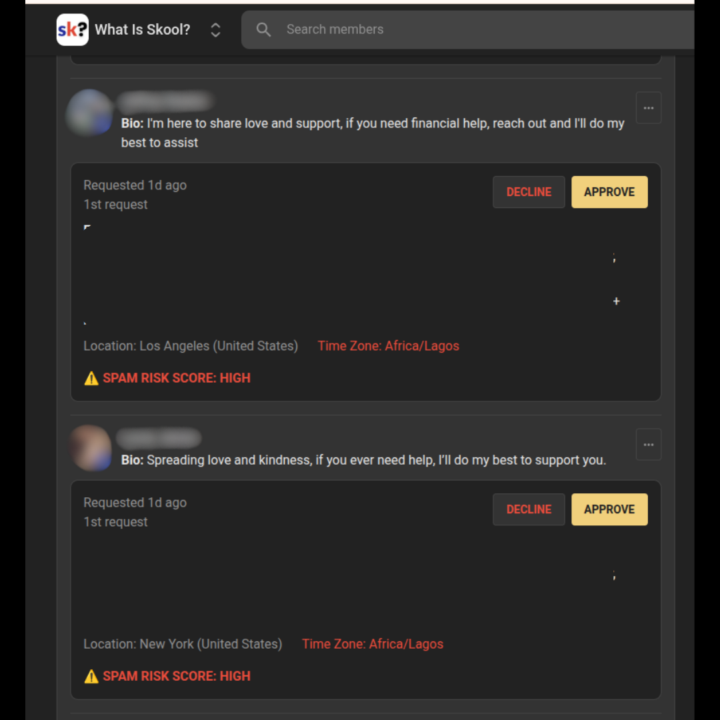
When you are on any online platform, we all know by now there is bound to be spam. People talking about dropshipping, asking you to move to WhatsApp, saying “Hello dear,” and sending messages that clearly do not belong in a real community space. Some of the common questions Skool community owners and admins have about dealing with spam are: How do I stop spammers in my Skool community? How can I tell if a Skool membership request is fake? What is the best way to prevent spam DMs in Skool? How do I use Skool’s features to reduce spam? Well Skool just released a new feature update that helps community owners spot spam accounts directly inside Skool membership requests. You can now see when a profile is marked as high risk for spam before approving them, which makes protecting your Skool community much easier. Before this update, one of the best ways to identify fake accounts was by checking location details through chat. Many spammers say they are from one place, but their profile data shows something completely different. That extra step worked, but it took more time. Now the process is faster and clearer. See the photo to see how the locations do not match. This is a simple example of how spotting these red flags early can help you stop spam accounts before they ever get inside your community. You can also put smart systems in place alongside this new feature. Setting level requirements for things like sending direct messages or posting in your Skool community helps reduce spam and protects your members. Requiring people to reach a certain level before they can message others or post gives you more control, saves time, and keeps your community focused on real conversations instead of cleanup. Personally, I recommend setting the chat level to at least 4. This gives you a better chance of spotting accounts that try to comment back and forth quickly just to level up and unlock messaging. It also gives real members time to get to know each other inside the community before moving straight into private messages.
🔥
2 likes • Mar 4
Stamp it out.
Feb 9 •
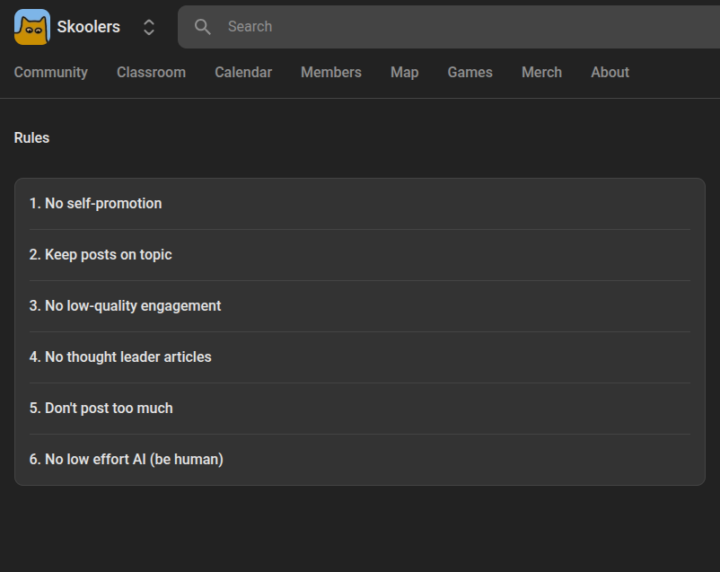
Why the Skoolers Community Uses Vague Rules on Purpose
I’ve been asked this directly and I’ve also seen a lot of people asking it publicly. Why are the Skoolers community rules vague? Some people are totally fine with it. Others really dislike it. Both reactions are okay. Some people prefer things extremely clear with exact limits. Some are used to platforms where everything is spelled out. Others have been part of large communities before and already understand why vague rules exist in the first place. Here’s the part that matters and why I now strongly recommend vague rules… even for smaller communities. Hard rules create loopholes. Vague rules create better communities. The moment you introduce hard limits, people naturally want to reach those limits. Instead of looking at the intention of a post, it turns into “does this technically fit in the guidelines?” It even takes away from something that makes a community really wonderful. If a community like Skoolers spelled out exactly what a good post is and what a bad post is, we might never see some of the creativity that comes from someone trying something out. From experimenting. From sharing something that wasn’t done before that ends up being genuinely good. Vague rules leave room for that. They also mean that as moderators and admins, we end up having a lot of conversations. We look at patterns. We make decisions based on context instead of black and white rules. Sometimes there is a new person who is just trying to fit in. A post might technically be questionable, but the right response is to welcome them and guide them. Other times someone is new and blatantly self promoting, which clearly is not allowed. In that case, we can redirect and still welcome them without letting the behavior continue. Those situations look similar on paper but they are very different in reality. Vague rules allow for that distinction. They also protect against bad actors. An example that Andrew Kirby shared explains this well. If people were told they would not be prosecuted for stealing things under $50, you would immediately see people stealing things up to $49. The clear rule creates the behavior.
Poll
49 members have voted
🔥
2 likes • Mar 4
@Ellis Sargent
1-7 of 7
🔥
@michel-guntern-2407
🌍 Connecting creators, nomads, travel brands, hotels, and tourism destinations looking to start meaningful content partnerships. ► TravelNotes.org ✈️
Active 42m ago
Joined Mar 1, 2026
🌍 Europe 🧭 📷
Powered by