Activity
Mon
Wed
Fri
Sun
Nov
Dec
Jan
Feb
Mar
Apr
May
Jun
Jul
Aug
Sep
What is this?
Less
More
3 contributions to Frightfully Good Paranormal

Apr 6 •
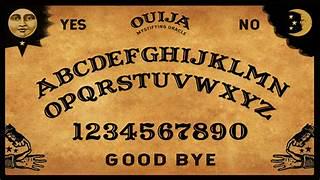
Strategies to Consider when using the Ouija Board
If you’ve ever sat at a table with a Ouija board, even just once, you’ll know it carries a strange sort of reputation that sits somewhere between curiosity and caution. People lean in, half fascinated and half unsure whether they’ve just opened a door they don’t fully understand. That tension is exactly why it has lasted as long as it has. A Ouija board, in simple terms, is a talking board. It is marked with letters, numbers, and basic words like yes, no, and goodbye. Participants place their fingers lightly on a small pointer, often called a planchette, and ask questions with the intention of receiving answers from spirits. Whether you believe that movement comes from subconscious muscle response or something external is where opinions start to split, but the experience itself has been remarkably consistent across generations. The modern version of the Ouija board became popular in the late 19th century, during the height of the Spiritualist movement. This was a time when people were actively trying to communicate with the dead, often in parlours filled with candlelight and expectation. It was not fringe behaviour back then. It was fashionable. Entire communities were built around séances and spirit communication, especially in America and parts of Europe. The Ouija board offered a more accessible version of that experience. You did not need a medium. You just needed a board and a willingness to try. By the early 20th century, it had become commercialised, sold as both a game and a tool. That dual identity is where things started to get complicated. On one hand, it was marketed like a family pastime. On the other, it was being used in very serious spiritual contexts. Over time, especially through the mid to late 1900s, its popularity began to decline. Horror films played a large part in that. The board shifted from something curious and social into something associated with danger and possession. People stopped seeing it as a novelty and started seeing it as a risk.

0 likes • Apr 27
It always mystified me as why there isnt a Hello on the board as an opening lol. I have only used the board once. That was at Ashwell Prison with you both, barb and Lisa. I feel I need a bit more practice with sensibleexperienced users before leading one myself.
Mar 9 •
Question to our community - what's on your bucket list to visit?
We have been lucky enough to visit quite a few very interesting and allegedly haunted places in the UK and a few in America, Romania, Germany and Prague and of course Australia. But there are so many more we would still love to go to! Some of the 'allegedly' most haunted places were actually very quiet when we visited. But, that is the reality of ghost hunting. we all know that it does not happen 24/7 and you just have to be at the right place and the right time and we definitely do not provoke. Except when I get cranky that nothing is happening and I kind of what things to move along! But if you would love to jump into this conversation let us know where you would like to go and if you have been somewhere interesting include a photo!

0 likes • Apr 27
@Niva Crocetta brrrrrr. Cold! Lol
Apr 1 •
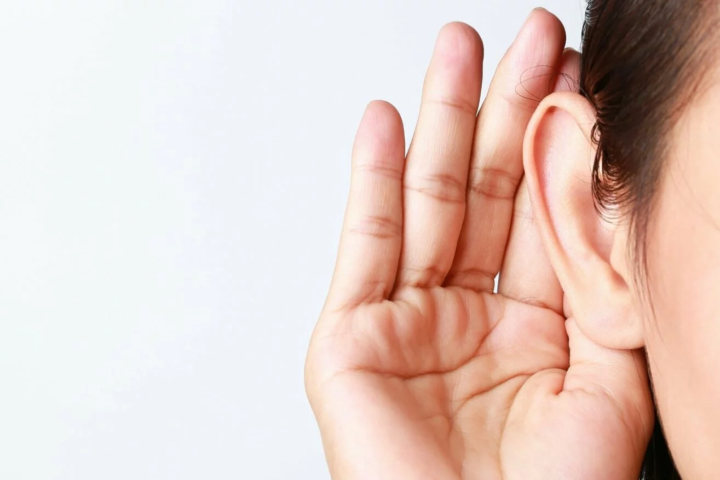
Why we should all Learn to Just Sit and Listen during Paranormal Investigations.
There’s a moment on every investigation that most people miss — not because it’s hidden, but because it’s too simple to feel important. It happens when everything finally goes quiet. No one’s asking questions. No one’s fiddling with gear. No one’s trying to make something happen. It’s just you… standing in someone else’s space… listening. And for a lot of investigators — especially newer ones — that moment feels like failure.They feel like that should be continually active. Continually turning on another gadget just in case something is missed and not recorded for YouTube Channels. We’ve been trained, subtly but consistently, to believe that activity needs to be captured, measured, validated through equipment. That if the REM pod isn’t lighting up or the spirit box isn’t chattering, then nothing is happening. So we fill the silence. We rush it. We layer technology over it like we don’t quite trust our own senses to do the job. But here’s the uncomfortable truth — the more noise you bring in, the less you actually perceive. And I don’t just mean audible noise. I mean cognitive noise. Expectation. Interpretation. The constant low-level pressure to produce something. When you walk into a location loaded with devices, you’re not just documenting — you’re directing. You’re setting a tone. You’re telling the environment, consciously or not, “perform for me.” And sometimes… it simply won’t. I know right?!!! There is a possibility ( more like a probability) that every investigation will reveal activity. Not because nothing is there, but because you’re not giving it space to exist in its own way. Learning to sit still during an investigation isn’t passive. It’s not lazy. It’s one of the most disciplined things you can do — and it’s often where the most meaningful experiences happen. Because when you strip everything back, you start noticing what was always there. The temperature shifts that don’t show up as dramatic spikes but feel… wrong against your skin. The way certain areas carry a density that has nothing to do with airflow or structure. The subtle changes in sound — not voices, bangs, but the absence of expected noise.
0 likes • Apr 1
Agreed. I often sit there not knowing what to ask next anyway, so I just sit, listen and appreciate thier company
1-3 of 3
@melanie-eldred-3105
A tutor in Arts & Crafts and enjoys a good paranormal investigation 🥰
Active 157d ago
Joined Mar 9, 2026