Activity
Mon
Wed
Fri
Sun
Jun
Jul
Aug
Sep
Oct
Nov
Dec
Jan
Feb
Mar
Apr
What is this?
Less
More
Owned by Mario
Developing a "state of the art" sound design and mixing can be truly challenging. We are here to fix that and share the cold secrets of audio mastery.
Memberships
Skoolers
191.8k members • Free
20 contributions to High End Sound for Music

Feb 3 •
MIXING TIPS VOL 2
5 short tips for mixing melodic house: 1. Design contrast, not constant energy - Melodic house lives on tension vs release—let verses be lighter so drops feel earned, not just louder. 2. Treat reverb as a rhythmic element - Time your reverbs to the groove (pre-delay + decay synced to tempo) so space moves with the track. 3. Keep transients soft but intentional - Avoid sharp EDM-style attacks; gentle shaping keeps the sound warm, hypnotic, and non-fatiguing. 4. Balance emotion in the midrange - The story lives between 500 Hz–3 kHz—leads, vocals, and chords should feel present without ever shouting. 5. Check the mix at low volume often - If the melody, bass movement, and groove still read quietly, the mix will translate everywhere. There is more of them in classroom section!!
3
0
Feb 3 •
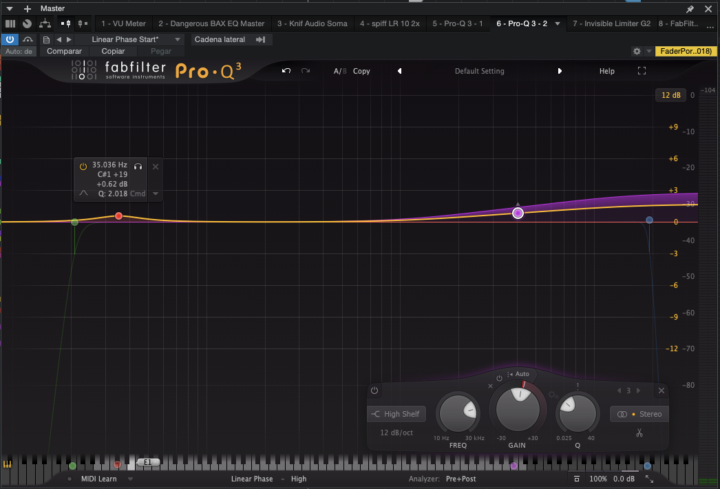
MASTER FINAL EQ PRESET
Here is what a recent work for a high-mid profile artist, should look like - the track is peak time techno so its sounding slightly bright shelf just before clipping: and little boos on the sub
2
0
1-10 of 20
Active 23d ago
Joined Oct 2, 2025