Activity
Mon
Wed
Fri
Sun
Aug
Sep
Oct
Nov
Dec
Jan
Feb
Mar
Apr
May
Jun
Jul
What is this?
Less
More
Owned by Dr. Maria
🦄 On a Mission to get a 1000 good startup ideas funded. 🚀
A safe space to nerd out and talk about science.-Community/Chats/Debates/Journal
Memberships
School of Mentors
6k members • $29/month
Molecular and Cellular Biology
42 members • Free
The AI Advantage
126.4k members • Free
MedTech
30 members • Free
The Business Gym - GROWTH LAB
29 members • Free
Astrocartography and you!
89 members • $5/month
Founder HQ
103 members • Free
Rebuild After Recovery
145 members • Free
GOOSIFY: Skool Made Fun
13.1k members • Free
4 contributions to dayNumber_

Mar 31 •
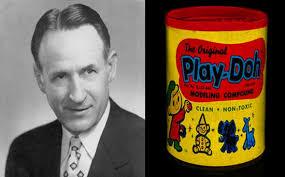
Motivation Mondays-Play Doh Started As Wallpaper Cleaner
Play-Doh started as wallpaper cleaner. The company was going bankrupt. The man who saved it was 25 and had just been told he had cancer. A kindergarten teacher showed him the product everyone else was ready to throw away was actually one of the greatest toys ever made. Over 2 billion cans later, she was right. Joe McVicker was 25 years old. The year was 1955. He was sitting in a factory in Cincinnati, Ohio, surrounded by tubs of soft, doughy putty that nobody wanted to buy anymore. The putty was supposed to clean wallpaper. That's all it had ever been designed to do. But the wallpaper cleaning business was dying. For decades, American homes were heated by coal. Coal left a layer of black soot on everything — including the wallpaper that covered most living room walls. You couldn't wash wallpaper. You needed a soft, nontoxic compound that could lift soot without damaging the paper. That compound was Kutol Products' entire business. Cleo McVicker had saved Kutol from bankruptcy once before. In 1933, the worst year of the Great Depression, Cleo had been sent to liquidate the failing soap company. He was 21. Instead of shutting it down, he negotiated a contract with Kroger grocery stores to manufacture wallpaper cleaner. His brother Noah created the formula. Kutol became the largest wallpaper cleaner manufacturer in the world. Then tragedy struck. In 1949, Cleo McVicker was killed in a plane crash. His widow took over. She brought in Joe McVicker and Bill Rhodenbaugh to help run the company. Joe was barely out of college. And then the real crisis hit. After World War II, American homes started switching from coal to oil and gas heating. No more coal. No more soot. No more dirty wallpaper. On top of that, manufacturers started making vinyl wallpaper that could be washed with soap and water. Kutol's only product was becoming obsolete overnight. By 1954, the Christmas orders that usually sustained the company didn't materialize. Kutol was headed for bankruptcy.

🔥
1 like • Mar 31
@Jordan Ovejas Excellent story! Thanks, for sharing. That’s a great example of a pivot. It’s interesting. The guy hit rock-bottom with his health and his company and everything and he repurposed and rep pivoted everything and then got better in the end. Very motivational. Good lessons.
Jan 28 •
In the process of raising $25k to launch our first demo day!
Currently right now I'm in the process of raising $25k for personal runway to keep building and also have a guaranteed prize of $5k for our winner of our first live demo day. The live demo day will be where we select 10 random founders that are part of the paid community when it launches at $10/mth, and also have logged at least 30 days in the last 60 days. Each 1 of 10 who got selected for the live demo day will get a chance to demo what they've been building to all members of the community. We will stream it live in the dayNumber community where both free and paid members can watch and at the end vote who they want to win the prize. The founder with the most votes wins! I will launch the paid community once we have at least 1000 members in the dayNumber community, so if you know any founders who would be a good fit, that is building something meaningful in this world invite them in! Also part of what I'm doing to raise the $25k is offering a magic show performance for your team or business or next event if someone sponsors at least $500, if it's close enough to me, of course if I have to fly out anywhere it would have to cover the cost of the flight and travel expenses plus at least an additional $500. As the community both free and paid grows the monthly cash prize will increase, I want to eventually have the largest cash prize in the world to give away to founders every month! Lets support founders building real solutions to real problems in this world and together impact billions of lives!

🔥
2 likes • Jan 28
@Jordan Ovejas are you doing this? Are you raising as a nonprofit? Or are you raising it in exchange for equity? What type of raise are you doing?
🔥
1 like • Jan 29
@Jordan Ovejas good luck. The magic show is is a cool idea.
Jan 29 •
Elon Musk’s 5-Step Algorithm for Running Companies (Distilled)
Elon Musk uses a very specific order of operations when improving any system, product, or company. Most people get this wrong by doing the steps out of order. Here’s the correct sequence 👇 Step 1: Make the requirements less dumb Every requirement is wrong some of the time especially if it came from a smart person. - Question every requirement - Ask who created it (not which department) - Make the person responsible for defending it - If no one owns it → it’s probably nonsense “A requirement without a name attached to it is dangerous.” Step 2: Delete parts or processes This is where most companies fail. - Actively remove things - If you’re not adding things back ~10% of the time, you’re not deleting enough - “Just in case” logic bloats systems endlessly Bias should be toward removal, not addition. Step 3: Simplify or optimize (ONLY after deleting) This is the most common mistake engineers make. - People optimize things that should not exist - School trains us to answer bad questions instead of challenging them - Never optimize before you delete “You’re wearing a mental straightjacket if you optimize something unnecessary.” Step 4: Accelerate cycle time Only now should you speed things up. - Yes, go faster - But speed before simplification = chaos - You can always make something faster later Step 5: Automate (last, not first) Automation comes after everything else. Elon admits he’s personally failed by: - Automating first - Then accelerating - Then simplifying - Only to later realize the thing shouldn’t exist at all True story: Tesla deleted unnecessary components and bypassed a $2M robot simply by asking the right question. The Core Insight Order matters more than intelligence. Most companies: Automate → accelerate → optimize → keep everything Elon’s order: Question → delete → simplify → accelerate → automate That’s how you build things that actually scale. 🎥 Watch the full video here: https://youtu.be/tdf3luOCNks?si=bhorNl2vMgSJs5P4
🔥
1 like • Jan 29
@Jordan Ovejas Nice thanks for sharing.
Dec '25 •
Big Update on Founder Journey Tool
So it’s Day 156 for me on this founder journey and I’ve pivoted so many times with the intention of providing the best possible to support idea to early stage founders. Finally I have created an MVP for a tool for founders to help you build daily, document your progress and be able to share that with others for proof of what you done if you want to. For me what’s kept me going is publicly documenting my journey for these 156 days and knowing what day I’m on because subconsciously I know I have to keep going as each day progresses to the next. I’m open to any feedback and would love to hear if it’s helping you with keeping consistent and to build daily! Here’s the official link: dayNumber.io

🔥
1 like • Jan 9
Maybe add some rewards for posting streaks.
🔥
0 likes • Jan 9
Also, are posts private?
1-4 of 4

🔥
@maria-nagy-4467
I’m a PhD Microbiologist, a startup founder. I’ve raised >$700K. I help Startup Founders get funded.
Active 5h ago
Joined Jan 6, 2026
Atlanta