Activity
Mon
Wed
Fri
Sun
Aug
Sep
Oct
Nov
Dec
Jan
Feb
Mar
Apr
May
Jun
Jul
What is this?
Less
More
Memberships
Reverse Flip™ Starter
3.3k members • Free
Rentals To Riches
3.2k members • $50/month
Multifamily Strategy Community
3.2k members • $1/month
Triple Net Playbook
59 members • Free
Apartment Investing Secrets
374 members • Free
Transactional Funding Roadmap
11.3k members • Free
1 contribution to Apartment Investing Secrets

Oct '24 •
Is This 400-Unit Deal Worth It?
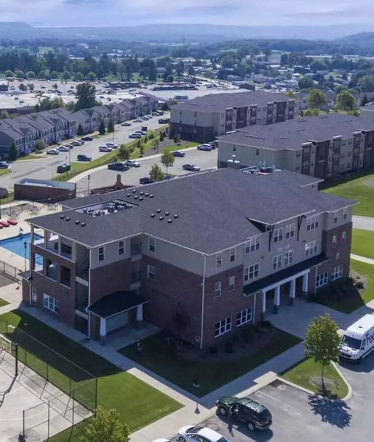
When a Mastermind member brought us this 400-unit deal, it was a perfect chance to break down how to analyze a multifamily investment. The numbers may seem impressive, but understanding the details can reveal the true potential—or risks. 1. Rent Opportunity: Current rents are $1,000 per unit—about $200 under market. With 400 units, this leaves $960,000 in unrealized revenue every year. Calculation:400 units × $200 × 12 months = $960,000/year in additional revenue. The key question: How fast can rents be raised, and what upgrades or tenant turnover will be needed to make that happen? Closing this gap could significantly boost the property’s value. 2. Operating Expenses: Expenses are currently 55% of revenue—high for a property built in 2015. Ideally, they should be closer to 40%. Reducing these expenses would directly increase net operating income (NOI) and the property’s value. Impact: If expenses are reduced from 55% to 40%, the property’s profitability rises sharply, suggesting possible mismanagement or bloated costs that can be cut. 3. Cap Rate vs. Asking Price: The seller is asking $25M, but the local cap rate is 7%. We’re using a conservative 8% exit cap rate in our calculations. Proforma NOI: 400 units × $1,200 (new rent) × 12 months = $5.76M/year NOI at 40% expenses = $5.76M × (1 - 40%) = $3.456M/year Proforma Value: $3.456M / 8% = $43.2M This means the property could be worth up to $43.2M once rents are increased and expenses lowered. But are you paying $25M for the future potential, or for what the property is doing right now? 4. Renovation Costs: Each unit needs about $10,000 in updates, which totals $4M for all 400 units. This upfront investment must be justified by rent increases and better tenants. Total Investment: Purchase price = $25M Renovations (CapEx) = $4M Total investment = $29M Make sure these renovations will deliver a strong enough return to justify the cost. 5. Return on Investment (ROI): We calculated an equity multiple of 4.02x, meaning for every $1 invested, you could get $4 in return.

0 likes • Oct '24
I think it's a deal
1-1 of 1

Active 23h ago
Joined Jun 4, 2024
Powered by