Activity
Mon
Wed
Fri
Sun
Aug
Sep
Oct
Nov
Dec
Jan
Feb
Mar
Apr
May
Jun
What is this?
Less
More
Memberships
We Do Wellness and Resilience
17 members • Free
Mauni-London Recovery Coaching
127 members • Free
45 contributions to Mauni-London Recovery Coaching

8d •
Human Rights Walk for the Museum of Homelessness
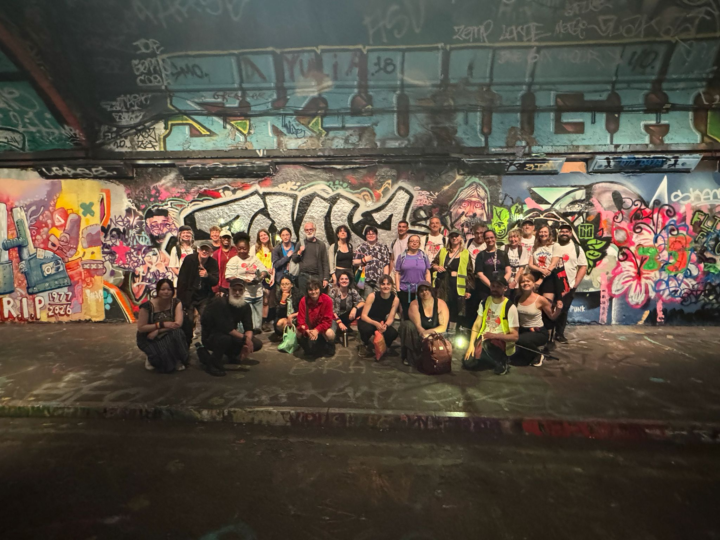
Human Rights Night walk! It was very special. 35 of us walked for over 7 hours traversing London's streets taking in some of the capital's most significant human rights spots. We lit candles together, swapped stories, heard poetry and offered each other much needed encouragement at times as dawn approached. And we've raised plenty of funds - nearly 6k for the museum's essential work to support the community! Check them out here: https://museumofhomelessness.org/

May 23 •
Welcome
Welcome @Mzwandile Manto , Manto will be holding the pilgrimage space for the next 42 Days starting Monday. Straight into the deep end !!! I love it.... ❤️ Click the link in the Calendar to join. All sessions are recorded and transcribed. @Gwen Podbrey @Rabson Banda @Charlie Morrison @Tia Boulton @Emma Buttriss @roselle Gowan @Paulo Pinto @Garth Rogers @Marcus Ward @Ruth Lilleker @Bruno Tumusiime @Michaela Collins FYI Manto has offered to be a trustee for the U-ACT PBO in SA and will be drafting a concept note for the Master's Programme. We will start Monday with Spritual Principles. Let's bring some love and the power of the ancestors into our space. Remember that this container is about Training Coaches. The We-Do container is about Treatment . I am wanting to build capacity here so that we have. SOLID ONLINE TREATMENT CONTAINER in We-Do. #Ubuntu Why won't this let me tag Doris , Roselle, Ocean !!!!

1 like • May 23
How beautiful! Welcome @Mzwandile Manto look forward to jumping in on the sessions from Monday x

May 22 •
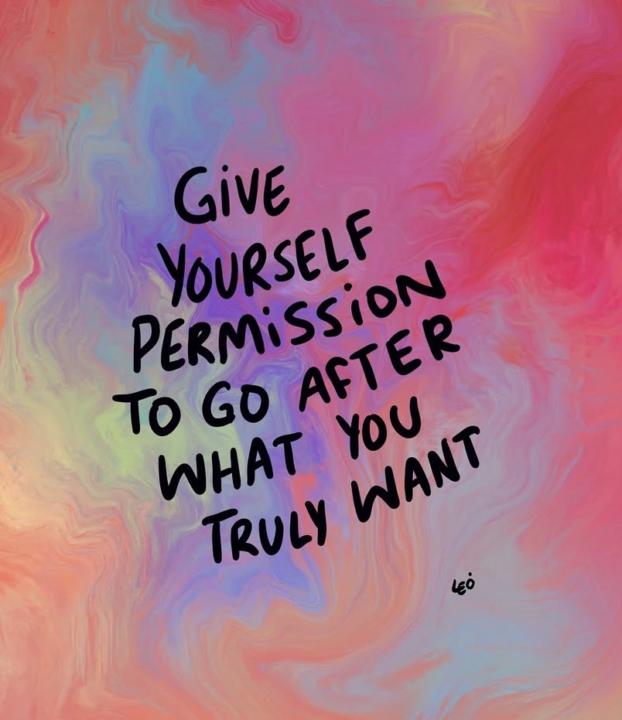
Permanent permission
After our fantastic session yesterday we should all have permanent permission to do what we need to do to make the world a better place. Let’s go be brilliant!!
1 like • May 22
Love it! ❤️ We all have permission to bring loving change. Walk into these rooms/meetings like the universe sent you!

May 20 •
ADHD in Real Time
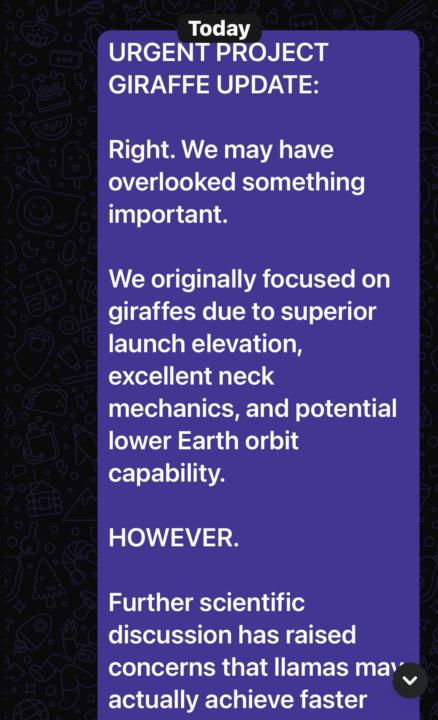
Giraffes, Snakes, and What ADHD Conversations Can Actually Sound Like People massively underestimate what ADHD conversations actually are. Not because the people having them aren’t intelligent. Because the intelligence does not always arrive looking respectable. It does not always sound polished. Or measured. Or particularly sensible. Sometimes it arrives disguised as complete nonsense. This actually started because I saw a picture of a giraffe and immediately found myself wondering whether giraffe vomit would be properly projectile or whether it would just sort of… dribble. And because my brain apparently refuses to suffer alone, I text one of my longest-standing friends — we’ve been friends for about 33 years — because I knew she would not only understand the thought, but fully commit to investigating it with me. Now, to most people, that probably sounds like two women talking absolute shite. And to be fair… it IS absolute shite. But underneath the nonsense, something else is happening entirely. Pattern recognition. Associative thinking. Creative linking. Rapid-fire conceptual building. One stupid thought lands. Then another attaches itself. Then another. Then suddenly the conversation is moving at a speed that makes complete sense to the people inside it while looking utterly ridiculous to anybody outside it. That’s the bit people miss. Because ADHD conversations often sound disorganised externally while something incredibly fast is happening underneath them. The brain is: testing, connecting, building, pivoting, cross-referencing, challenging, expanding. Not neatly. Not linearly. But intelligently. That matters, because a lot of neurodivergent people grow up being told they are distracted, off-topic, too much, dramatic, not focused enough, or somehow less capable than they actually are. When really, some of them are thinking so quickly that conventional conversation cannot always hold the shape of it. And that is not the same thing as being unintelligent.
1 like • May 22
[attachments]
May 21 •
The Marshmallow Test, ADHD, and the Human Cost of Misunderstood Nervous Systems
The marshmallow test got mentioned today and my brain instantly went to ADHD before addiction was even brought into the conversation. But the second addiction and later life outcomes got mentioned as well, that was it really. Because ADHD already has such a heavily documented relationship with: dopamine dysregulation, impulsivity, reward seeking, novelty seeking, emotional regulation difficulties, addiction vulnerability, masking, shame, burnout, and chronic nervous-system strain. So my immediate thought was not: “some children could wait and some could not.” It was: “Hang on… was ADHD ever meaningfully accounted for in any of this?” Because if later outcomes from delayed gratification studies showed links with addiction vulnerability, impulsivity and long-term behavioural outcomes, then surely somebody at some point had to ask what was actually happening underneath the behaviour itself. Because I do not think waiting is neurologically equal for everybody. And I do not think impulsivity is anywhere near as simple as people often reduce it down to either. If somebody already struggles with: dopamine regulation, understimulation, emotional overwhelm, restlessness, internal discomfort, or the exhausting effort of constant self-regulation… then immediate reward may not simply feel enjoyable. It may feel relieving. And I think that distinction matters massively. Particularly when later research around the marshmallow test itself apparently started questioning whether it was ever purely measuring self-control in the first place. Because suddenly things like: trust, stress, environment, predictability, and whether the child genuinely believed waiting would safely result in reward… all started entering the conversation too. Which honestly changes the entire feel of the study. Because now the question is no longer just: “Who had good self-control?” It also becomes: “What was each nervous system actually experiencing in that moment?” And the more I sat with it, the more my brain kept widening the question out further.
1 like • May 22
This resonates so deeply it hurts, Ruth. You have perfectly articulated the hidden crisis of ND. My own timeline reflects this completely: diagnosed and medicated at 7-9, and then abruptly taken off it at 15-16 because I was told I’d "grow out of it as an adult." What followed was nearly two decades of being wrongly medicated for anxiety and depression, undergoing investigations for various psychological disorders, and enduring years of pain, discomfort, and what felt like a trail of lost success and failed opportunities. It wasn't until age 34 that the system finally circled back and agreed: it was ADHD all along. When you ask, “What happens to a human being when neurological distress gets repeatedly interpreted as behavioural failure for 20, 30 or 40 years?” it hits the absolute core of my current reality. Because my question now isn't just about the 19 years lost to misdiagnosis and the psychological grief of what could have been. My question is about the physical toll. What happens to a body that has lived in a perpetual state of fight-or-flight, burning through its reserves just to mask and survive an unsupported nervous system? The real human cost isn't just the years lost in the past—it’s the lingering fear of the years cut short in the future due to the premature aging, exhaustion, and chronic strain of long-term trauma and burnout. For those of us with ADHD, the immediate reward isn't a lack of self-control; it is an act of neurological survival—a desperate grab for relief from internal discomfort. Thank you for shifting the conversation from a reductive "moral test" to what it actually is: a baseline need for safety, predictability, and neurodivergent-informed understanding. We are paying for the lack of it with our minds, and quite literally, with our bodies. Live, laugh, toaster bath!
1-10 of 45
@marcus-ward-4147
Those closest to the problem are the ones best equipped to lead the way out. My work isn't just professional - it’s personal.
Active 4d ago
Joined Feb 24, 2026
INTP
London, UK
Powered by