Activity
Mon
Wed
Fri
Sun
Mar
Apr
May
Jun
Jul
Aug
Sep
Oct
Nov
Dec
Jan
Feb
What is this?
Less
More
Memberships
Top Chess Community
19.2k members • Free
Dr. Mike's Chess Academy
1.4k members • Free
ActivityAL 💚 byGeraldGerlich
83 members • Free
ActivityPro 💜 byGeraldGerlich
26 members • $1,999/month
Get Energy and Power Network
31 members • Free
Activity 🩵 byGeraldGerlich
53 members • Free
ActivityALP 💛 byGeraldGerlich
71 members • Free
Chess Master School
3.9k members • Free
6204 contributions to Top Chess Community

🔥
56m •
Endgame guide part 2
## 🧩 1) Diagram Plate — *The Basic Position* ``` 8 ┌─────────────────┐ 7 │ . . . . . . . .│ 6 │ . . . . . . . .│ 5 │ . . . K . . . .│ 4 │ . . . . . . . .│ 3 │ . . . . . . . .│ 2 │ . . . . p . . .│ 1 │ . . . . . . . .│ └─────────────────┘ a b c d e f g h ``` * White King on **d5** * White Pawn on **e2** * Black King on **e5** In such endgames, the two critical ideas you must always evaluate are: 1. **Opposition** — *who waits, who moves* 2. **Key Squares** — the squares that guarantee pawn promotion if your king reaches them before the opponent’s king. ([Chess Stack Exchange][2]) You’ll learn below how the kings dance around the pawn and why it matters *who moves first*. --- ## 🔥 2) Energy Flow Annotations In this endgame, the kings are two cosmic bodies, and their relative **tempo** defines the gravitational pull on the pawn’s destiny: ```text White King → advancing toward pawn’s key squares Black King → trying to intercept or block Opposition → control line of kings; forces the weaker king back ``` Key paths (in most king-pawn endings): * White wants to occupy **key squares** in front of the pawn — typically **d4, e4, f4** when the pawn is on e2 (two ranks ahead). * Opposition gives the stronger king the right to approach these squares *first* because the opponent’s king must retreat. At the core, **opposition is not the final goal** — it’s the method to reach the **key squares** (the true places of power). --- ## 📜 3) Theoretical Explanation ### 🛡 What Is Opposition? **Opposition** occurs when two kings face each other with only one square in between them on the same rank, file, or diagonal. * The player **not to move** *has* the opposition and can force the enemy king backward. There are three common kinds: 1. **Direct opposition** — kings face each other with one square in between. 2. **Diagonal opposition** — kings line up diagonally with one square separating. 3. **Distant opposition** — kings are separated by 3 or more squares yet still aligned in a manner that allows one to force the other back.

🔥
1 like • 51m
Thanks for sharing
🔥
1h •
Endgame guide part 1
# 🌌 THE GRAND ENDGAME ATLAS ## The Most Common Endgame Positions (Foundation Map) We will divide this into **7 Realms of Endgame Knowledge**. Each realm contains: * Core theoretical positions * Practical setups * Typical mistakes * Mythic archetype symbolism * ELO mastery levels Later, we will deep dive into each one as standalone Codex Chapters. --- # I. 👑 KING & PAWN ENDGAMES **The Primordial Realm — Pure Chess Energy** This is the most important endgame category. Everything else reduces to this. ## 1. The Opposition The skeleton key of king endgames. Types: * Direct opposition * Distant opposition * Diagonal opposition * Corresponding squares Core concept: The side to move often loses control of key squares. Symbolism: The Silent Duel of Two Kings. ELO mastery: * 1000: Basic opposition * 1400: Distant opposition * 1800+: Corresponding squares mastery --- ## 2. The Rule of the Square Can the king catch the pawn? Visual geometry principle. Mistake pattern: Players calculate instead of visualizing. --- ## 3. Key Squares For passed pawns. If king reaches key square → pawn promotes. Critical for: * Outside passed pawn strategies * Pawn races --- ## 4. Breakthrough Positions Classic structure: ``` White: pawns f5 g5 h5 Black: pawns f7 g7 h7 ``` Break with: g6!! or h6!! Theme: Pawn sacrifice to create unstoppable passer. --- ## 5. Pawn Races Calculation + tempo precision. Includes: * Outside passed pawn * Shouldering technique * Triangulation --- # II. 🏰 ROOK ENDGAMES **The Most Common Practical Battlefield** “Rook endgames are 50% of all endgames.” ## 1. The Lucena Position Winning technique with extra pawn. Core idea: Build a bridge. Essential for every serious player. --- ## 2. The Philidor Position Drawing method. Core: Cut the king, defend on 3rd rank. Lucena + Philidor = mandatory pairing. --- ## 3. Active vs Passive Rook The golden rule: Rooks belong behind passed pawns. --- ## 4. Checking from Behind Perpetual harassment technique.
🔥
2 likes • 58m
@Luciano Ivanovich Ivan see
🔥
2 likes • 58m
@Luciano Ivanovich * I can

8h •
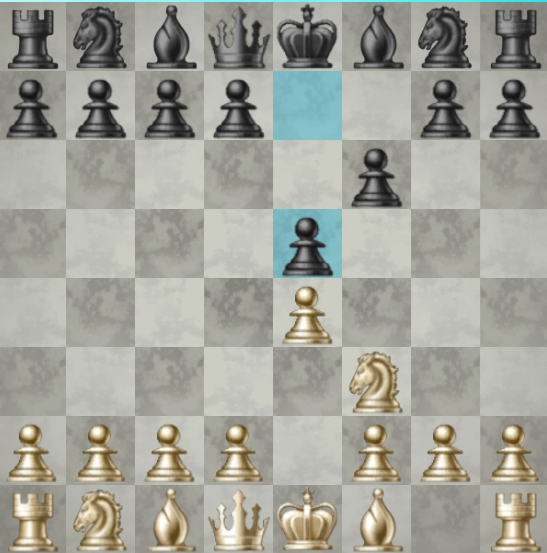
who plays this opening 😭
somebody review this game for me https://www.chess.com/game/live/164520093990
🔥
0 likes • 59m
@Andrew Wolfe wrong community
🔥
1 like • 59m
If he played e5 it would have been a bit better but seriously f6
🔥
1h •
BOGO Indian defense part 5
# ♟️ The Bogo-Indian Defense ## The 4.a3 Fianchetto System **1. d4 Nf6 2. c4 e6 3. Nf3 Bb4+ 4. a3** White immediately questions the bishop. This is principled. White says: > “If you check, you must decide.” And that decision shapes the entire middlegame. --- # 🌌 Why 4.a3 Is Important Compared to 4.Bd2 or 4.Nbd2: * White gains space on the queenside. * Prepares b4 expansion. * Forces structural clarification. * Often plans g3 and Bg2 afterward. This line frequently transposes into: * Catalan structures * Queen’s Gambit Declined * Hybrid Nimzo-type positions But the move order gives White useful flexibility. --- # 🧠 Black’s Critical Decision After 4.a3, Black has two main paths: ### 1️⃣ 4…Bxd2+ (Most solid) ### 2️⃣ 4…Be7 (Retreat) Rare: * 4…Bf8 (ultra rare) * 4…c5 (immediate strike) We go deep. --- # 🔥 Main Line: 4…Bxd2+ The most common and reliable. ### 5. Nbxd2 O-O 6. g3 d5 7. Bg2 c5 We often reach Catalan-like structures. Important detail: White recaptures with the knight — not the queen. This preserves flexibility and central control. --- ## Structure Overview White setup: * g3 * Bg2 * O-O * Qc2 * Rd1 * e4 break later Black setup: * …d5 * …c5 * …Nc6 * …b6 * Pressure on d4 This becomes positional and strategic. --- # 🧱 The Catalan-Type Position Example continuation: 1. d4 Nf6 2. c4 e6 3. Nf3 Bb4+ 4. a3 Bxd2+ 5. Nbxd2 O-O 6. g3 d5 7. Bg2 c5 8. O-O Nc6 9. dxc5 dxc4 Now tension defines the game. Key Themes: Black: * Active piece play * Queenside counterplay * Dark-square pressure White: * Long diagonal pressure * Central expansion * e4 break preparation --- # ⚔️ Alternative: 4…Be7 Instead of exchanging, Black retreats. ### 4…Be7 5. Nc3 d5 6. Bg5 O-O Now we often transpose into QGD structures. The move a3 supports: * b4 expansion * Prevents …Bb4 later This is slower but playable. --- # 🌊 Immediate Strike: 4…c5 Rare but interesting. 5. d5 exd5 6. cxd5 O-O This becomes Benoni-like. More tactical, less classical.
🔥
1 like • 1h
Thanks for sharing
🔥
1h •
Daily puzzle
Can you solve the daily chess puzzle? Good luck! https://www.chess.com/daily-chess-puzzle/2026-02-11
🔥
1 like • 1h
Thanks for sharing
1-10 of 6,204