Activity
Mon
Wed
Fri
Sun
Nov
Dec
Jan
Feb
Mar
Apr
May
Jun
Jul
Aug
Sep
Oct
What is this?
Less
More
America's Best Restaurants
611
Free
Magnetic Hospitality Operators
2
$1,500/m
Break the Algorithm
4.5k
Free
GC
Growthworks Community
23.9k
Free
Off-Market Social System
7.8k
$5/m
1 on 1 Coaching
8.1k
Free
10 contributions to Growthworks Community

Jul '23 •
Delegation Gamechanger
What's up Growthworks community. Aaron and this community gives so much value, I wanted to step up and share some of our own. Have you ever wanted to free yourself from micromanaging your team? I mean, not just passing off a couple tasks to a VA. But actually feel like you can delegate whole projects and feel secure passing the reigns on an entire new project and the outcomes that you want? We use a framework called the Impact Charter, to put everything they need in one place so you can make sure you're all transparently on the same page, and you can discuss any issues or opportunities before the sh*t hit's the fan. If you're familiar with traditional project management, you may have used or come across a project charter. It's a useful document to get buy in from all the various parties involved, but we can take it a step further. That's why we came up with the Impact Charter. The Impact Charter is a new take, instead of focusing on what needs to be done, it's focused on why it's important and the actual "impact" taking action is supposed to have. It's outcome-oriented work management. Here's the framework for a basic Impact Charter. It's a little wonky on Skool, so if you want a deeper explanation and a template, let me know in the comments. 1. Project Summary: Identify the primary 'job' that the project is being 'hired' to do. Your project name should reflect this. The summary should explain why this 'job' is important. 2. Impact Hypothesis: Formulate hypotheses about how accomplishing the 'job' will impact the users or beneficiaries. 3. Champions: Determine who will be the champion for the 'job' to be done and ensure they understand their role in fulfilling it. 4. North Star: This should embody the ultimate outcome that users or beneficiaries hope to achieve when the 'job' is done well. 5. Guidance System: The goals should guide how the 'job' is going to be done and what steps will be taken to achieve it. 6. Signals: Identify the signals that will indicate whether you're progressing toward completing the 'job'. These should include both quantitative (numerical) and qualitative (non-numerical) measures. 7. Context & Insights: Take into account the environment and context in which the 'job' is being done. This can greatly influence how well it's accomplished. 8. Narrative Background: This is the story behind why the 'job' needs to be done. It gives the reason behind the project and makes the 'job' relatable. 9. Stakeholders: Identify all the stakeholders who have a role in or can influence the 'job' to be done. This includes both internal and external stakeholders. 10. Shared Values: Identify the core values that will guide the execution of the 'job' and how these align with the stakeholders. 11. Situational Challenges and Advantages: Identify the challenges and advantages in the 'job' environment that could impact how it's accomplished. 12. Timeframes: This is about when the 'job' needs to be done. Establish clear start and end dates that align with the 'job' requirements. 13. Additional Opportunities and Possible Solutions: Identify other 'jobs' that could be done in the process of accomplishing the main one, or alternative ways the main 'job' could be done. 14. Selected Strategy: Formulate a clear strategy based on understanding the 'job' and how it can best be done. This includes identifying the benefits and risks associated with the chosen strategy. 15. Deliverables: These are the outputs that result from doing the 'job'. Identify what these will be, and how they will contribute to accomplishing the 'job'. 16. Estimated Cost: Determine what resources will be needed to do the 'job', and estimate their cost. 17. Implementation Strategy: Develop a plan for how the 'job' will be done, including task management and resource planning. 18. Roles: Identify who will do what in the process of accomplishing the 'job'. 19. Communication and Financial Plan: Develop plans for communication and finance that align with the needs of the 'job'. 20. Schedule: Create a timeline for the 'job' that includes key milestones and activities. 21. References and Credits: Acknowledge the sources of information or resources that contributed to defining the 'job' and planning its accomplishment. 22. Signed By: Ensure commitment from leadership to do the 'job' and fulfill the charter. 23. About Us and Contact Us: Provide information about the organization that's committed to doing the 'job', including contact information

0 likes • Oct '23
Excellent!

🚀
Sep '23 •
NEW - 4 Reasons You're Not Where You Want to Be
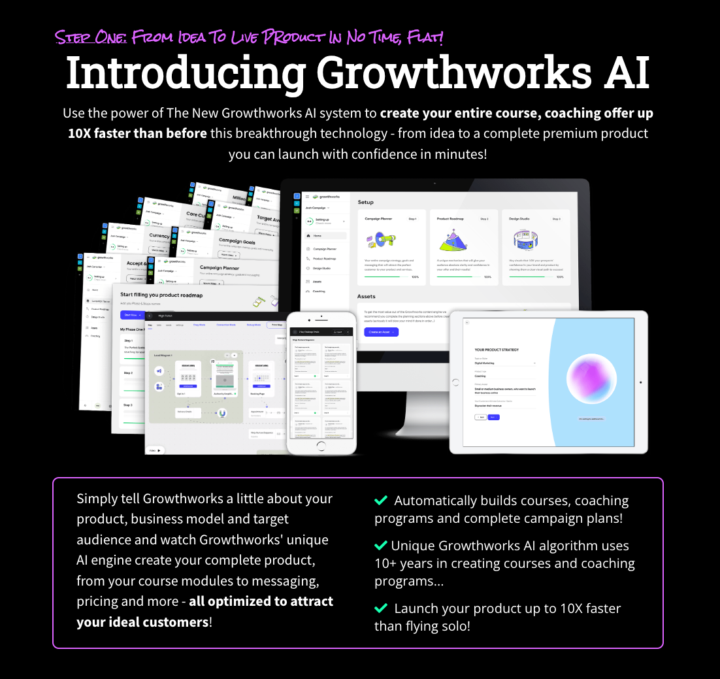
If you're new here and not clear on how this system works, I just launched this new long form page to help you understand how this 4 part system can help you like nothing else on the planet... First off, there are 4 main obstacles that prevent virtually every creator, consultant or entrepreneur looking to launch: (QUESTION: Please let me know which of the 4 you're stuck on right now) 1: CREATING A GOOD OFFER : I'm sure you're well aware that getting your ideas and expertise out of your head and into a well-structured program is extremely difficult! And that's just the beginning! You also have to name your product, craft a message in a way that stands out from the crowd and actually attracts buying customers, identify your target audience, decide on the right price and more! And here's the brutal truth: The offer is 99% of your success! No amount of content, emails, ad hacks or social media presence can make up for a poorly crafted offer - you have to get this right! 2: CONTENT: You realize that no matter which funnel, strategy or system you're using, there's a major obstacle standing in between you and your digital marketing dreams: An ocean of content. You need to write ads if you want to get clicks. Landing pages and sales page copy before you can launch. Emails and video templates...the list goes on! 3: THE TECH STUFF: Even If you're lucky enough to tackle these first two "Big Problems" - creating an effective offer, mapping out your program and creating a ton of content (course slides, lead magnets, email sequences, sales copy , etc.).... Now comes the third "Big Problem" - all the tech stuff! Landing pages, lead forms, automated nurture sequences, shopping carts, calendars, tags , Zaps and more... The truth is clear: All the time and effort you've poured into creating your product and crafting content won't add up to diddly squat until you are live and open for business! 4: MONEY! - When you're in startup mode, cash is tight!
3 likes • Sep '23
@Don Bethune wow sounds so simple. I’ll have to do some research on “Go High Level”. Not totally familiar with it. But I have Aaron’s programs though.
3 likes • Oct '23
@Barry Crewse thanks for the kick in the butt. I’ve got some Thinking to do.
🚀
Aug '23 •
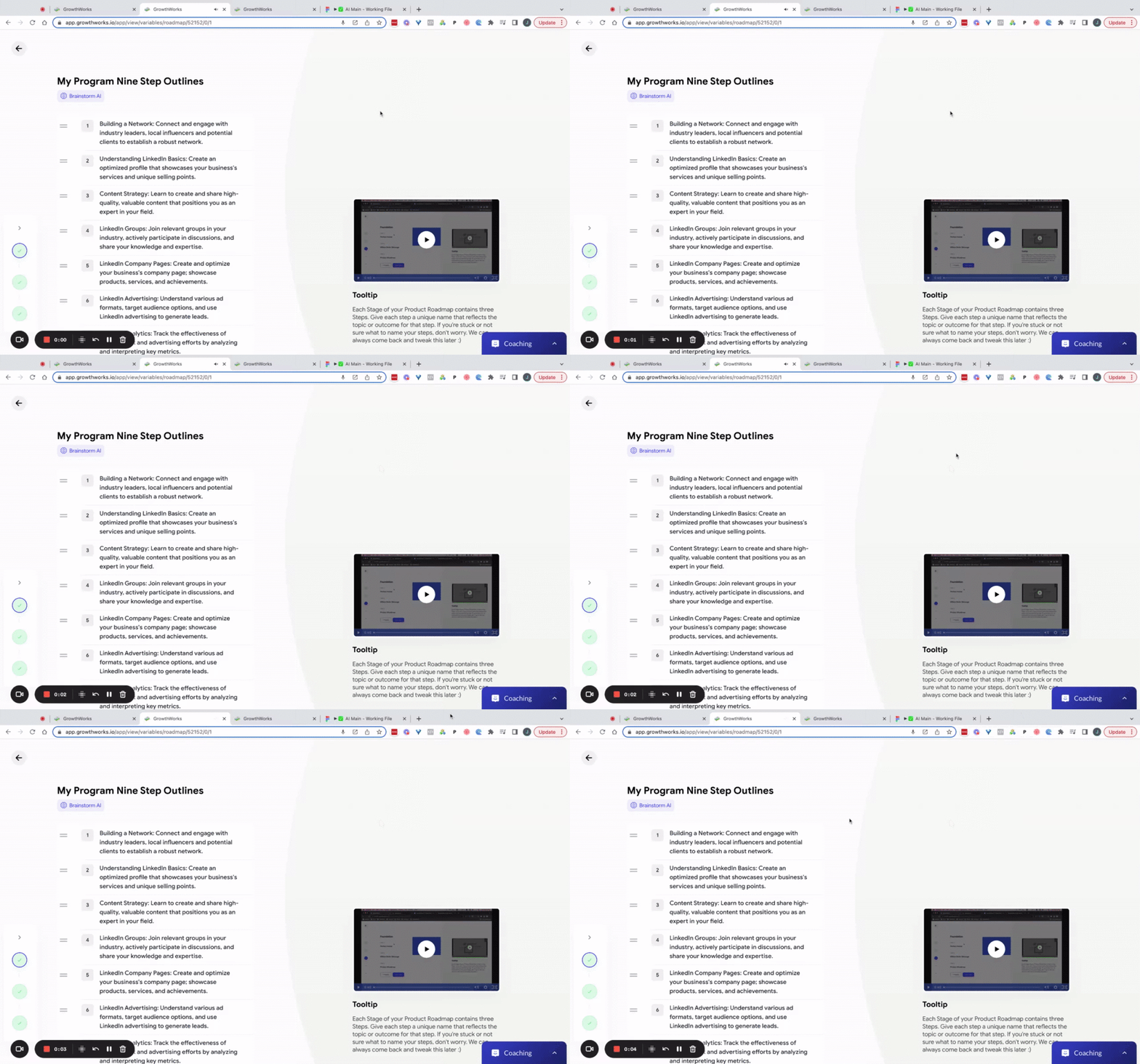
Brainstorm AI is Live!
Quick video (if you watch it at 2x speed) about how AI is currently working (generate & brainstorm) and what is coming next. Please as always feel free to leave feedback and we appreciate you all! https://www.loom.com/share/37355091be1e487ebfc47433cafb0ec5
3 likes • Aug '23
Very cool 😎
🚀
Jul '23 •
NEW: Growthworks AI Demo/Replay!
IMPORTANT: 1) Before you sign up, it's imperative that you watch the first 50 minutes of this video to ensure you understand how the new AI Engine works, when you'll get access and what's included! DO NOT sign up until you complete this portion of this video. 2) For this launch period, we are releasing 200 user licenses. If you attempt to sign up and there are no more spots, please be patient as we'll release another cohort of 200 in the next 7-10 days. We are doing this to ensure access, support and on-boarding goes smoothly. SEE THIS DOC for more information. SIGN UP: Coupon Code: GWAI
2 likes • Jul '23
😍😍😍

Jun '23 •
10 Life Lessons that Apply to Business...
Once a month, I have lunch with a good friend who works as a consultant for mid-sized businesses (50-150 employees). He travels across America helping companies establish business systems and processes to scale their growth. He's a really smart guy. Our lunch tradition is to pick a topic to talk about and agree to ONLY talk about that topic. In past lunches, we have talked about things like vacation destinations, our favorite cars, and what we remember about high school. Sticking to a single subject keeps our lunches lively and sparks fresh thoughts and ideas. Yesterday, we agreed that our ONLY discussion topic would revolve around "Life Lessons". These could come from our personal experiences or lessons we've learned from others or read in books. Before we left, we narrowed it down to our top 10: 1️⃣ If you have enough money to solve a problem, you don't have a problem. 2️⃣ If you spend too much time working on your weaknesses, all you end up with is a lot of strong weaknesses. It's better to strengthen your strengths. 3️⃣ Happiness isn’t based on possessions or power but on relationships with people you love and respect. 4️⃣ The problem is never the problem. The problem is that you don't know how to think about the problem. 5️⃣ Getting results doesn't take much time at all. It's not getting results that takes a lot of time. 6️⃣ Never do anything that would embarrass your parents. 7️⃣ You have the right to change your mind. Especially when you are exposed to new information. 8️⃣ You are solely responsible for the trajectory of your life. 9️⃣ Always do the right thing, even if it costs you money. 🔟 Never stop learning. How can these 10 things help you in your business? Share your thoughts in the comments:

1 like • Jun '23
These are all very powerful lessons. Great share
1-10 of 10

Active 2d ago
Joined Mar 25, 2023
ENFP
NYC
Powered by