Activity
Mon
Wed
Fri
Sun
Aug
Sep
Oct
Nov
Dec
Jan
Feb
Mar
Apr
May
Jun
What is this?
Less
More
Memberships
Web Profit School VIP - Beta
328 members • Free
Affiliate AI Agents
24 members • Free
Stephen B. Henry
54 members • Free
Skool Cafeteria
83 members • Free
The Beginner Affiliate
81 members • Free
Tony's Digital Marketing Lab
281 members • Free
5 contributions to Stephen B. Henry

🔥
16d •
📌 Coach or Therapist?
Understanding the Difference Matters Few topics create more confusion in the helping professions than the distinction between coaching and therapy. The lines can appear blurry from the outside. Both involve conversations. Both seek positive change. Both may involve discussing goals, relationships, fears, disappointments, and hopes for the future. Both are built upon trust. Because of these similarities, people sometimes assume they are essentially the same thing. They are not. Understanding the difference matters, not only for the people seeking support, but also for those providing it. It protects clients. It protects practitioners. And perhaps most importantly, it helps ensure people receive the kind of support they truly need. Different Purposes At the risk of oversimplifying, therapy often focuses on healing. Coaching often focuses on growth. Licensed therapists are trained to diagnose and treat mental health conditions. They help individuals navigate issues such as depression, anxiety disorders, trauma, grief, addiction, and other psychological challenges. Their education, supervision, licensure, and continuing requirements are designed to equip them for this important work. Coaches, on the other hand, typically work with people who are functioning reasonably well but want help moving from where they are to where they want to be. A coach might help someone: clarify goals, improve habits, build confidence, navigate career transitions, strengthen leadership skills, develop accountability, improve communication, or create a plan for the future. The emphasis is often on possibility. Not pathology. Forward movement rather than clinical treatment. That distinction is important. The Reality Is More Nuanced Of course, human beings do not arrive neatly categorized. Life is rarely that tidy. A client may seek coaching around productivity and reveal unresolved grief. Someone pursuing career advancement may disclose symptoms of severe anxiety. A person focused on relationship goals may describe experiences rooted in past trauma.


1 like • 12d
@Stephen B. Henry Life is a challenge for sure and for certain. Therapy may "brand you" and prevent one from persevering and growing through a situation then moving on. Coaching may be too shallow never really working past the routines by developing the skills to grow into your strengths while developing one's weaknesses. Consider a seed when dropped into the earth. It first dies, creating roots, stems and leaves. If not hindered, it produces a flower and then bears fruit yielding seeds. In all this, there is a purpose and a time. I believe that people lose understanding and direction in part, because they never planted a seed in the earth, watched it grow, nurtured it, and tasted it's fruit. Try it out this year! Plant a seed in the earth, a small patch of ground, dirt in pot on a windowsill. Water it, watch it grow, feel the connection of watching something grow. You may be surprised.
🔥
May 19 •
📌 Fixed Tools In A Moving World
Part 1: The Problem Is Not The Tool We are living through an unusual moment in technological history. People are racing to build fixed systems around something that changes almost daily. Prompt packs. Automated workflows. One-purpose bots. "Done for you" A.I. systems. Pre-built solutions promising permanent shortcuts. And yet the intelligence underneath all of it keeps evolving. That creates an interesting tension. A tool built six months ago may already reflect outdated assumptions, outdated limitations, or outdated interaction methods. Meanwhile, those engaging conversationally and directly with modern LLMs often benefit from continuous improvements without changing anything except the quality of the conversation itself. The issue is not that tools are bad. Tools can be useful. Automation can save time. Structure can reduce overwhelm. The real problem begins when people mistake temporary systems for permanent intelligence. Conversation adapts. Rigid systems often do not. That is why conversational interaction matters so much. Not because it is trendy. Not because it is "easier". But because it remains flexible in a moving environment. The future may not belong to those who collect the most tools. It may belong to those who remain adaptable enough to grow alongside the intelligence itself. Over the coming days, we will be exploring these ideas together here in the Your Pathway To Growth forum; one post, one perspective, and one conversation at a time. As this 12-part series unfolds, the complete collection will also be added to a dedicated course module inside Your Pathway To Growth classroom (Premium tier to access) so members can revisit, reflect upon, and explore the full journey in one place.

1 like • May 20
The ideas of application and delivery methods have been consistent in the ever changing arena of technology. As competitive entrepreneurs drive one another and change the delivery methods, it can feel like advancement. It’s the creation of a half baked idea which reveals the actual leap forward. The imperfection becomes the missing stepping stone to creative excellence.

3 likes • May 20
This morning by 5:30 A.M. I completed an affiliate funnel for the Micro Course Maker GPT app and it works! My second offer ever and I stayed up all night to have it ready for the W+ launch time at 8A.M.. It may seem a small thing to some, but it required set up the autoresponder, (needed an optin form), setup the bonus on W+, setup the site pages, cloak the links, you know the rest. I slept a little, got up too early to activate the funnel, hit the sack about 8:30 A.M. in a buzz LOL. Feels great. Now to figure out this traffic thing, ha ha.
May 19 •
Almost There.... Almost Where I am Supposed To Be
Nine days ago today, I had the pleasure of reading an excellent and inspiring article posted by Stephen B. Henry found here: https://www.skool.com/your-pathway-to-growth-5059/an-old-perspective-on-new-coaching. I have found the principles shared to be true and right on point. This had been realized many times during my career working in varies industries and with many types of people having a wide spread of skills and education. Currently, we are developing an interesting system to launch our online business that will be specific while allowing anyone to learn and use the framework to create almost any goal they choose and feel good about doing it. I am a few weeks from completion and will let you know when ready, but, in the mean time...... One of the tools being used to develop this framework is new (about 9 days ago) and will allow a new level of learning that is a game changer. I have been allowed to share it with you here: https://passiverise.com/95er where you can try it out. The bridge page mildly touches on it and offers a demo to try it our after submitting the opt-in form. At the end of the module is an affiliate link to get this app and will be active at 8:00 A.M. ET USA, or 1 P.M. UKT.
2
0
🔥
May 10 •
📌 An Old Perspective On New Coaching
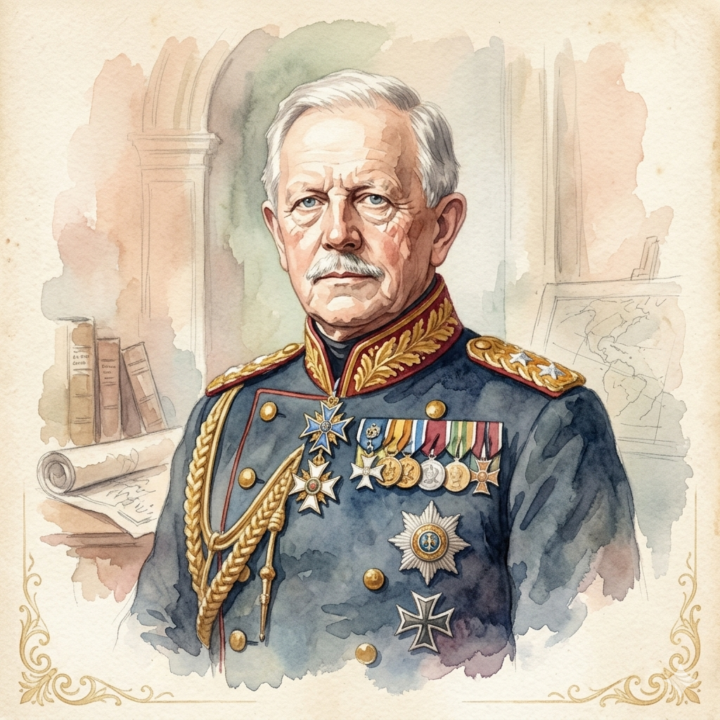
The great Prussian Field Marshal Helmuth von Moltke the Elder once observed that no military plan survives first contact with the enemy. The phrase is often repeated in simplified form, but the deeper meaning is what matters. Reality changes things. Human beings change things. Conditions shift. Assumptions fail. New information emerges. Adaptation becomes more important than rigid adherence to the original plan. I have been thinking about how perfectly that applies to coaching, mentoring, consulting, and even teaching in our modern world. Particularly now, in an age overflowing with blueprints, frameworks, systems, and step-by-step certainty. No Detailed Coaching Blueprint Survives First Contact with the Client The modern coaching industry loves structure. Templates. Roadmaps. Funnels. Five-step systems. Seven-step transformations. The promise that if someone simply follows the prescribed sequence, the outcome is inevitable. There is understandable appeal in this. People want certainty. Coaches want clarity in what they offer. Clients want reassurance that there is a path forward. And structure does matter. A good framework can save time, reduce confusion, and provide orientation when someone feels lost. But there is a quiet problem hiding beneath the surface of many modern coaching models: Human beings are not standardized environments. And the moment a real client enters the process, reality begins reshaping the blueprint. Helmuth von Moltke understood this in warfare more than 150 years ago. No matter how brilliant the original strategy, the first real encounter changes the conditions. Unexpected resistance appears. Terrain matters. Morale matters. Timing matters. Individual decisions matter. The plan must adapt or fail. Coaching is not war, thankfully, but it shares something important with it: Both involve human complexity. Many coaches are trained to believe the strength of their work lies in the precision of their system. But in practice, the strength often lies elsewhere: In their ability to respond. To notice. To adapt. To recognize that the person sitting in front of them is not the theoretical client the blueprint was designed around.
2 likes • May 11
@Stephen B. Henry Good post, thank you. I have seen this in action and have had the privilege of coaching others through this very thing. Change is so tough for some. If I may, when ready, can I include a link to my new system that includes some of these principles?
1-5 of 5

Active 1d ago
Joined Apr 30, 2026