Activity
Mon
Wed
Fri
Sun
Aug
Sep
Oct
Nov
Dec
Jan
Feb
Mar
Apr
May
Jun
Jul
What is this?
Less
More
Owned by Loke
Join a space that honors Hawaiʻi 🌺 UNLOCK local insight, DISCOVER hidden gems, and help preserve the true spirit of the islands.
Memberships
Full Stack Freedom
1.2k members • Free
All Dogs Past And Present
10 members • Free
Peace & Healing through Prayer
359 members • Free
Sun, Sand & Serenity
14 members • Free
The AI Advantage
126.6k members • Free
Free Skool Course
71.5k members • $1
Skoolers
165.3k members • Free
ECOM MRR (1000 Recurring Mbrs)
113 members • $197/month
12 contributions to Loke’s Hale of Inspiration
Apr 17 •
Words of Wisdom our Tutu (Grandparents) Taught Us
I would like to invite you to share an ‘olelo (Hawaiian word) or a phrase you grew up hearing at home and what it meant to your ‘ohana (family) Drop it in the comments with the story behind it…🤙🏽🌺🤙🏽
0 likes • Apr 18
@Jule Lord do you remember any word or phrase from when you were growing up? Does not have to be family
0 likes • 20h
@Jule Lord Mahalo for sharing. I am happy for you that you received the foundational principle of 'Ohana from the Disney film. I did not watch any of Lilo and Stitch. You have inspired me to write a piece on ho'oponopono because the Joe Vitale interpretation of Ho'oponopono has its place but is cut off from the full representation of what ho'oponopono is. Mahalo nui loa for the inspiration. And a note on the deeper meaning of Aloha, is namaste. Another piece I will write about.
4d •
Fern Anuenue Holland, County Councilwoman from Kauai writes
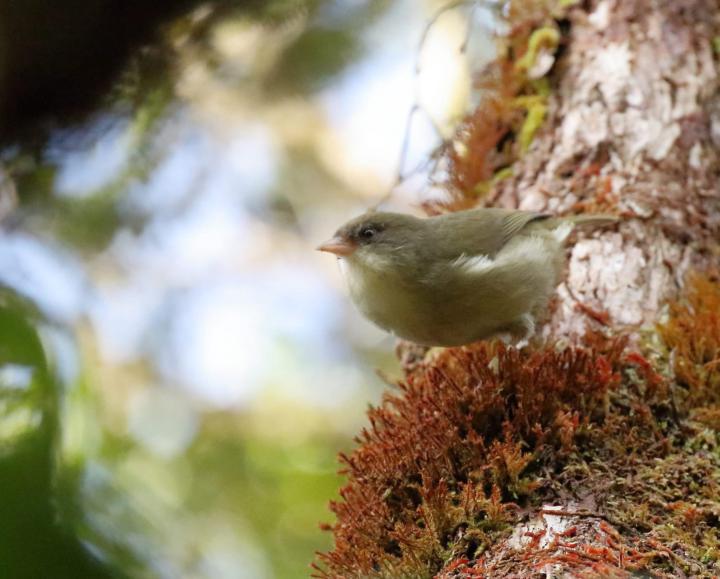
Today was, without question, the hardest briefing I have experienced as a County Councilmember. About six weeks ago, I received a call from the Forest Bird Recovery Coordinator with the Hawaiʻi Department of Fish and Wildlife. As an ecologist, I understood immediately what the data meant. I cried to the point that I could barely continue the conversation. After that call, I requested that our Council receive a formal briefing because I believed every one of my colleagues needed to hear directly from the scientists who have dedicated their lives to protecting Kauaʻi's native forest birds. Today, they did. The news is heartbreaking. Our native forest birds are disappearing. For decades, scientists have monitored mosquito populations throughout the Alakaʻi Plateau because the spread of avian malaria has been the single greatest threat to our remaining honeycreepers. Historically, even one mosquito captured in a monitoring trap overnight was cause for concern, signaling that malaria was creeping higher into the mountains. Then everything changed. Beginning in October 2025, those same monitoring traps began catching dozens, and sometimes hundreds, of mosquitoes in a single night. The mosquito population exploded. With it came avian malaria. The consequences have been catastrophic. The ʻAkikiki has not been observed in the wild since last fall. Scientists now believe it is extinct in the wild on Kauaʻi. Just 39 individuals remain in conservation facilities on Maui and Hawaiʻi Island. They are now the last hope for the survival of this remarkable species. Last month, biologists located a single ʻAkekeʻe nest north of Mohihi. Based on current surveys, they now believe the species is functionally extinct in the wild. Only one known female remains on Kauaʻi, possibly with a single mate. She laid three eggs this year. This week, the recovery team confirmed that none of those eggs hatched. Even species that once numbered in the thousands are collapsing. In 2023, scientists estimated there were approximately 3,500 ʻAnianiau and 9,000 Kauaʻi ʻAmakihi remaining. Since November, they believe the vast majority have been lost. Current estimates suggest fewer than 100 individuals of each species remain.
2
0
4d •
Island Life
Our islands are fragile ecosystems. It does not take much to completely wipe out species. I remember reading in National Geographic years ago the rate of extinction on species on these islands. There are many reasons. The loss of these birds on Kauai are devastating. I know what it is like to experience the sudden silence where the birds sang their beautiful songs. I live in an alpine forest where flocks of birds used to flutter from tree to tree. And then our next door neighbor bulldozed the entire forest behind her hale (house) so she could walk back there. I could not believe she laughed as she shared that with one of her friends at the post office. I cried inside. What took hundreds of years to grow from barren lava to the ohi’a tree sprouting, to the leaves falling making soil for all the other species like ferns and all the native plants, making homes for all the insects and snails and on. Gone in one day. And then the devastating silence. Where is the cries on i’o, where is the screech at night of pueo? Where are the flocks of birds? It has taken years and slowly a few of the birds return. But not like before. People move to Hawaii and love the beauty and then buy a lot a bulldoze it down! When I moved here 34 years ago, people created narrow pathways through the forest to walk through creating a beautiful experience becoming one with the forest. What is your mana’o of this?
May 1 •
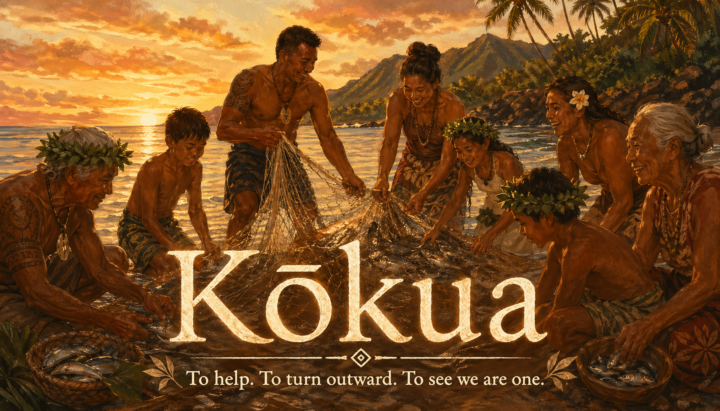
Kōkua — The First Question You Ask
Something happened at work recently that I haven't been able to stop thinking about. Our entire refrigeration system went down. Master controller failure. No warning. Just — gone. While my coworkers and I were scrambling, stressed, trying to do right by everyone — customers came through the door. And what I heard stopped me cold. "Are you going out of business?" Not — "Are you okay?" Not — "Is there anything I can do?" Not — "Here's my number if you need help." Just concern for themselves. Their cheese. Their schedule. Their inconvenience. And I thought — this is exactly what we've been losing. There's a word for what was missing in that moment. Kōkua. It means to help. But more than that, it means you already understand that we are connected — that your neighbor's problem is worth your attention, that when something goes wrong around you, the first question you ask is not "what do I lose?" but "How can I help?" This is one of the foundational ways of life here in Hawaiʻi. It comes from knowing we are not just I — we are we. ʻOhana. And ʻOhana doesn't stop at your front door. It reaches into the neighborhood, the community, the store where you shop, the beach you share. It's why we call each other Bradah and Sistah. Uncle. Auntie. Tūtū — even with people we've just met. Because we already see each other as part of the same whole. I'm not telling this story to shame anyone. Many people who've moved here simply were never taught this. The culture they came from centers the individual — my needs, my comfort, my bottom line. But that's not how we do things here. When things go down — when the power goes out, when the store floods, when your neighbor's roof comes off in a storm — you turn outward, not inward. It costs nothing. And it means everything. 💬 Was kōkua modeled for you growing up — or did island life teach it to you? Share your story below. Let's keep this alive together.
0 likes • May 11
@Ginger Vogler yes, big events challenge us! While taking the action needed, emotions get squashed. Afterwards, we get to release and reset. Resetting also means reflecting on it all and processing what triggered us. If we didn’t have tgese challenges, we may never grow! 💕
Mar 31 •
🌊 Vision Post Welcome – The Vision 🚀
[IMPORTANT READ] Mahalo nui loa! I want to take a moment to thank each and every one of you who has already joined Loke’s Hale of Inspiration. 🌺 We are all on the same canoe, my late husband Bruddah Kei would say...everyone called him Bruddah Kei because they could not say his name, Keihanaikukauakahihulihe'ekahauanele Together, the goal is simple… As our island goes through the changes with many of our local people unable to afford to live here and move away. At the same time, the people moving here do not know yet the local ways and how we live as us and we. We need to create a space that feels like a home, like on Bruddah Kei and my lanai where everyone were welcome to share kaukau and talk story. Or like how we did old time days at the boat ramp at Honaunau where my hanai Bruddah Johnny Mahoe Cho had his picnic table where he fed everyone and we all listened to each other's stories. A place where we all can share what is happening in our world and how we can kokua, we all can collaborate and inspire each other to Kui I Kanu'u, strive for the highest. A place where people can come to slow down, reconnect, and experience the beauty of life through the lens of us and we. This is more than a group. It is a feeling.A rhythm.A return to what matters. Think of this space as your daily exhale. Our online picnic table next to the ocean. A place where you can step away from the noise and reconnect with something deeper—through nature, reflection, and the art of noticing. What you'll experience in this community where locals can be locals • Moments of beauty inspired by Hawaii 🌊 • Gentle reminders to slow down and be present 🌿 • Reflections that shift perspective and bring clarity 💫 • A supportive space where you can simply be 🤍 Together we’re building a community of people who want to live more intentionally, notice more deeply, and feel more connected. With that in mind, this is our first main focus as a group: 🔥 Practice the art of maka'ala, observing your environment in everyday life
3 likes • Apr 11
Aloha, I am Loke, I have lived Hawai'i for the last 34 years of my life. I have noticed the trees and plants where I live have grown 2 feet this week after the shock of the 19" of rain we got 3 weeks ago. It hadn't rained in a year and 3 months before that and there was very little growth during that time. So fun to see!!
1-10 of 12
@loke-keihanaikukauakahihuliheekahaunaele-keanaaina-9202
When I came to Hawai’i, I was seeking a better way to live on the our planet 🌎. I found it living the Way of the Kanaka Maoli with Bruddah Kei
Active 20h ago
Joined Mar 11, 2026
Powered by