Activity
Mon
Wed
Fri
Sun
Aug
Sep
Oct
Nov
Dec
Jan
Feb
Mar
Apr
May
Jun
What is this?
Less
More
Memberships
Automation-Tribe-Free
4.4k members • Free
Davie's Free Ecom Course
73k members • Free
The Commission Club
251 members • Free
FT
Free Traffic Group
476 members • Free
Affiliate Success Society
406 members • Free
The Income Launchpad
439 members • Free
The Passive iNcome Lab
7.2k members • Free
REVENUE REVOLUTION
10.4k members • Free
Super Affiliate Academy (Free)
12.1k members • Free
14 contributions to Free Traffic Group

2d •
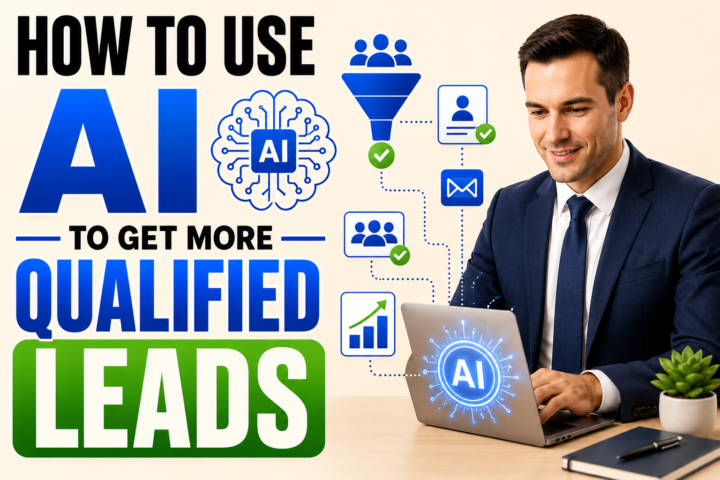
How To Use AI To Get More Qualified Leads
Most internet marketers do not have a traffic problem. They have a qualified lead problem. They may get clicks, visitors, followers, video views, or social media attention, but those numbers do not always turn into real buyers, email subscribers, booked calls, or paying customers. That is why one of the most common questions marketers are asking today is: “How can I use AI to get more qualified leads?” This question matters because leads are the lifeblood of every online business. Without leads, there is no list. Without a list, there is no follow-up. Without follow-up, most sales are lost. AI gives marketers a faster way to find the right people, understand what they want, create better messages, and follow up with them more effectively. What Is A Qualified Lead? A qualified lead is not just a random person who clicks on your link. A qualified lead is someone who has a real interest in your topic, problem, product, or service. They are more likely to take action because they already have a need, desire, or pain point connected to what you offer. For example, a person searching “how to build an email list for affiliate marketing” is more qualified than someone searching “make money online.” The first person has a specific problem. They know what they want. They are closer to taking action. AI helps you identify these deeper buying signals. Instead of guessing what people want, AI can help you discover their questions, search phrases, pain points, objections, and interests. Why Old Lead Generation Methods Are Getting Harder In the past, many marketers focused on simple traffic methods. They posted links, ran ads, shared content, joined groups, or used search engine optimization. Some of those methods still work, but competition is much higher now. People are exposed to more ads, more emails, more videos, and more offers every day. This makes them harder to impress and slower to trust. A basic headline or generic lead magnet is often not enough anymore. AI helps solve this problem by making your marketing more targeted. Instead of creating one message for everyone, you can create specific messages for different audiences, traffic sources, problems, and stages of awareness.
0
0
23d •
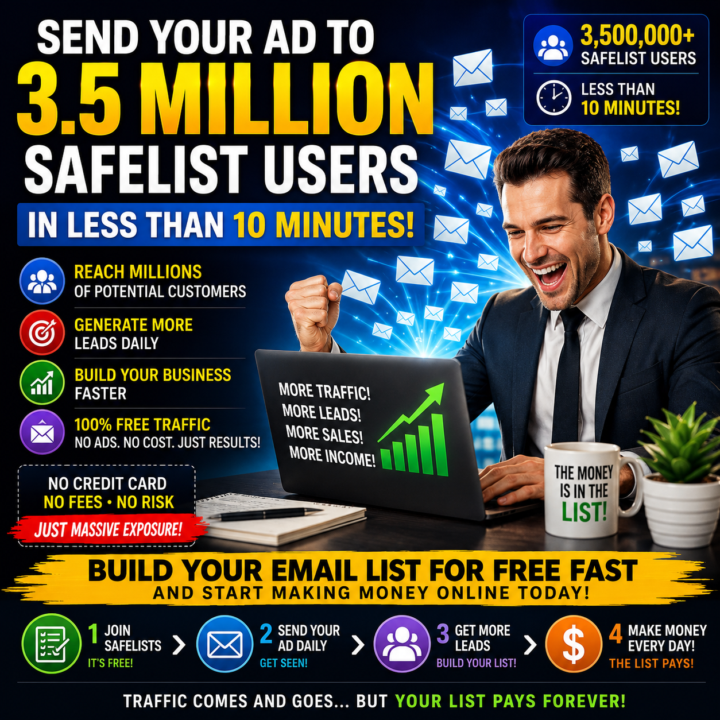
Send Your AD to 3.5 Million Safelist Members
How Safelists Can Help You Build a Free Email List Fast and Start Making Money Online If you're looking for one of the fastest and most affordable ways to start making money online, there is one strategy that successful marketers have used for decades: building an email list. Click Here To Get Our Free Report On How To Send Your AD to 3.5 Million Safelist Members You've probably heard the phrase countless times: The money is in the list. The reason this saying has survived for so many years is simple. Traffic comes and goes. Search engine rankings change. Social media algorithms shift overnight. Paid advertising costs continue to rise. But your email list belongs to you. When someone joins your email list, you gain the ability to communicate with that person repeatedly. You can build trust, provide value, recommend products, promote services, and generate sales again and again from a single subscriber. That's why building an email list should be your first priority if you're serious about making money online. Why Most Free Traffic Methods Fail Many beginners spend months trying to get free traffic from search engines, social media platforms, forums, or video sites. While these methods can work, they often require a significant amount of time and effort before producing results. Even worse, many visitors leave your website and never return. Imagine getting 1,000 visitors to your website and having 990 of them disappear forever. That's exactly what happens when you focus only on traffic instead of list building. Professional marketers understand that collecting email subscribers is far more valuable than getting random visitors. Instead of chasing traffic every day, they build an audience they can reach whenever they want. The Hidden Power of Safelists Safelists are one of the most overlooked free traffic sources available today. A safelist is a community where members agree to receive promotional emails from other members. In exchange, they can send their own advertisements to the community.
0
0
28d •
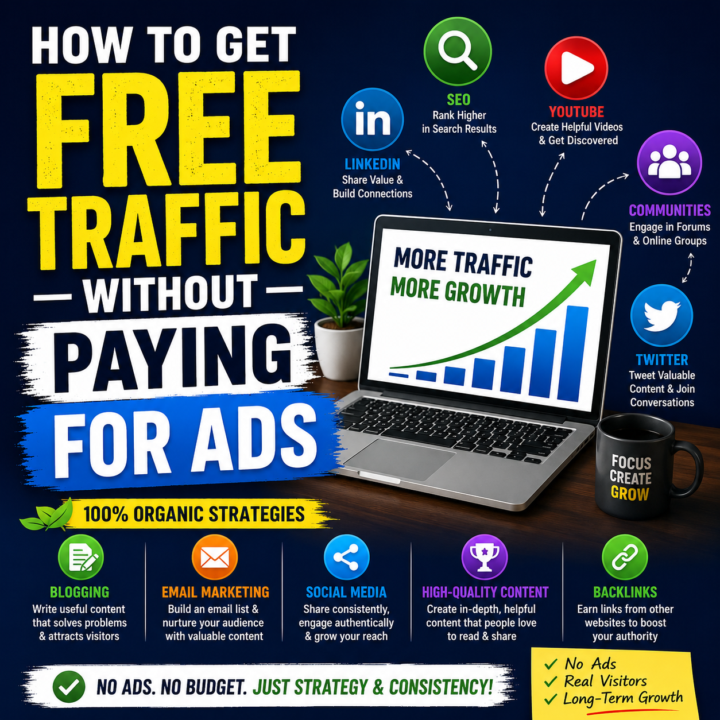
How Do I Get Free Traffic Without Paying For Ads
Most people who get started online make the same mistake. They believe they need a large advertising budget before they can make money online. Click Here For Cheap Buyer's Traffic That's exactly what I thought when I first started. Everywhere you look, someone is talking about Facebook Ads, Google Ads, YouTube Ads, solo ads, native ads, and countless other paid traffic methods. While paid advertising can certainly work, it also comes with risk. Spend money incorrectly and your budget can disappear quickly with little to show for it. What many beginners don't realize is that some of the most successful online marketers built their businesses using free traffic. Free traffic takes more effort than paid advertising, but it can become a long-term asset that continues producing results for months or even years. Think about it. A helpful blog post can attract visitors from Google long after it's published. A YouTube video can continue generating views every day. A Pinterest pin can send traffic to your website for months. A useful answer on Quora can bring targeted visitors who are already interested in your topic. The best part? You don't have to pay for every click. Instead of renting traffic through advertising, you're building digital assets that can keep working for you around the clock. One of the simplest ways to start is by creating content that answers questions people are already asking. For example: How do I start affiliate marketing? How do I get traffic to my website? What are the best ways to make money online? How do I build an email list? When you consistently provide useful answers, people begin to see you as a trusted resource. Trust is one of the most valuable assets you can build online. Social media platforms also provide huge opportunities. Facebook groups, Instagram, YouTube, Pinterest, Reddit, and other communities are filled with people looking for information and solutions.
Jun 2 •
🚀 Submit Your Ad To 383,986 Active Members For FREE Every Day!
Looking for more traffic, leads, and sales? Get your business, website, offer, or affiliate link in front of 383,986 active members at absolutely no cost. ✅ Free Daily Advertising ✅ Reach Thousands Of Potential Buyers ✅ Get More Website Visitors ✅ Generate More Leads & Sales ✅ Start Promoting In Minutes Click Here Why pay for expensive ads when you can get free exposure every day? Submit your ad now and start growing your business online today!
1
0

Jun 2 •
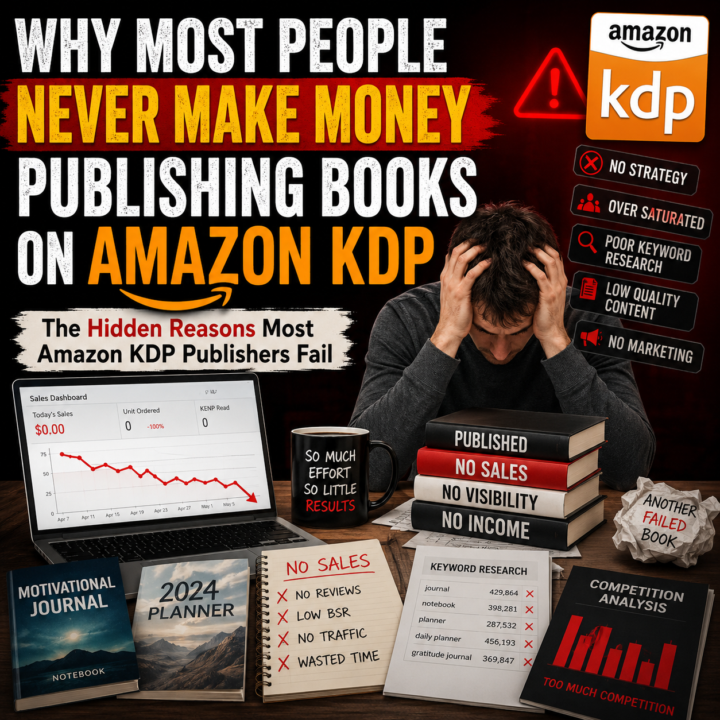
Why Most People Never Make Money Publishing Books on Amazon KDP
The Hidden Reasons Most Amazon KDP Publishers Fail Every year, thousands of people sign up for Amazon Kindle Direct Publishing (KDP) with dreams of creating passive income. They watch videos showing authors making hundreds, thousands, or even tens of thousands of dollars per month from self-published books. Unfortunately, the vast majority never make any meaningful income. Try Our Custom AI Agent KDP Low-Competition Keyword Finder — It’s FREE! Get Instant Access Without Joining an Email List! Click Here Many new publishers upload book after book, spend hours creating covers, write content, publish their work, and then wait for sales that never come. The problem is usually not the book. The problem is that most publishers completely ignore one of the most important parts of the entire process: keyword research. Without proper keyword research, even an excellent book can disappear into Amazon's massive marketplace where nobody ever sees it. At the same time, many publishers accidentally publish books in risky niches or unsafe topics that can trigger Amazon reviews, account suspensions, or even permanent account closures. The result? Months of wasted effort, lost income, and frustration. Fortunately, there is a much smarter solution. Our FREE AI KDP Keyword Finder Agent was specifically designed to help publishers discover profitable opportunities, avoid dangerous mistakes, and dramatically improve their chances of building long-term monthly royalty income. Why Keyword Research Is Everything on Amazon KDP Amazon is essentially a giant search engine. When customers want a book, they type keywords into Amazon's search bar. Examples include: * Weight Loss for Seniors * Keto Cookbook * Fantasy Adventure Novel * Anxiety Workbook * Coloring Books for Adults * Dog Training Guide Amazon then decides which books to display. If your book targets the wrong keywords, customers may never find it. Many new publishers make one of these common mistakes:
0
0
1-10 of 14
@larry-kearney-6350
Full-time online marketer with 30+ years in SEO, video, email, and affiliate marketing. Earned over $100K helping businesses grow online.
Active 2d ago
Joined May 26, 2026