Activity
Mon
Wed
Fri
Sun
Aug
Sep
Oct
Nov
Dec
Jan
Feb
Mar
Apr
May
Jun
Jul
What is this?
Less
More
Memberships
Synergy4life Credit Academy
94 members • Free
Credit Repair for Tax Pros
56 members • Free
Ask A Debt Collector
2.8k members • $47/m
The Virtual Bookkeeping Series
85k members • Free
Limitless Wealth Builders
426 members • Free
2 contributions to Synergy4life Credit Academy

17d •
🚀Welcome to the Family! Let’s Build Together🚀
Hey everyone! A massive welcome to all our newest members who have officially joined our community recently! 👋✨ We didn’t build this space for people to just sit on the sidelines, and watch others win. This community is a powerful network, and it thrives when we actively connect, collaborate, and grow together. Whether you are here to scale your business, master your credit, or unlock new strategies, this is Day 1, and your momentum starts right here, right now. 📩To Our Newest Members: Introduce Yourself! Don't be shy—the fastest way to get massive results is to get involved and get noticed. Drop a comment below and let us know: • What is your name and where are you tuning in from? 🌎 • What is your current business/industry, or what are you planning to launch? 💼 • Drop a GIF that matches your current energy today! ⚡ 🤝🏼To Our OG & Existing Members: Let’s Connect! To our seasoned members who are already crushing it, you know how much power is in this room. We want you open to sharing! Drop some wisdom, share a recent win, or say hello to the fresh faces. Let’s use this thread to network, find potential collaboration partners, and build connections that actually move the needle. Drop your introduction or say hello below—let’s lock in and win together! 👇🏼

1 like • 17d
My name is Kim and I am from the Dfw area. I am a tax preparer as well as a part of credit repair. I am also a life coach. Taxes are great but I’m looking to scale my credit repair business to the fullest. My energy today is 🤯
Jun 8 •
🔥 Skool Training: The Verified Account Comeback Play
One of the biggest mistakes in credit repair is treating “verified as accurate” like the end of the road. It’s not always the end. Sometimes it’s where the real strategy starts. When an account comes back verified, don’t panic and don’t just resend the same letter. Slow down and ask: What exactly did they verify? Balance? Status? Payment history? DOFD? Date updated? Remarks? Sold/transferred language? Ownership? Bureau-to-bureau differences? A verified response does not automatically mean every part of the account is reporting correctly. It means they claim they investigated and confirmed the information. Your job is to compare the response against the actual reporting. Weak Round 2: “Please reinvestigate this account.” Stronger Round 2: “This account was previously disputed, but the response failed to address the specific reporting conflicts. Experian is reporting a balance. Equifax is reporting $0. TransUnion is reporting the account as charged off with recent payment history updates. Please explain how this was verified as accurate when the balance, status, and payment history do not report consistently across the bureaus.” See the difference? One is generic. The other is based on what still doesn’t line up. That’s the comeback play. The workflow: 1. Review the bureau response 2. Compare the account before and after the dispute 3. Identify what changed, stayed the same, or was ignored 4. Compare all 3 bureaus 5. Decide the next move: bureau follow-up, furnisher dispute, MOV, CFPB, FTC, AG, BBB, or documentation request 6. Track everything A verified account is not always a loss. Sometimes it shows you exactly where to apply pressure next. Action Step: Pick one verified account and ask: What still looks inaccurate, incomplete, outdated, or inconsistent? Drop your answer below or tell me which part of verified responses gives you the most trouble.
1 like • 20d
I believe nothing like automated
1-2 of 2
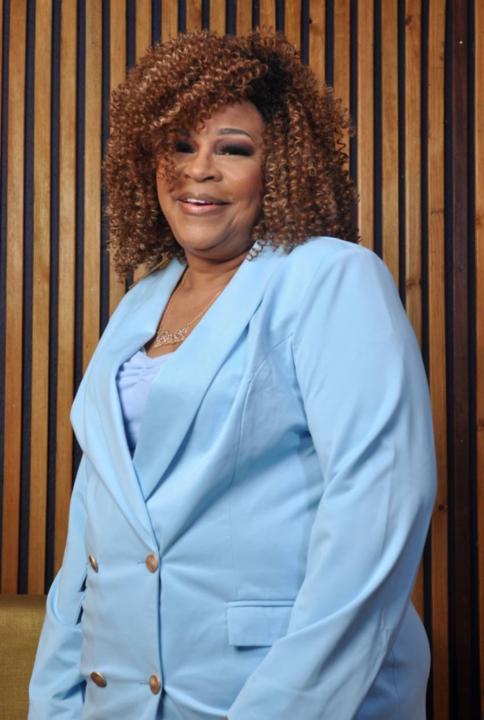
@kym-wallace-2996
I’m very passionate about what I do, I’m a mom, a travel advisor and a finance guru for over 30 yrs
Active 16d ago
Joined Jun 19, 2026