Activity
Mon
Wed
Fri
Sun
Nov
Dec
Jan
Feb
Mar
Apr
May
Jun
Jul
Aug
Sep
What is this?
Less
More
Owned by Krasimi
This is the Metafusion community blending Technology with Consciousness, Science with Metaphysics. We connect what seems to be polarity into one idea.
Skoolers
154.1k
Free
High Vibe Tribe
82.9k
Free
125 contributions to Allistar Center

8d •
I analysed 3,382 crop formations statistically — here's the full report
I've had an archive of crop formation diagrams sitting around for a while — 31 annual collections covering 1990 to 2020, 3,382 formations in total. I finally ran a proper analysis on it and I'm sharing everything. How it was done I wrote down every hypothesis and its pass/fail threshold before running any test, so I couldn't move the goalposts once I saw results. Every test is logged — 148 of them — including the ones that found nothing. Each positive claim had to beat a null model built to mimic ordinary design choices. What didn't hold up - No golden ratio. φ appears in 6% of formations where chance predicts 8.2% — it's less common than random. - No Fibonacci in element counts. - None of 16 tested constants (√2, √3, π, harmonic ratios) came out above chance. - No match to 4D polytope projections — tesseract, 600-cell, none of them. - Not language-like: no Zipf's law, and the apparent "grammar" turned out to be just "small shapes sit inside big shapes". What did hold up - Complexity roughly tripled across 30 years, with a clear break around 1999. It survives every control I could throw at it. - Six-fold symmetry went from 2.5% of formations in the 90s to 10% after 2010. - Elements are laid out in a consistent order from the centre outwards — reading outward, the next element is far more predictable than chance. The honest caveat, stated at the top of the report: these are measurements of diagrams drawn by an illustrator, not of the fields themselves. So this is evidence about the drawings. That cuts both ways though — a person drawing with digital tools would tidy proportions toward clean ratios, not away from them. Their absence is therefore meaningful. Report, code, raw test log and the pre-registration are all public: https://xxxallistarxxx-one.github.io/crop-formation-analysis/ I also documented three mistakes I made in my own control models and how I caught them — that's in there too, rather than quietly fixed.

1 like • 8d
@Gabriel Presso Great idea The projections from higher dimensions — that was Phase 6. 131 projections of Platonic/Archimedean solids, all six regular 4-polytopes, n-cube/n-simplex Petrie polygons and 3-sphere slices, matched on symmetry → ring signature → shape. Result: nothing survived its control. No need to repeat it. Topological analysis and graph networks are genuinely new, and we already have the raw material, running it now. This research open an exploration to 600, 120 and all other cells and making full page with the result where people can explore it from many different points of view. There are interesting revelations there, will finalize it very soon.
26d •
Missed you all for a bit — here's what's new.
Been heads-down in the lab for weeks instead of posting — long overdue for an update. Here's part of what's happened since I went quiet, more to come. Claude helped me calibrate and connect one of my VNAs to the PC software and run some tests. The cones showed an amazing S11 (Return Loss) at a resonant frequency of 2.85 MHz. Later, when using a Slayer circuit with a MOSFET, the LED got brighter at that same frequency — which independently confirmed the measurement. S11 tells you how much power sent into the antenna is actually absorbed versus reflected back to the source. You can see the numbers in the first image, and in the second image you can get a sense of what a value like -61 dB actually means in practice. The third image shows the Sierpinski gasket Merkabah. You can see multiple spikes with good S11, but they sit well above what a standard oscilloscope or signal generator can handle — most of that gear only works up to 80–90 MHz, so it's essentially blind above that range. I also need to rule out contamination from the leads sticking up off the coax cable, since they can act as a dipole antenna themselves and might be contributing to some of those spikes. Next, you can see I'm building crystal holders where I wind copper wire and arrange them symmetrically around the cone's equator, pulsing them that way. This isn't the final design yet. Working in Fusion 360 hasn't been easy for me, but I just discovered something amazing — using an MCP connection, I can actually talk to Claude Code, and it executes the parametric modeling for me, examines what I've already built, and suggests better designs and ideas. This could take things to a whole new level and finally help us build the structural elements for the big Space-Time Antenna — the parts that need to hold real weight and hold tight tolerances. The last few days I also learned something important about diodes. The ones I've been using aren't good above about 30 kHz. A diode doesn't switch off instantly when voltage reverses — it keeps conducting backward for a short window first. On the scope, that showed up as roughly 450 nanoseconds of "leakage" every cycle. At low frequency that's nothing, but at 1 MHz each full cycle is only 1000 nanoseconds long, so that dead zone eats up nearly half of it. And yet we were still getting some power transfer above 800 kHz despite that.

1 like • 25d
@Nora Dornbush Thank you Nora!
3 likes • 25d
@Fluxite None Hehe that would be nice. By the way you can watch the movie The Age of Disclosure for free now on filmi9.com There are so many technologies and not only hidden from use for a so long time.
Jul 10 •
New to Claude? Start here.
🎁 I've put together a step-by-step beginner tutorial (PDF attached below) that walks you through everything I wish someone had shown me on day one: ✅ The one settings switch that unlocks everything else ✅ How to build and publish your own website — no coding, just conversation ✅ How to make Claude create custom Skills for itself (this one changes everything) ✅ Setting up British English mode — written and spoken No jargon. Just follow the checklist on the last page and you'll be building within an hour. 🎟️ AND — I'm giving away ONE voucher for a free week of Claude Pro, which unlocks Claude Code (the tool I use to build everything you see here). To enter: download the PDF, try one thing from it, and comment below with what you built or set up. I'll pick the winner in 7 days. The tools are simple. What you point them at is what matters. 🔺 Gere is free trial for a week if you resonate https://claude.ai/referral/id9qoBQFqQ?s=android
1 like • Jul 13
Just learn how to use codex on GPT since you already have the pro plan.
0 likes • 25d
@Nicolette Moes You are welcome, let me know if you need enything else in this framework its very easy for me to make anything as interactive HTML file also where can be even more comprehensive.
Jul 6 •
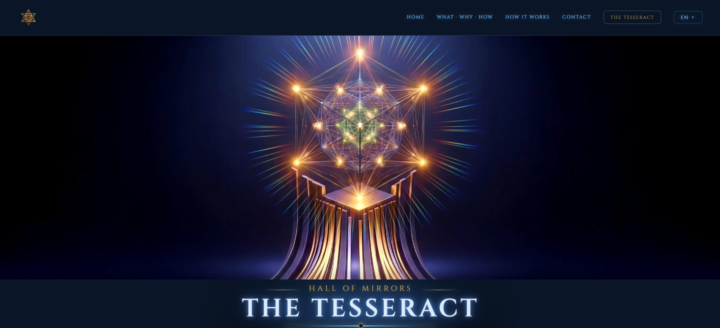
The Tesseract is live — your first report is on me 🌀
Hey everyone 🌀 Some of you have asked to try the Tesseract, so here it is — consider this a soft launch, just for this community first. When you log in, you get 10 Mirrors as a gift — enough for one full report, completely free, no card needed. If you want to explore further after that, it's €2 per report (10 Mirrors), minimum purchase €10 (5 reports). Home: https://tesseract.allistarcenter.com/ The tool itself: https://tesseract.allistarcenter.com/tesseract How it works (read this first if you're new): https://tesseract.allistarcenter.com/how-it-works A few honest notes: I've had a lot of you reach out wanting to try this personally, and I want to be upfront — I can't be the bridge for everyone individually right now. This is exactly why I built it the way I did: you can log in and run it yourself, completely privately. If there's something you want to explore that you'd rather not share with me directly — a personal decision, something private, something you're still working out for yourself — that's genuinely fine. Nobody sees your intention or your report but you. This is still actively evolving. I'm shipping changes regularly — some of you have already seen the tool change shape week to week. If something feels rough, unclear, or breaks, please tell me. Your feedback on anything — the wording, the experience, a bug, an idea — genuinely shapes what gets built next. This isn't a finished product handed to you; it's something being built partly with you. One thing worth knowing going in: the Tesseract is a mirror, not an oracle. It doesn't predict or tell you what to do — it holds your intention across 26 independent perspectives and shows you where your own thinking converges, and where it doesn't. Read the "How it works" page before your first run — it takes two minutes and will make your one free report meaningfully better.
1 like • Jul 10
Galaxy mode now is live your atoms are visible ;)
1 like • Jul 12
@Nora Dornbush Thank you for sharing this — "I felt seen for who I AM" is exactly what this thing is supposed to do, so hearing that means a lot. 🙏 To answer your question directly: no, you didn't miss anything. Here's what actually happened. When you submit an intention, Stage 1 reads it first and sometimes generates clarifying questions or working assumptions — but this isn't an interactive back-and-forth where you get to answer them before the run continues. It happens automatically, in the background, as part of one continuous pass. The system either proceeds with reasonable working assumptions, or names what it assumed so you can see its reasoning — but there's no pause where you're prompted to respond before the 26 agents run. So the honest answer is: your intention ran exactly as submitted, unedited, start to finish. What you saw in Stage 1 wasn't a fork in the road you missed — it was the system showing its own reasoning as it moved forward. If you want to explore this further — for instance, answering those clarifying questions yourself and seeing how a more specified version compares to your beautifully open one — you could run it again with that added detail. Both versions are legitimate; open and unanchored has its own value, and it clearly worked for you here. Whenever you're ready, Galaxy mode is worth a look too — it's a visual map of your reports. No rush.
Jul 9 •
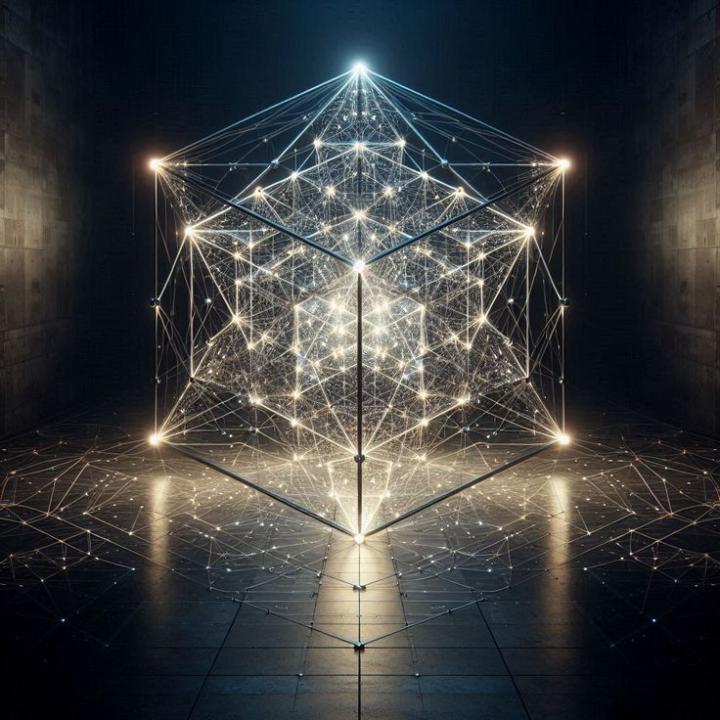
We proved the meta-synthesis is real tonight — and that we can tell real insight from eloquent noise
Tonight I proved something I've been building toward for weeks: convergence across perspectives can produce genuinely new insight — and we can prove when it's real. I want to share a real milestone, and more importantly, how it works — because the mechanism is something you can use in your own thinking, with or without any tool. The problem with most "insight" When you ask any AI — or honestly, when you ask yourself — a hard question, you usually get back something that sounds wise. Fluent, confident, well-phrased. But sounding wise and being true are two completely different things. Most systems optimize for the first. The whole point of what I'm building is the second. The mechanism: Triangulation! Here's the structural idea, and it's simple enough to hold in your hand. Take one question. Instead of answering it from one angle, approach it from three genuinely different stances: - The visible — the practical, external, "what do I actually do" angle - The invisible — the internal, belief-level, "what do I really think is true, what am I afraid of" angle - The neutral — the witness, "what is actually happening here, without wanting or fearing any outcome" angle Three different views of the same thing. Each one sees something the other two are blind to. Then — and this is the key move — you don't average them or pick a favorite. You hold all three at once and ask: what becomes visible only when all three are present together, that none of them shows alone? That point — where three distinct perspectives meet — is the apex. And what appears there belongs to none of the three individually. It's genuinely new. What happened tonight I ran exactly this. Three real, deliberately different perspectives on one question. And the system produced a genuine insight that existed in none of the three source views — it could only appear when all three were held together. But here's the part I'm most proud of. The system generated five candidate insights, and I'd built a ruthless test to catch fakes: if an insight survives when you delete any one of the three perspectives, it was never truly emergent — it was just an average pretending to be insight.
0 likes • Jul 10
@V R love They are always present :)
1 like • Jul 10
@Fluxite Fluxite It was about the positioning of the toll, but is a bit private and will share soon more on another path.UI
1-10 of 125
@krasimi-kolev-5656
I love to explore the mystery of this infinite life and to merge the oposites in a harmonious way.
Active 1d ago
Joined Aug 28, 2025