Activity
Mon
Wed
Fri
Sun
Nov
Dec
Jan
Feb
Mar
Apr
May
Jun
Jul
Aug
Sep
Oct
What is this?
Less
More
6 contributions to The Sensory Ladders™️ Project


0 likes • Jul 14
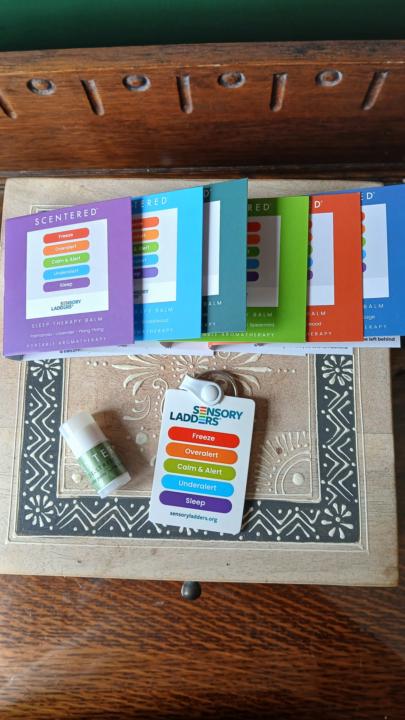
Sleep is my favourite

Jul 11 •
Our new Sensory Ladders Training Platform is live | anyone, anywhere, any time
Hello all We are proud and excited to share a very special announcement with you. The Board of Directors is pleased to announce the launch of our new Sensory Ladders®️ Training Platform, created to support the delivery of Sensory Ladders®️ training across the globe. This has been a significant piece of work behind the scenes. We have invested in a new platform that will allow us to share Sensory Ladders®️ training in a more professional, accessible and sustainable way. It will also support us to move more quickly with translations, so that Sensory Ladders®️ can continue to reach people, families, communities and services around the world. We are launching with the English version first. Following this, we will be working with our international teams and partners to support translations into other languages. For us, this is about protecting access while extending reach and access. Sensory Ladders®️ have been developed in co-production with users since 1999. They were created to support people with complex sensory patterns, including experiences linked to neurodiversity, trauma, sleep disruption, mental health, physical health, illness, injury, rehabilitation, ageing and everyday life. Sensory Ladders®️ are unique because they are always personal. They are not a fixed programme or a one-size-fits-all model. Each Sensory Ladder®️ is created with the person, and with the people who know and support them, so that it reflects their own body, nervous system, story and lived experience. Every Sensory Ladder®️ is different because every person is different. Sensory Ladders®️ help make sensory experiences visible. They support praxis and participation, communication, advocacy, self-understanding and shared understanding, especially when words are difficult or when needs are not yet understood by others. As part of this project, we will also be launching associated and related products. These will help fund continued access to Sensory Ladders®️ resources and support the translation work needed to keep Sensory Ladders free and open access.
1 like • Jul 11
It looks so lovely and fresh, with new layers of learning!! well done to all the team

Jun 1 •
Sensory Ladders & Night Terrors
Hello! I'm wondering if a sensory ladder could be used to support night terrors and if anyone has any experience around supporting families whose children experience frequent night terrors and the impact on sleep that this has for the whole family.
1 like • Jun 2
@Anna Michell This is such an interesting question. My first thought would be that a Sensory Spider™ may be the more useful starting point than a Sensory Ladder®, particularly if we are trying to understand why the night terrors are occurring and what factors might be contributing to them. A Sensory Spider can help individuals explore patterns across the day and night. For example: • Are there sensory sensitivities that make settling to sleep difficult? • Are there particular sensory experiences, environments, routines or transitions associated with episodes? • Is the individual showing signs of being overwhelmed, exhausted or working hard to manage sensory information during the day? Once patterns begin to emerge, a Sensory Ladder® may then help identify regulation strategies that support the individual before bedtime and during overnight awakenings. There is growing evidence that sensory processing differences and sleep difficulties are related. Children with sensory sensitivities, sensory avoidance and sensory modulation differences appear more likely to experience sleep difficulties, parasomnias and disrupted sleep. From a practical perspective, I often encourage individuals to think about a self-soothe box rather than focusing solely on the night terror itself. This might include sensory strategies that support feelings of safety and regulation, such as familiar smells, preferred textures, calming visual items, comfort objects, gentle movement opportunities, breathing activities or co-regulation ideas that can be accessed consistently as part of the bedtime routine. Sometimes the goal is not to “stop” the night terror, but to strengthen the individual’s overall capacity for regulation, rest, recovery and feelings of safety across the whole 24-hour day. I’d be really interested to hear whether others have found particular sensory patterns or regulation strategies helpful when supporting individuals experiencing frequent night terrors.

0 likes • May 1
Hi Rosie, they are avail in our shop or if you have done Sensory project 3day mental health workshop or ASI1/UUSI1 it’s in your course materials ☺️
Mar 16 •
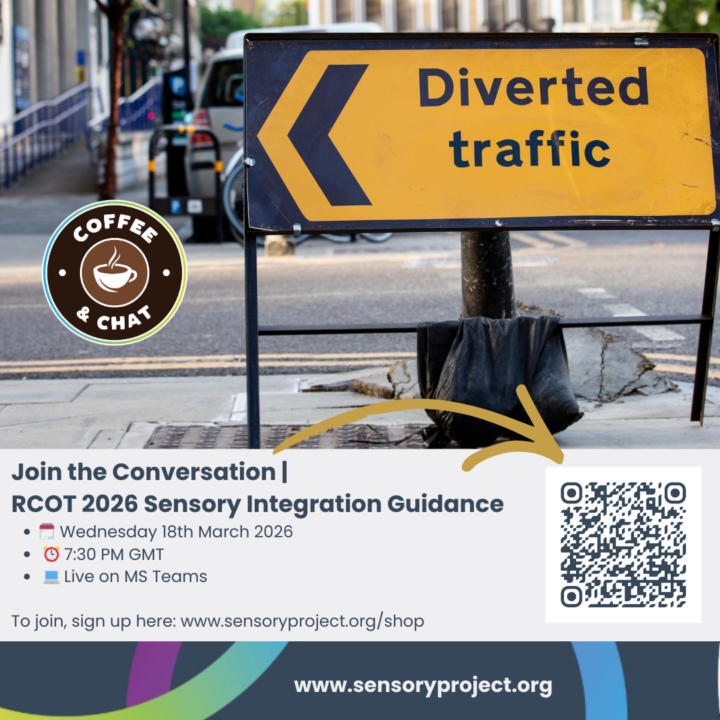
🚧 Community Road Diversion 🚧
Following a number of messages, questions, and conversations from members of our community after the latest RCOT publication on sensory integration and sensory approaches, We’ve decided to put up a temporary road diversion. Our planned ISIC 25/26 Coffee & Chat this week will now take a slight detour… Instead, we’ll be hosting an open community discussion to create space for people to share reflections, questions, and honest thoughts about the new guidance. No hot takes required. No pressure to agree or disagree. Just a safe space for thoughtful conversation within our community, everyone is welcome. So grab your coffee, follow the diversion signs, and join us for the discussion. Wednesday 18th March 2026 7:30 PM GMT Live on MS Teams #ASIWise #SensoryProject #CommunityConversation #SensoryIntegration #OccupationalTherapy
0
0
1-6 of 6
@katie-crowfoot-9229
ASI Wise & Sensory Project Lecturer | Tutor | Mentor | Occupational Therapist with Advanced training in ASI, working in Adult Mental Health
Active 4d ago
Joined Feb 6, 2026
INTJ
Powered by