Activity
Mon
Wed
Fri
Sun
Nov
Dec
Jan
Feb
Mar
Apr
May
Jun
Jul
Aug
Sep
Oct
What is this?
Less
More
Owned by Kathryn Lynnette
A safe place to discuss the pros and cons of vaccines.
Natural Living Lab
8.1k
Free
Skool Course
36.6k
1.0
$29/m
Skoolers
151.3k
Free
Storytime Skool
7
Free
Maverick Aromatherapy
103
Free
76 contributions to Maverick Aromatherapy

11d •
Not doing nothing much.....
Not doing nothing much, I remember those Sundays in my childhood. Got a bit older, and Sunday afternoons would be a family foursome round of golf with high tea in the club house. A beautiful bit of prose.... have a read, so much wisdom, particularly this part... "I have noticed that even the language has changed. We no longer spend an afternoon doing nothing. We are *recharging our batteries*, *taking some personal time* or *prioritising self-care*. Everything must have a purpose, even rest." Copied and pasted from Facebook, written by Kevin McManus. "The Lost Art of Doing Nothing There was a time, not so very long ago, when doing nothing was a perfectly respectable way of passing an afternoon. People sat in chairs and looked out windows. They watched the rain falling on the fields, the occasional car passing along the road, or a neighbour making his way home from the village. They might comment on the weather, although there was rarely anything new to report. Sometimes they said nothing at all. And nobody thought there was anything particularly wrong with this. In the Ireland of my childhood, doing nothing was almost an art form. An elderly man could spend the better part of a Sunday afternoon sitting beside the fire, occasionally stirring the ashes with a poker, without feeling the slightest obligation to improve himself. He wasn't practising mindfulness or taking time out for his mental health. He was simply sitting there. There was no app involved. I remember visiting houses where the clock ticked loudly on the mantelpiece, the fire crackled in the grate, and the conversation moved at a pace that would be considered dangerously slow today. Someone might remark that there was a touch of frost coming. Another person would agree. A third might recall a particularly hard winter sometime in the 1960s. And that could keep everyone occupied for twenty minutes. Silence was never regarded as a failure of conversation. It was simply a natural part of it. People could sit together without feeling the need to fill every moment with words.


3 likes • 6d
My family has a name for relaxation. We call them Kathryn days. After my mom who seemed to have her days begin at 4pm when we came home from school. Until she was widowed at 49, she never got dressed till we walked in the door! I find the older i get, the more Kathryn days I have. We deserve them!! After 51 years of working and teaching, then 7 years if babysitting, i am enjoying the downtime!
Sep 17 •
Clove oil
Recently i got sucked into purchasing a product called BugMD. It is supposedly the latest and greatest anti flea cure here in the U S. It has clove and cottonseed oil as the main ingredients. Clove has eugenol in it which means be careful!! Since my little (7 lbs) Chihuahua had picked up a few fleas, compliments of my sisters cat. I fell for it and bought the complete kit. My poor little Chico had a very bad reaction to it. He had diaherria for several days and a bad cough. I thought for a while there it was going to be fatal. So please be careful with “natural” ingredients. They can also injure your pets!!

Jun 26 •
Link to oil recipes from the bible
I thought this was interesting: https://bible.modernlifestylejournal.com/?rtkcid=6a3e3f46d8feb36ce9074093&rtkcmpid=6a2ed1d5dcf1cfd7c9a03fdf&rtkupdclickid=6a3e3f46d8feb36ce9074093&fbclid=IwVERDUASrHvtleHRuA2FlbQEwAGFkaWQAAC_KnarLKXNydGMGYXBwX2lkCjY2Mjg1NjgzNzkAAR5lxrMtyUwLb6XVrisRoFsXfs75vU_YDmX96VyxFaix7wNZwSc4RhJGOC-J_g_aem_7VF1f0j1B-TxbNKAAzVauA Put in browser. Or it will work right from this location.
4 likes • Jun 26
I remember someone saying that the frankincense and myrhh brought to jesus by the wisemen were resins not oils.
1 like • Sep 17
I beleive Ribin has written two books in this subject.
Jul 26 •
How much do you know about Aromatherapy history?
It's officially end of term for my Clinical students for the summer. Come and join myself and my Clinical Aromatherapy students and Mavericks for a "Pop-quiz" at 7pm BST tomorrow night (27th) and test your knowledge! We'll cover the history of Aromatherapy, some world famous Aromatherapists and their mark on our industry, and of course, some fundamental general Aromatherapy. This is a fun session and is open to ANYONE whether you are a therapist or a novice....... learning is learning at the end of the day! Just comment or PM me for the zoom link.

2 likes • Jul 26
Darn Jane! It is my massage day! I will try to get home to tune in for part of it!
Jul 10 •
Refrigeration
Jane once told me there are some oils that should not be refrigerated. I was taught to refrigerate citrus oils, and pretty much have refrigerated everything! I recently ran out of carrier oils and now am wondering if I should or should not be refrigerating those. Does anyone else refrigerate anything? Why or why not? I do not use a whole lot of oils so preservation is important to me. Thank you for your expertise!
2 likes • Jul 10
I don’t use cooking oils at all. I generally just use water. I am fat enough without adding more fat to the fryer. I am almost a vegetarian, now, occasionally grabbing a hamburger! With Bill Gates meatless, meat being approved by the cdc, i will probably have to buy and butcher a cow to get real beef!!
2 likes • Jul 10
Ok. I do keep those in fridge, my teacher said they did not last as long as anything else. My Rose hydrosol was the only thing that survived my neglect during these babysitting years!
1-10 of 76
@kathryn-lynnette-bales-3759
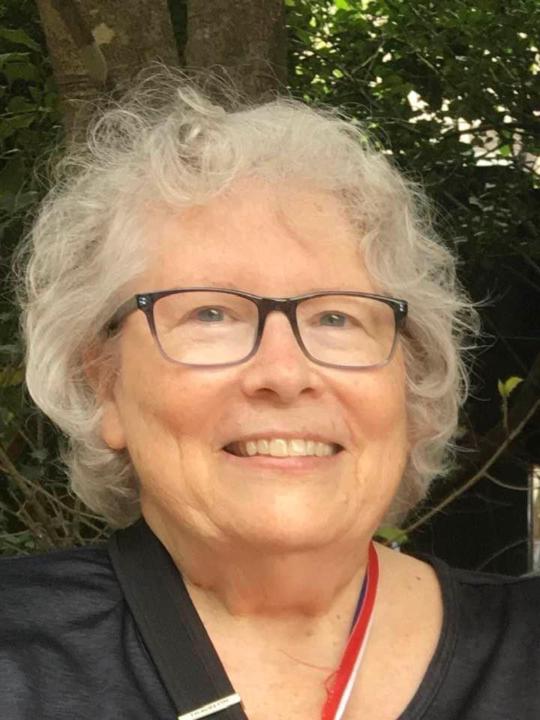
Certified Aromatherapist, Reiki Master, Reflexologist-continuous learner-caretaker for 7 yr old, mother of dogs, loves to camp!! Oldest of 6 girls!!
Active 26m ago
Joined Jan 20, 2026
St. Louis Mo USA