Activity
Mon
Wed
Fri
Sun
Apr
May
Jun
Jul
Aug
Sep
Oct
Nov
Dec
Jan
Feb
Mar
What is this?
Less
More
Memberships
Frightfully Good Paranormal
76 members • Free
2 contributions to Frightfully Good Paranormal

Jan 28 •
TOOLS GHOST HUNTERS USE - EMF DETECTORS
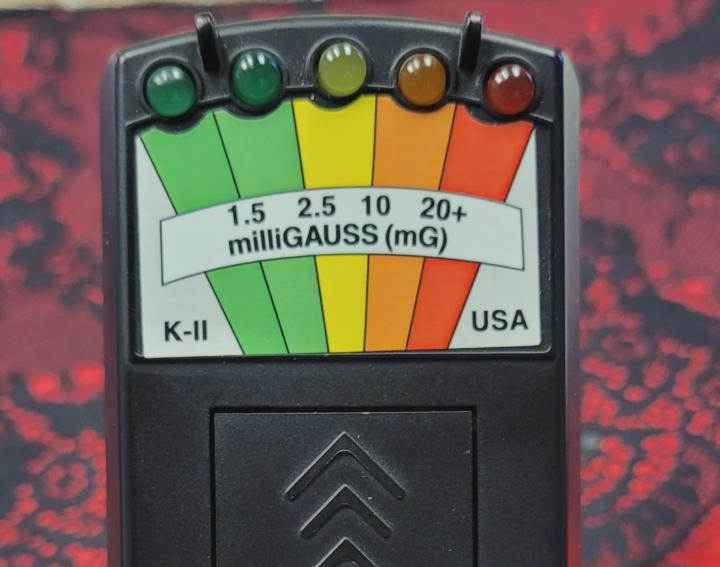
Why do people keep talking about EMF? What is it anyway? Does EMF tell me there is a ghost near me? What are EMF Detectors? If you’ve spent any time watching ghost hunting shows or tagging along on investigations, you’ve seen this moment play out more times than you can count. A device starts beeping.Lights flicker.Someone quietly says, “Whoa… EMF spike.” And just like that, the room changes. Everyone freezes. Something paranormal has apparently happened. But before we start congratulating ourselves on catching a ghost mid-manifestation, it helps to understand what EMF actually is — and why it became such a big deal in ghost hunting in the first place EMF stands for electromagnetic field. In the simplest possible terms, an electromagnetic field is created whenever electricity is present or moving. That’s it. There’s no mystery built into it. If something uses power, carries current, or is connected to electrical wiring, it produces EMF. That means EMF comes from the wiring inside walls, power lines outside buildings, light switches, fuse boxes, appliances, extension cords, mobile phones, walkie-talkies, cameras, batteries, elevators and, inconveniently, most of the equipment ghost hunters carry with them. In modern buildings, EMF is everywhere. It’s not rare, unusual, or paranormal by default — it’s just part of living in an electrified world. So why did EMF become so closely linked to ghosts? The idea didn’t come from nowhere. In the early days of modern paranormal research, particularly from the 1980s onward, some investigators noticed that people who reported hauntings often described physical sensations rather than visual ones. (This is important!!!) Dizziness, nausea, pressure in the head, anxiety, headaches, a feeling of being watched — these experiences showed up again and again. Around the same time, researchers suggested that strong or fluctuating electromagnetic fields could affect the human nervous system, especially in people who were already sensitive. The theory was simple: if high EMF can make people feel strange, and people feel strange in places they believe are haunted, then maybe EMF plays a role in those experiences.

1 like • Jan 31
Very informative 😊
Jan 31 •
How to Use your EMF Meter/Reader
How to properly scan an area for EMF! The biggest mistake people make is walking into a location, switching on a meter, and treating every spike like it’s meaningful. EMF surveying should always happen in layers, not as a single pass. The most effective approach looks like this: You start with a baseline sweep in daylight or before any investigation begins. This means slowly scanning walls, floors, ceilings, and fixed objects to identify normal EMF sources — wiring runs, fuse boxes, light fittings, appliances, phone towers bleeding in through walls, and even underground cables. Most “hauntings” don’t survive this first step. Then you do a static environmental read. You leave the meter stationary in a quiet room for several minutes and watch what it does when nothing is happening. This tells you how jumpy the environment naturally is. Only after that do dynamic sweeps — moving through the space again during the investigation to see if changes are genuinely anomalous compared to your baseline, not just “higher than zero.” And lastly — and this is the part TV never shows — you cross-check readings with multiple meters. One device alone tells you very little. That process matters far more than the brand name on the meter. The EMF devices that actually give the most reliable results - Single-axis EMF meters. These are the old-school, boring-looking handheld meters used by electricians and safety inspectors. They usually measure one direction at a time and give you a clean numerical readout. They’re not flashy — but they’re honest. Excellent for baseline mapping and identifying wiring sources. Terrible for drama.Very good for credibility. Tri-axis EMF meters (including Trifield)These measure EMF in three dimensions at once, which is far more useful in buildings where fields bounce around unpredictably. The Trifield meter sits in this category, but with a twist. It measures: - Magnetic fields - Electric fields - Radio frequency (RF) That makes it genuinely useful — if the operator understands what mode they’re using.
0 likes • Jan 31
Thanks Anne 😊
1-2 of 2