Activity
Mon
Wed
Fri
Sun
Aug
Sep
Oct
Nov
Dec
Jan
Feb
Mar
Apr
May
Jun
Jul
What is this?
Less
More
Memberships
The Bid Room
11 members • Free
13 contributions to The Bid Room

5d •
The Decisive Phase of a Defence Program Cycle Never Makes the News
After a program refresh, the delivery firms inside the estate build out their sub-consultant and supplier benches. It happens through capability statements landing on the right desk, and through being known as a safe pair of hands. No public tender. No AusTender listing. Then the benches settle into a preferred-supplier rhythm, and the door narrows for years. That cycle tends to run quietly in the background of major programs precinct upgrades, shipbuilding and submarine programs, state-level defence infrastructure moving from planning into procurement. The firms getting positioned aren’t waiting for something to bid. They’re having the right conversations while the benches are still being built. “Known” isn’t complicated. It means a Defence-framed capability statement on the right desk, a clean answer when asked about clearances and systems, and a phone call returned the same day. 👉 Have you ever found out about a Defence opportunity after the supplier bench had already been decided? What would you do differently now?

5d •
DISP Stops More Firms at the Car Park Than at the Gate
Here’s what newcomers get wrong: you don’t need DISP membership to start. Plenty of estate and construction work can be pursued while membership is in progress. On many sub-consulting paths, you never hold it at all your prime carries it. The real trap sits further in: discovering at tender time that one piece of scope needs a clearance level nobody has started. Clearances are personal. They take months. And they can’t be bought back the week the project starts. So the question isn’t “do we have DISP?” It’s “which parts of our target work need what, and when does that clock have to start?” Get the sequencing wrong, and the contract isn’t lost at tender, it was lost six months earlier. 📌If you’re mapping a path into Defence work, where are you in the DISP sequencing right now?
3
0

5d •
Most Builders Don’t Lose Defence Contracts on Price. They Lose on What They Didn’t Price.
The build scope is visible. The system around it isn’t. Cleared or escorted personnel, DEQMS documentation, ITPs and quality holds, compliance evidence, site access windows around a live base, bid administration hours Defence simply expect new entrants' price the works and miss the machine around it. Strong builders often win on price, then spend the next year quietly handing the margin back. Not because they built badly because those costs never made it into the number. And the number is the only place they can be fixed. Defence doesn’t punish high prices. It punishes wrong ones. ➡️ What’s a cost you learned to price in the hard way, after a Defence (or other complex) contract?

5d •
Your Defence Pipeline Isn’t Dry. You’re Standing at the Wrong Door.
Defence is one of the largest construction and estate clients in Australia and almost none of that work is advertised the way a council project is. There are three doors in. Door 1 is AusTender open RFTs, the one everyone watches. Door 2 is Standing Offer panels and sub-consultant frameworks, where the recurring work actually lives. Door 3 is sub-consulting to the Program Delivery firms already inside the estate how outsiders become insiders. Most firms camp at Door 1 and call the market dry. The work is there. It just flows through channels you have to be positioned for before the RFT ever drops. 📌 Which door have you had the most luck with AusTender, panels, or sub-consulting in?
3
0

5d •
What Government Clients Are Really Buying
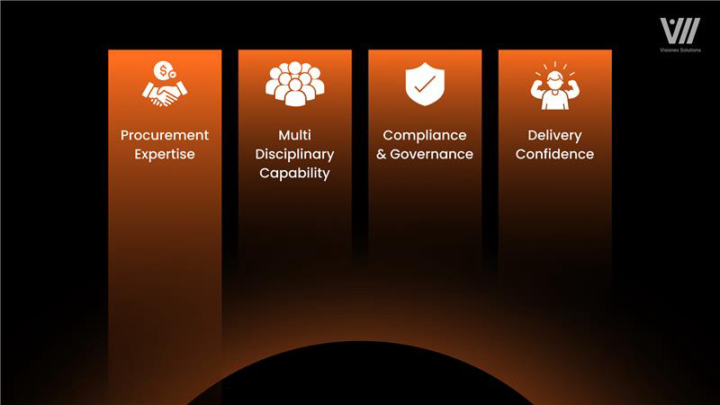
Winning government work isn’t about compliance alone. It’s about certainty, governance, and proven delivery capability. Across council, state, Commonwealth, and Defence procurement, the businesses that win consistently aren’t just the ones ticking every compliance box, they’re the ones building submissions that are commercially sound, operationally credible, and directly aligned to how government actually evaluates risk, value for money, and delivery assurance. That means understanding how your project management, estimating, technical, and bid writing functions come together as one story not five disconnected sections stitched together the week before submission. Government clients aren’t just buying a price. They’re buying certainty that you’ll deliver what you said you would. 👉 What’s one thing you’ve changed in how you put a submission together that made the biggest difference to your win rate?
3
0
1-10 of 13

@kalhari-wathsala-2921
Business Manager @ Visionex Solutions | Tendering, BD & team coordination across FM, defence & construction |
Active 8h ago
Joined Jun 30, 2026
Melbourn
Powered by