Activity
Mon
Wed
Fri
Sun
Aug
Sep
Oct
Nov
Dec
Jan
Feb
Mar
Apr
May
Jun
What is this?
Less
More
Memberships
AI Automation Agency Hub
327.6k members • Free
AI Automation Society
417.1k members • Free
13 contributions to AI Automation Society

3d •
I Found Out My AI Skill Was Broken, And It Was "Working" the Whole Time
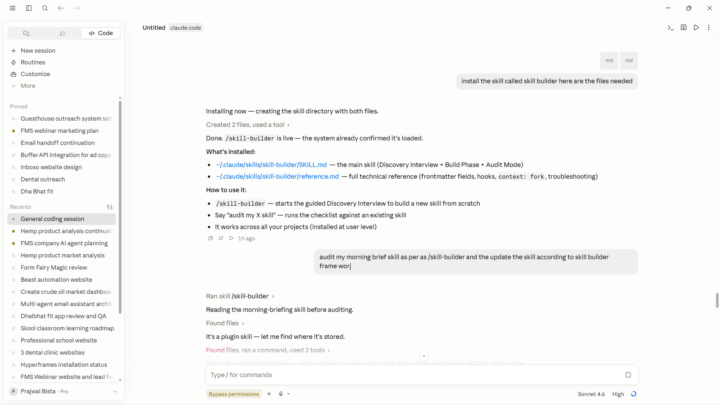
So I've had this Morning Briefing skill running in Claude Code for a while now. Every morning, it searches the web and gives me a full news briefing — Nepal news, international headlines, crypto, oil prices, the works. It was working, so I never touched it. Turns out working and well-built are not the same thing. I installed a Skill Builder skill this week — basically a skill that helps you build new skills but i used it to audits your other skills against best practices. Ran it on my morning briefing and it found a bunch of stuff I never would've caught on my own. The description was 12 lines long (Claude has a shared budget for all skill descriptions — mine was hogging it). There was no argument hint so the slash menu showed nothing useful. And the big one — disable-model-invocation wasn't set, which means Claude could randomly fire off 10 web searches in the middle of a conversation without me asking. Not great. Fixed everything in like 10 minutes. The briefing output looks the same — because the content was already solid — but the skill is now lean, clean, and won't go rogue on me and sake tons of token. Honestly the lesson here is simple: your Claude skills are not just prompts, they're more like mini software. And software needs maintenance. If you've built skills and never audited them, Skill Builder is worth installing. Drop a comment if you want to know how to set it up.

1 like • 2d
@Chetan Mishra next skill: monthly-skill-review, following the skill builder skill !?
0 likes • 19h
@Prajwal Bista maybe descide this by a little risk assessement: Severity * Likelyhood * Detection = Riskpriority Severity: How severe will a failing Skill hurt the output/the token consumtion/the customer … etc (Rating: 1 low - 10 high) Likelyhood = how likely is it that a skill will fail/be insufficient/be faulty … etc (Rating: 1 low - 10 high) Detection = how likely is it that you detect the error? (Rating 10 easily - 1 undetectable) Detection capability reduces the overall riskpriority - because a regular review with shorter intervals will positively influence the Detection-rating so, up to you. if you already have a lot of trust in your skills: monthly. If you don‘t: weekly. maybe this helps
2d •
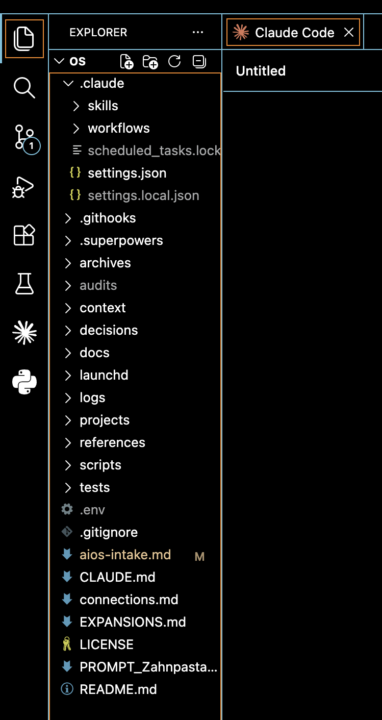
Done. AIOS set-up and growing
#AISOS up and running. easier than expected. now growing it continously. focused on skills and routines to automate my day to day. Thanks for giving us access to this, @Nate Herk
1 like • 1d
@Moustapha Rifai we‘re both far from it. but enjoy the feeling while it lasts
0 likes • 1d
@Steven Ricks just go for it as soon as you hit level 3

💎
⭐
Oct '24 •
Welcome! Introduce yourself + share a career goal you have 🎉
Let's get to know each other! Comment below sharing where you are in the world, a career goal you have, and something you like to do for fun. 😊
0 likes • 7d
@Stasy Lukas welcome
0 likes • 7d
@Yanick Doctor just start. welcome
💎
⭐
7d •
🚀New Video: I asked Claude Code to make me as much money as possible
I asked Claude Code to make me as much money as possible, and these four upgrades 3x'd my income in 30 days. Most people use AI wrong, and it quietly burns their time and money on stuff that was never going to work. But when you use Claude with this exact code to stack as much money as possible, these fixes change everything. Skip them and you're leaving real wealth on the table. Resources here: https://drive.google.com/drive/folders/1eCOxxiFSMz49UONwPlbOfDnkHj9QzDg5
5 likes • 7d
@Tameem Alghamdi or you use both and let one review the other

8d •
2/3 - "Email Marketing" automation - This is what we learned to set up BEFORE sending a single email
The biggest mindset switch we had building this campaign wasn't about sending MORE, it was about sending BETTER. Volume done wrong is exactly what affects, and we learned that the hard way. 💧 Send like a human: Sending 500 at once from a new account is the best way to get into spam quickly. So we made the system mimic a person, warm-up (raises volume gradually), time window (office days and hours only), and one every so often, not all at once. We let it flow drop by drop, like water shaping a rock. 🛑 Automatic brake: If bounces cross a certain threshold, the campaign pauses itself and alerts us. Something funny happened here, at first it counted auto-replies like "back on Monday" as bounces and stopped for no reason. We tuned it to only count real bounces. We learned that an alarm that goes off for everything is an alarm you end up ignoring. 🔁 Follow-up depending on behavior. This part made us happy, generic follow-up, the same message for everyone, never quite convinced us, so we made the system read what each person did and react, across 4 branches: if they viewed the content, it invites them to a meeting; if they viewed it but don't reply, a close that acknowledges they've already seen it; if they opened nothing, a soft message that reopens the door; and if it's already been several touches, an "elegant close" that lets them go without pushing. One detail that cost us: the spacing. Before, someone could get two follow-ups the same day. We fixed it so each one counts from the previous one, not from the first touch. And new emails and follow-ups have separate limits, so they never compete with each other. We think looking human isn't a trick, it's respecting how email works. And follow-up isn't repeating, it's reacting to what the person did. 👉 How many follow-ups do you send before letting a contact go? We want to know how others do it, we send two, and you?!

1 like • 8d
@Robert Alfaro thanks good insights three times is the charm, so yes, two follow ups
1-10 of 13

@julian-thielmann-9471
Engineer, Microbiologist, Food Industry, Production Manager
Active 2h ago
Joined May 30, 2026
Powered by