Activity
Mon
Wed
Fri
Sun
Aug
Sep
Oct
Nov
Dec
Jan
Feb
Mar
Apr
May
Jun
Jul
What is this?
Less
More
Memberships
Syntropic Sunlands w/ Milan
178 members • Free
Food Forest Family (FREE)
3.7k members • Free
2 contributions to Syntropic Sunlands w/ Milan

May 21 •
Olive Grove in a Wasteland
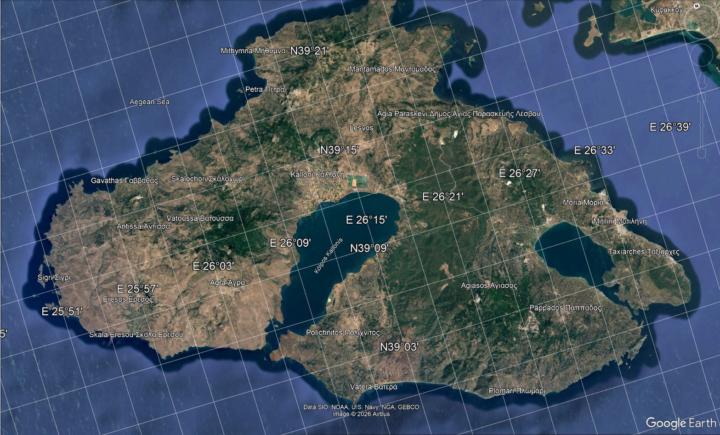
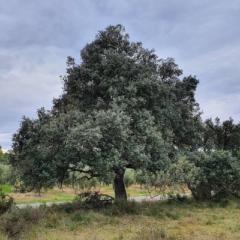
Greek American starting to learn about agroforestry -> Syntropic agroforestry and thinking about the island of lesvos where I am from and potentially starting a project. Our island is kind of weird and has a lush eastern side and an arid (almost lunar) western side. I am not sure why this is but I have heard that the west side gets less rain and the soil is acidic and vulcanic and probably over grazed. I do remember however passing an olive grove in this wasteland and now wondering how this was achived in such harsh conditions. Did the farmer here just dig a well, irrigate like crazy and fertalize? The only thing that grows out here is this spiny bush locally called sea urchin's foot αχινοπόδι aka "Genista acanthoclada". Land out here is pretty cheap so was thinking about buying some and perhaps doing an infestation.
2 likes • May 22
Hi, I think that before buying land here you should make sure that you have a certain soil depth to work with. Plants don't grow on rock, most of them anyway... All other challenges (lack of rain, soil acidity, strong winds...) will make it harder, but with the right selection of plants and management it could work out.

Apr 1 •
Almond grove update - March 28th
Hey you all ! I’m starting to document all the plantations I’ve designed and planted and plan to update you every few months so you can track growth and refer back to past videos. This is the largest plantation I’ve designed and planted so far—with the help of volunteers, it covers 6,000 m². This is an almond grove with seedless grapes climbing eucalypts in between. This is what I call a “hybrid infestation – plant all at once”, as we’re really seeing the planting in two steps: 1- The placenta and secondary species - letting the myoporum, eucs, casuarinas and acacias form a continuous hedge in between the almonds. 2- Years down the line when appropriate - when almonds start producing well - coppice the acacias, eucs, casuarinas, tamarix and myoporums let them regrow for the ones that recover. Then plant the next wave of succession on a growth pulese : grevillea robusta as a long-term emergent - Planting it now alongside the eucalypts is an experiment to see if it can survive next to their sizable trunks; some may need replanting. I would also plant the low-ish strata - Main : Viburnum tinus good drought-resistance and reliable - Others: Prunus lusitanica, Ruscus apophyllum, and Acanthus mollis (testing them out) The only ick is that I have to make sure that I find a plant that can handle coppicing really well when harvesting the almonds. One challenge is finding plants that can handle coppicing well during almond harvesting. One idea is to have two people pulling nets while another shakes the tree, allowing almonds to drop without stressing the understory. The other is to use plants like Acanthus mollis, which go dormant in summer, then the ground is free to put nets down. Finally, I’ve considered seed bombs of primary forest species like carob, olive, lentiscus, Italian buckthorn, etc.. - an idea Scott Hall gave me. Birds might naturally assist with this in 5 years, but adding seed bombs then would act as “biomass insurance.” Although slow initially, with improved soil fertility after 5 years, these species should establish much faster than in the current poor soil.

2 likes • Apr 12
Although 'there are no recipes', 'it is context specific', 'hands-on experience is crucial'... I think it is also important to see design examples, which many people are reluctant to share. So, thanks for the open source attitude @Milan Marquis Regarding to understory plants that can be coppiced to facilitate harvesting, we are trying Coriaria myrtifolia, a relatively common native here in Catalonia, a non-fabacae nitrogen fixer with fast growth. I've coppiced a few established plants in the forest and they respond very good, but I don't know whether or not it can withstand annual coppicing. It's a quite toxic plant though, with non-edible fruits that might look like edible berries. However, I thing harvesting with nets can be done over a low strata pruned at about 1m height. With two nets from each side of the line and attached one against the other in the middle of the line (over the viburnum) using some kind of pincers. Or with a front umbrella harvester of course.
1-2 of 2
Active 2d ago
Joined Feb 12, 2026
Tarragona