Activity
Mon
Wed
Fri
Sun
May
Jun
Jul
Aug
Sep
Oct
Nov
Dec
Jan
Feb
Mar
Apr
What is this?
Less
More
Owned by Jena
Storytellers exploring how engaging with animals and the natural world can produce compelling narratives that serve as catalytsts for positive change.
Memberships
Heart Coherence with Animals
23 members • Free
Animals Make Us Human
54 members • Free
H
Horsewatching
59 members • Free
the skool CLASSIFIEDS
1.6k members • Free
Skoolers
194.6k members • Free
Soulfully Authentic
89 members • Free
Photography Community
3.1k members • Free
Empowering Animals
27 members • Free
Homeopathy Skool™
120 members • Free
30 contributions to Empowering Animals

9d •
We Love the Underdogs
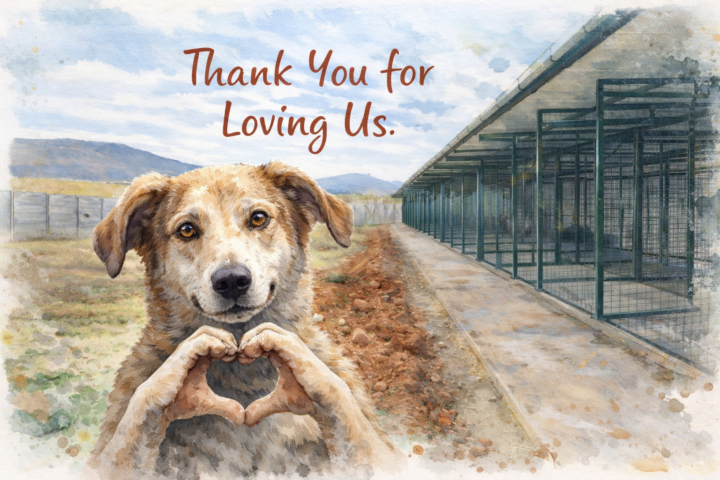
Staying on the subject of dogs, I received a newsletter this morning from Harmony Fund with updates about Sasha’s Shelter in Serbia. It literally made my eyes fill with tears or deep gratitude. As you probably recall from past posts, they were up against a May 1st deadline, or the city would take the 750 dogs to certain death. Laura Simpson, the founder, has been helping underdogs around the world for over 30 years. And if a mountain needs to be moved, she moves it. She rallied and kept going and didn’t give up, even when all they were seeing was darkness. Thanks to people like us in Empowering Animals, a community of animal lovers who shared what they could, little by little the money was raised and construction is underway and on schedule to move all 750 dogs to their new, safe home. Now, some dogs will go on to find their forever homes, and some will have a safe, permanent and loving home with Sasha, because they have nowhere else to go. Sasha and Laura are sending their love and appreciation to all of us who helped move this mountain for the underdog. This is why I created Empowering Animals. To bring us together to make a difference in animals’ lives. Thank you from my heart to yours for being part of Empowering Animals. Small acts add up. 💚🐾

2 likes • 9d
Makes me very happy to hear this.
9d •
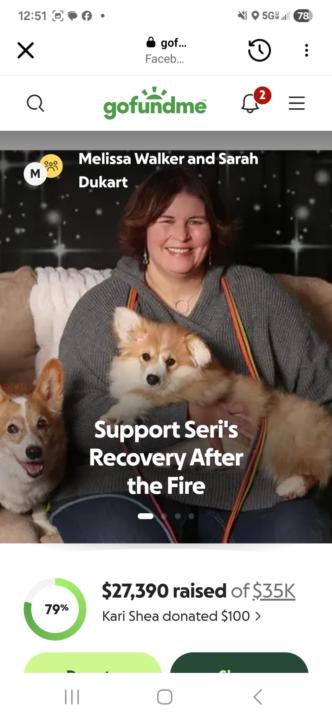
Standing with Seri 🤍
After a fire this past weekend at Seri’s grooming shop, I had a small role in helping some of her surviving reptiles get to a caretaker after they were accidentally shipped to the wrong address. That’s how I found out what she is going through. This fire didn’t just take a business and home, it took a piece of her life, including her beloved African Grey of 30 years and many of her reptiles. If you’ve ever loved and cared for animals, you understand the depth of that loss. They are not just animals in our care, they are beautiful souls we love like family. And as if that wasn’t enough, she is also preparing for an upcoming knee surgery. But this is also where something else shows up. Friends and the community. The same love she has given so freely is now finding its way back to her. If you are able to help, even in a small way, it matters. If you can’t, sharing her story matters too. Here is Seri’s GoFundMe: This is what it looks like when we come together. Not just for the animals. But for the people who have spent their lives caring for them. 🤍LM 🙏
2 likes • 9d
Okay that's really rough.
13d •
The Rarest Bird on Earth
I watched a documentary on the kākāpō and I wasn’t expecting it to stay with me the way it did. This isn’t just a rare bird, it’s a species that is still being carried every single day. At one point in 1995, there were only 51 left and right now in 2026, there are about 273. That sounds like progress and it is, but that has taken 30 years. When you really sit with it, you realize how fragile that number still is. It’s not just about how many there are, it’s about how they’re surviving. When a population gets that small, genetics become a problem and that is one of the kākāpō's biggest challenges. Some birds weren’t breeding, some eggs didn’t hatch and the same genes kept repeating. So now… humans are involved in a way most people don’t see. Every bird is known by name. Every bird is tracked. Their DNA is studied. Breeding is guided and sometimes even assisted. Not to control them but to give them a chance, and even then, they only breed every 2-4 years. The females wait for the forest to be plentiful and will only breed when the rimu trees produce enough fruit. The rimu fruit is what they depend on to raise their chicks. So, no fruit, no breeding. The great news is 2026 is one of those rare years and the forest is providing for the 84 breeding females. For the first time in a while, there’s real potential for a strong season. But even now, nothing is guaranteed. The males need to be booming, the females need to be in breeding condition, and the chicks need to be healthy. Jacqueline Beggs of the kākāpō recovery team states September will be a good indicator of the success of this year and I cannot wait to celebrate with them. I am linking some videos I watched, the first one is a documentary that explains the beginning up to 2009, and the second one is 2026 update. If you want to do more research, here is the website for the rescue team and the newsletter to keep updated on their progress.
1 like • 13d
Holy cow. Once every 2 to 4 years?!
17d •
Built for speed…
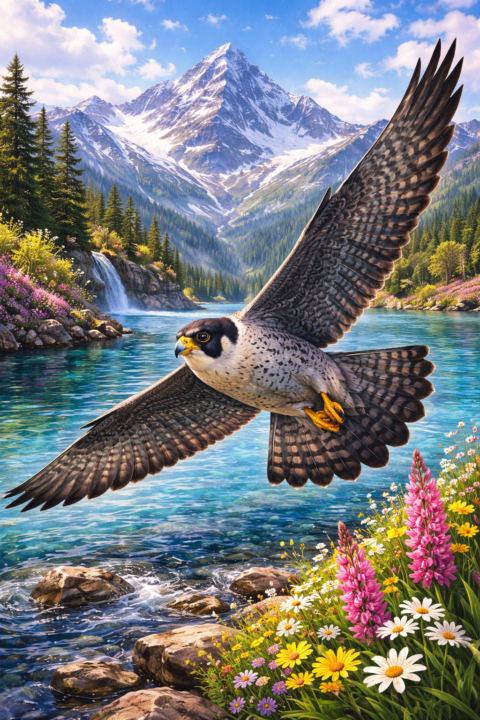
Peregrine falcons are another fascinating bird. They have incredible eyesight and can spot prey from great distances. What’s even more remarkable is how precise they are in the air. In a hunting dive, called a “stoop,” they can reach speeds of over 200 miles per hour. As they descend, they track and adjust to their prey with incredible accuracy, striking them mid-air with enough force to knock them out of the sky. If needed, they follow them to the ground and finish the hunt quickly, using their beak to ensure there is no prolonged struggle. This isn’t just instinct… it’s survival. Peregrines are built for the sky. They are not made for ground fighting, so everything they do is designed to avoid injury and stay in their element. I’ve had the opportunity to learn about raptors from a friend who spent decades tracking and studying them, and I’ve seen firsthand how powerful and precise these birds are. I also spent time volunteering at a raptor rescue where we cared for a peregrine who had likely been injured after a ground impact during a hunt. He never returned to the wild, but he became a quiet reminder of how even the most skilled hunters are vulnerable outside their element. And one of my favorite memories…watching a peregrine pair with their young through a scope out in the field. It’s something I’d love to do again. 🤎🤍🖤
1 like • 17d
yes they are astonishing.
18d •
It is a SPECIAL day!
March 23rd is National Puppy Day and Cuddly Kitten Day 🤍 A gentle reminder of how much love, comfort, and joy these little souls bring into our lives. If you have a special furry one in your life, give them an extra cuddle today. ❤️ They never ask for much… just love.

2 likes • 18d
LOVE.
1-10 of 30

@jena-ball-1006
I’m a multimedia storyteller & advocate of kids, critters, & the planet. Wild Dialog members harness the power of story to educate, inspire, & heal.
Active 2h ago
Joined Jan 12, 2026
INFJ
North Carolina