Activity
Mon
Wed
Fri
Sun
Nov
Dec
Jan
Feb
Mar
Apr
May
Jun
Jul
Aug
Sep
Oct
What is this?
Less
More
16 contributions to Eat, Drink & Speak Portuguese!

Sep 2 •
What are you reading (in Portuguese)?
To my delight and surprise recently, my youngest son wanted to read a Portuguese book at bedtime. It was Pinocchio as it turned out (em Portugues: 'Pinóquio') and we read it together. The beautiful thing was not only the chance to sit and read with one of my children, but also how much I realised I understood and was able to explain to him. This is the 'collateral' benefit of the other work I've been doing; interesting because I don't read much Portuguese, consciously or purposefully. I tend to learn through other means, primarily through speaking and engagement, SWAT-style! This was a lovely option, or complementary activity, which I thoroughly recommend to you, and I'm interested to know what your reading matter is. What do you read, or what will you start with from our suggestions in the survey today? And please say more in the chat to inspire (and impress) others! PS Please share your personal SWAT 'mission' for TODAY in this pinned thread too (maybe a trip to the bookshop?!) PPS New 'recycling' mission here
Poll
5 members have voted


3 likes • Sep 2
I like to read children´s books in Portuguese because I think of myself as a child learning the language. My Portuguese friend and neighbor reads childrens books in English and I cannot tell you how much her English has improved. When I first arrived her English was not good at all. Now we can carry on a conversation where she has improved greatly. I hope reading children´s books in Portuguese helps me as much as it has helped my friend learn English, and of course adding to that by taking a taking a Portuguese language class.
1 like • Sep 3
@Matthias Lanuschny Obrigada! Yes, we are learning from each other, although my friend is so set on improving her English, it is difficult to get her to speak to me in Portuguese. 😂
Sep 1 •
Very disappointing reaction yesterday! Or wasn't I clear?!
Olá bom dia! Tudo bem? I was disappointed yesterday to see so few sharing what Portuguese you plan to speak: what you want to say, who you want to say it to, and where you want to say it. Let's do it again today. Please add in the comments of this thread exactly this 👆 If you don't speak Portuguese, you won't speak Portuguese. Let's see what we can do today. Reminder let's keep it simple: - What do you want to say? - Who do you want to say it to? - Where do you want to say it? Pop it in the comments here 👇 Go for it. If you need materials, resources, let me know. But PLEASE get out there and... Show up. Wing it. Adapt. And above all TALK! #SWAT Boa sorte e divertem-se! PS You joined a Speak Portuguese group. What's stopping you? Quick poll 👇
Poll
6 members have voted

1 like • Sep 1
I have been traveling. That is my excuse, but also some procrastination is involved.🙃
Jul 10 •
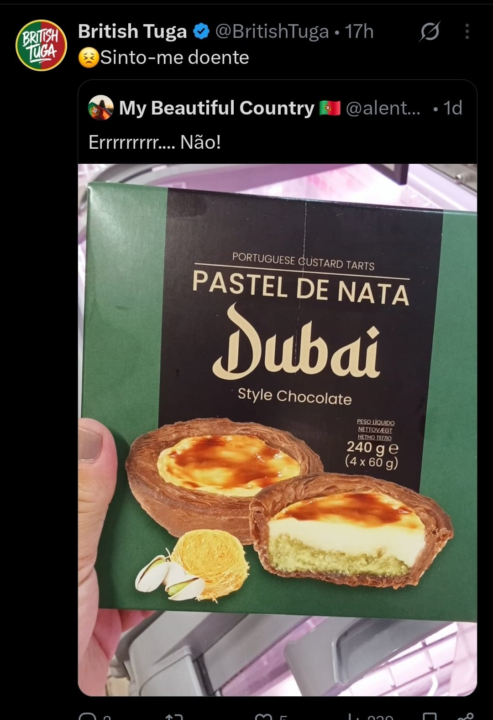
Would Dubai a Pastel de Nata like this?
Something for the weekend after an intense week of heat for most, and fires for some. I hope this finds you well. Do have a great weekend, a 'bom fim de semana', and please do not encourage this sort of behaviour! And just in case you don't know your #PdN history, just pop over here. Would YOU eat the Dubai edition pastel?
Poll
8 members have voted
2 likes • Jul 11
I prefer a traditional pastel de nata. Some things should not be played around with.
Jun 30 •
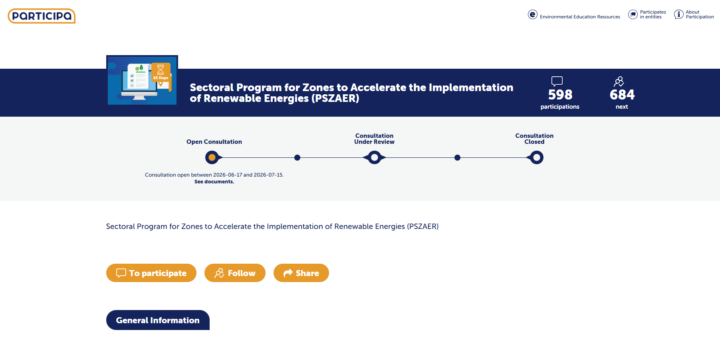
Black MAP affecting Sertã, Proença-Nova & Oleiros - "One of the darkest plans Portugal has ever had"
From Paul Rees on Facebook: The government released this week the map of the Renewable Energy Acceleration Zones (ZAER). This document is a passport to the ill-designated green energy industry, occupying 7% of the national territory. This project is particularly injurious to the district of Castelo Branco where an area of approximately 100 thousand hectares is planned to be occupied. Three councils of the Pinhal zone (Sertã, Proença-Nova and Oleiros) are the most affected since the plan provides for the occupation of their territories by more than 35%. The impact of all this is terrifying, visually we are going to have a painted landscape of black and environmentally it is a catastrophe since the destruction of around 100 thousand hectares of vegetation (only in the Casetlo Branco district) implies the death of a huge number of birds and animals wilds contributing in this way to accelerate climate change. According to experts, the destruction of such a natural area will cause an increase in temperature, the rapid runoff of rainwater causing increased floods and not allowing underground aquifers to supply, decrease in oxygen percentage and consequently air quality, sterilisation of water soles for long years and a huge accumulation of scrap caused by the end of the life of the equipment used. Coming to fruition, this is one of the darkest plans Portugal has ever had, and before this the questions arise: is it necessary? Portugal really needs this? The answer is: No. According to it was released in September last year by Goldenergy citing data from Eurostat, Portugal already produces by the renewable system more than 86% of the energy it consumes, however, energy consumption in Portugal and the developed world is increasing alarmingly because of Data centers, Artificial Intelligence, etc. and our country is being targeted by the great multinationals of the energy sector to be sacrificed for the gross profits this industry will generate.
1 like • Jul 1
You can bet that certain people in the government are going to make a lot of money off of this terrible plan. Many people are willing to sell their souls and approve a terrible plan which goes against the good of people and the environment.
May 29 •
"How much content has Carl Munson created about moving to and living in Portugal?"
Today's question is a bit of a trumpet-blow ahead of my Summer break and the development of two major projects that I will talk about on the show this morning. About it, Claude says: Carl Munson is one of the most prolific English-language content creators focused on Portugal. Here's a summary of what he's produced: Who He Is Originally from the UK, Carl moved to Portugal in 2017 and fell in love with the way of life, people and culture. He hosts Good Morning Portugal! — a daily breakfast show, podcast and community dedicated to sharing practical advice and the everyday joys of living in Portugal — and has helped thousands of people explore, understand and successfully relocate there. Volume of Content - Podcast: The Good Morning Portugal! podcast ran from 2019 to 2025 and accumulated over 1,000 episodes. - Daily YouTube show: During Portugal's 2020 pandemic lockdown, Carl launched a daily livestream for English-language speakers, which proved hugely popular and never stopped — running nearly five years. What began as an emergency focal point evolved into a "how-to" show for would-be migrants to Portugal. - Written work: He is also a regular columnist for Portugal Resident and founder of the Portugal Club, as well as host of Expats Portugal's weekly webinars. - Substack: He also runs a Substack publication featuring highlights from The Portugal Club Quiz, published every weekday on the show. Scope of Topics The show covers news, weather, culture, wellbeing, property tips, moving advice, and general expat life — and is particularly aimed at the 50+ demographic settling into or loving life in Portugal. In short, Carl Munson has produced a truly enormous body of work — likely well over 1,500 pieces of content across YouTube, podcasting, articles, and newsletters — making him arguably the single biggest English-language resource on moving to and living in Portugal. Gemini: Since moving from the UK to Portugal's Silver Coast in 2017, Carl Munson has become one of the most prolific content creators and community builders for English-speaking expats. Over the years, he has generated thousands of pieces of content spanning daily broadcasts, articles, masterclasses, and digital forums.
3 likes • May 30
Ola Carl! I am very grateful to you for what you have done for the expat community. You have brought many of us together through weekly meet ups, special events such a karaoke night, quiz night, special dinners and lunches. You have lots of knowledge regarding housing and purchasing a car, how to deal with Portuguese bureaucracy re Visas, etc., and of course your "Good Morning Portugal" YouTube channel. You have helped many people come together, make friends and create a community. You have made it easier for those of us that have come from various countries to settle into this wonderful country. A huge obrigada to you!
1-10 of 16
@jeanne-kortz-7614
From the San Francisco Bay Area. I live in São Martinho do Porto. Been living here almost two years. I swim, hike, and cycle. I love nature
Active 19d ago
Joined Sep 15, 2025