Activity
Mon
Wed
Fri
Sun
Sep
Oct
Nov
Dec
Jan
Feb
Mar
Apr
May
Jun
Jul
Aug
What is this?
Less
More
Tao of Tai Chi
32 members • $49/month
Budo Brothers Academy
679 members • Free
Super Sweet Science Ltd.
66 members • Free
The Ethical Predator (FREE)
2.3k members • Free
10 contributions to Budo Brothers Academy

9d •
80% FULL - Discont ends this weekend!
Hey everyone! The Reality Check Retreat is 80% full and this is the LAST weekdn to get the exclusive rate, after which is will siply be at the full price of $300 If you have even a passing interest do NOT miss out; this is not just another martial arts seminar - it is a total protection retreat

1 like • 7d
@Dustin Torres live event, as in it is in person training
20d •
REALITY CHECK: REDUX — Exclusive Skool Community Offer
Some of you here already know me through my work with Budo Brothers and the Reality Check and Too Close for Comfort courses. But online training can only take certain things so far. So, I wanted to extend a special invitation exclusively to the Budo Brothers Skool community. From September 11–13 in Stony Plain, Alberta, I’ll be running Reality Check: Redux — a small, intensive weekend retreat built around taking the concepts we talk about and putting them into practice. Redux revisits some of the foundations of Reality Check, but we're going considerably deeper. We'll be exploring TacTalk and communication under pressure, ground combat and survival, weapons-based combatives, self-protection, integrated problem-solving, and introducing DOT — Disrupt, Obstruct, Terminate, a new framework designed to bridge the gap between immediate emergency action and more developed tactical responses. But Redux isn't really about collecting more techniques. It's about finding out what happens to the things you already know when distance disappears, plans fail, pressure increases and the problem stops cooperating. We’re deliberately limiting the Retreat to 20 people so that it remains a genuinely hands-on experience rather than becoming another large seminar. And because of the relationship I already have with Budo Brothers, I wanted to offer members of this community an exclusive Redux rate of $250 CAD for the entire weekend. That's not a public price — it's specifically for the Budo Brothers Skool community. We'll train Friday evening, all day Saturday and through Sunday afternoon, before finishing the weekend with an optional couple of hours at the range. If you've watched the courses and ever thought: “I'd love to actually train this stuff with Jay…” Well...This is your chance. REALITY CHECK: REDUX September 11–13, 2026 Stony Plain, Alberta Maximum 20 participants Budo Brothers Skool rate: $225 CAD (+gst) The first Retreat was just the beginning.....Find out what's left when the comfort is gone.

0 likes • 9d
80% full! DIscount rate ends this weekend so if you are interested in a space do NOT miss out on securing the lower rate!
May 28 •
CREATION MYTHS: Why FMA didn't "invent" Modern Boxing
Human beings are obsessed with origin myths. The Garden of Eden. Ginnungagap. Prometheus stealing fire. Romulus and Remus. The Tower of Babel. We like beginnings because beginnings simplify things. They turn messy evolution into clean stories. They give us a single source, a sacred place, a first teacher, a hidden truth from which everything else supposedly emerged. Martial arts are no different. Every system eventually develops its own Eden story. Some are harmless. Some are cultural pride. Some are lineage marketing wrapped in historical storytelling. And some become so repeated that they eventually harden into “truth” despite very little actual evidence. Recently I came across an article discussing Filipino Martial Arts (FMA) and modern boxing. To its credit, it was more restrained than many versions of this claim, but it still repeated a familiar idea: that Filipino systems heavily shaped — perhaps even revolutionized — modern boxing footwork and movement. This is where things become interesting. Not because FMA lacks sophistication. Quite the opposite. Filipino Martial Arts contain highly refined concepts of timing, angling, rhythm disruption, transitional striking, and footwork. The issue is not whether FMA is effective. The issue is historical causation. There is a major difference between: “these systems share similar mechanics” and: “this system created those mechanics.” Martial artists often confuse the two. The article referenced the in-and-out movement associated with fighters like Muhammad Ali and suggested its roots could be traced to Filipino boxing influences in Hawaii during the early twentieth century. At first glance, this sounds plausible. The problem is that the evolution of boxing footwork was already occurring long before those influences emerged on the world stage. If we actually study boxing history, the progression is visible. Daniel Mendoza innovated movement because he had to. Smaller fighters throughout history are often forced into mobility, timing, deception, and angularity because standing still against larger opponents is suicide. Sam Langford represents another extraordinary example. Undersized for many of the men he fought, Langford developed elusive entries, explosive repositioning, and transitional movement that looks startlingly modern even today.
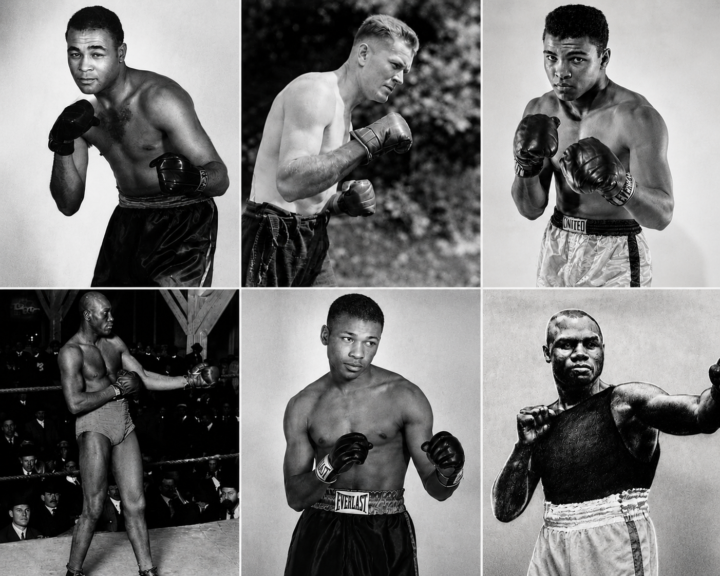
1 like • Jun 4
@Erik Allan Cheers! It helps to have a background in the arts I mention of course; Most have FMA and/or Boxing, but I have quite a bit of BKB too and once you look at the evolution, a single source is highly unlikley. Even natural evolution of the gloved game took a LOt of time. Early fighters - Johnson et al - have BKB fingerprints all over them, even though they were gloved

May 20 •
Question
I am just curious to know what drills or exercises do yall do with the kali sticks to perfect your technique ?
7 likes • May 22
I HIGHLY recommend Bagwork as Kyle said above; it is SO undertrained in FMA- impact changes everything. Make time to go through focusing on the form and alignment through carrenza too. Siniwali patterns, Sumbrada etc.. are all great, but most practitioners collapse under pressure because the core mechanics are lacking and it becomes "drilling for drillings sake". Some well-honed strikes coupled with footwork drills will do way more for the efficacy than most

Feb 28 •
Tai Chi as part of a martial arts workout
Question for the hive mind: I would like to add a small Tai Chi component to my warm up routine for my primary art practice. Based on what I have seen it will help in centering the mind and body. I already do a good amount of stretching and floor drills before moving into my primary art. 1. Suggestions on how to get started (I am new to Tai Chi) 2. Can be learned with minimum investment ($$$) or just time 3. Anything the hive mind may want to know before suggestions. Any and all feed back is greatly appreciated. Arigato 😀
1 like • Mar 5
@Alex Mann here you go - https://mindboxing.mykajabi.com/
1-10 of 10

@jay-cooper-1052
Reality Check founder. Teaching practical self-protection, mindset, and ethical decision-making under pressure. Train smart. Stay real.
Active 1d ago
Joined Oct 9, 2025
Powered by