Activity
Mon
Wed
Fri
Sun
Oct
Nov
Dec
Jan
Feb
Mar
Apr
May
Jun
Jul
Aug
Sep
What is this?
Less
More
AI Web Design Lab
382 members • Free
AI Creator Labs
1k members • Free
The Solo Expert AI Advantage
2.5k members • Free
AI Automation Network
5.3k members • Free
Build Your Online Business
1.4k members • Free
TaskMagic Empire
4.3k members • Free
Automation Station
3.4k members • Free
Automation-Tribe-Free
4.6k members • Free
Vertical AI Builders
10.2k members • Free
4 contributions to Orion Peptides

Jul 1 •
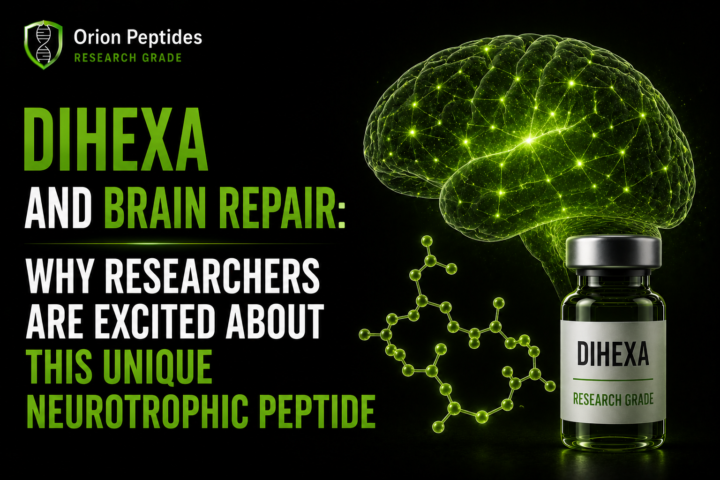
Dihexa and Brain Repair: Why Researchers Are Excited About This Unique Neurotrophic Peptide
When people think about brain recovery, they usually focus on the obvious things: rest, sleep, good nutrition, and time. While those factors are undoubtedly important, neuroscience research has shown that recovery isn't simply about waiting for the brain to heal itself. It's about whether the brain receives the right molecular signals to begin repairing damaged neural networks in the first place. This is where Dihexa has captured the attention of researchers. Unlike many compounds being investigated for cognitive health, Dihexa isn't simply studied for increasing neurotransmitters or stimulating brain activity. Instead, it appears to work much further upstream by interacting with some of the body's most important neurotrophic signaling pathways. For researchers interested in neuroplasticity, brain repair, and cognitive resilience, that makes Dihexa one of the more fascinating investigational peptides currently being explored. What Exactly Is Dihexa? Dihexa is a small synthetic peptide originally developed through research at Washington State University. Interestingly, it wasn't created from scratch. Researchers designed it from a small fragment of angiotensin IV, a naturally occurring peptide produced during the breakdown of angiotensin II, one of the body's hormones involved in blood pressure regulation. While angiotensin IV had already shown intriguing effects within the brain, researchers modified its structure to produce a compound that was considerably more stable and capable of crossing the blood brain barrier. That structural change opened the door to studying entirely new mechanisms involved in neuronal repair. Brain Repair Isn't Just About Neurons One of the biggest misconceptions about brain recovery is that damaged neurons simply regenerate on their own. In reality, successful repair depends on an enormous communication network involving specialized signaling molecules known as neurotrophic factors. These molecules don't directly rebuild neurons.

0 likes • Jul 1
I would love to hear about any experiences using Dihexa. 🤗
Jun 26 •
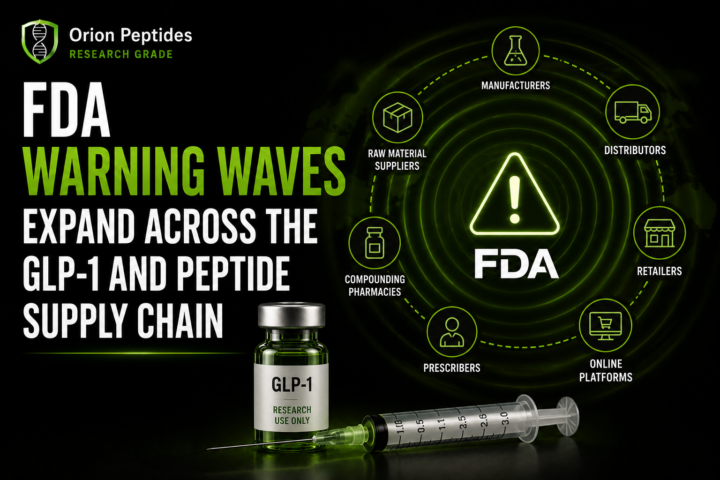
FDA Warning Waves Expand Across the GLP-1 and Peptide Supply Chain
There’s a pattern emerging in regulatory enforcement that’s becoming impossible to ignore. What looks like scattered warning letters is actually a structured rollout moving through the peptide ecosystem layer by layer — starting with compounding pharmacies, then telehealth providers, and now increasingly online peptide vendors. And the most recent wave makes that progression even clearer. The April FDA Sweep: Seven Vendors in One Action On April 7, the FDA issued a coordinated batch of warning letters to seven online peptide vendors: Mile High Compounds Prime Sciences Pink Pony Peptides FormPour Fantasy Face Gram Peptides PekCura Labs The allegations were consistent across all seven: marketing injectable peptides and GLP-1 products without FDA approval. A key detail in several of these cases was the inclusion of bacteriostatic water being sold alongside peptides — something the FDA interpreted as strong evidence that these products were intended for injection rather than “research use only.” That distinction matters, because it directly affects how the FD&C Act is applied. The Broader Enforcement Timeline This April action didn’t happen in isolation. Just weeks earlier, on March 3, the FDA issued 28 warning letters in a single day to telehealth weight-loss companies, including Ivim, Strut, SkinnyRx, Measured, and others. The issue again centered on compounded GLP-1 medications and what the FDA described as false or misleading marketing practices. Before that, enforcement pressure had already begun building in compounding pharmacies: - Boothwyn (February) - GenoGenix (March) - Apothecary Pharma (March) What’s notable here is not just the volume — it’s the sequencing. Each wave appears to tighten around a different layer of the same supply chain. The Vendor-Level Escalation: PureRawz Warning Letter Adding further context to the direction of enforcement, FDA records also include a warning letter issued to PureRawz (MARCS-CMS 715218 — September 08, 2025).
2 likes • Jun 29
@Matthew Kehoe Let's just hope they don't start seizing all the grey market peptides in the transit process. Big Pharma feels very threatened.
Jun 29 •
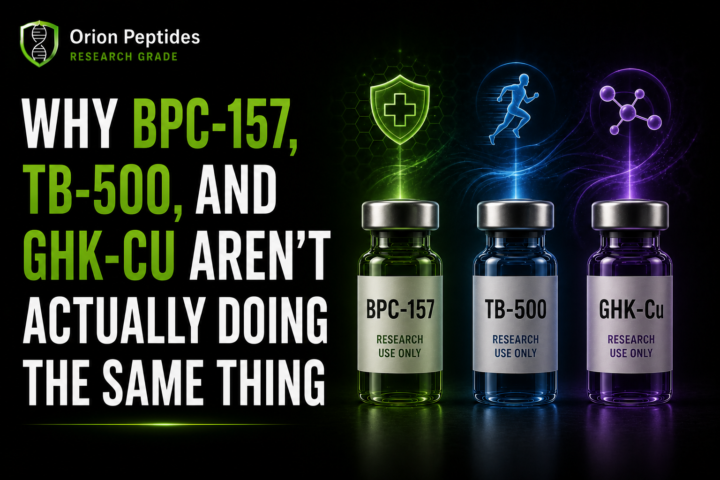
Why BPC-157, TB-500, and GHK-Cu Aren’t Actually Doing the Same Thing
The BPC-157, TB-500, and GHK-Cu peptide blend is often presented as a unified “regenerative stack,” as if three peptides have been combined to push the same biological system harder. That interpretation is not accurate at a mechanistic level. What this blend actually represents is not redundancy, but convergence. Three structurally unrelated peptides, each mapped onto different layers of tissue remodeling biology: cytoskeletal dynamics, extracellular matrix regulation, vascular signaling, and redox-mediated gene expression. They do not share a pathway. They share a domain. And that distinction matters. The Structural Misunderstanding Behind “Recovery Blends” The assumption is simple: if all three compounds are associated with tissue repair literature, then they must be acting on the same regenerative mechanism. But tissue remodeling is not a single pathway. It is a coordinated biological system composed of multiple interacting regulatory networks: • endothelial signaling and vascular response • extracellular matrix turnover and collagen organization • cytoskeletal remodeling and cell migration • inflammatory modulation and immune signaling • oxidative stress and redox regulation Each peptide in this blend interfaces with a different segment of that system. BPC-157: Endothelial and Signaling-Level Modulation BPC-157 is a 15 amino acid fragment derived from a gastric protective protein sequence. Across preclinical models, it has been investigated in the context of vascular integrity, nitric oxide signaling, and growth factor related pathways. Rather than functioning as a structural rebuilding agent, BPC-157 appears to operate upstream at the signaling interface. Research suggests interactions with nitric oxide synthase activity and downstream growth factor cascades such as VEGF-associated signaling under conditions of cellular stress. In fibroblast and tendon-derived cell models, exposure has been associated with altered migration behavior and stress resilience under oxidative conditions.
0 likes • Jun 29
Are they less effective when combined together in the GLOW blend?
Jan 6 •
🛑 Community Rules: Read Before Posting 🛑
Welcome to the team! To keep this space free, educational, and safe for everyone, please read and respect the following guidelines. We are here to research and learn, not to spam or endanger others. 1. NO Selling or Solicitation (Zero Tolerance)🚫 : - Do not use this group to sell your own products, promote your own affiliate links, or push "Underground Lab" (UGL) items. - Any member caught sliding into DMs to sell substances or unverified services will be banned immediately. 2. This is NOT Medical Advice ⚠️ - While I am a professional Biohacking Coach and Trainer, I am not a doctor, and neither are most members here. - Everything shared here is for informational, educational, and research purposes only. - Do not prescribe protocols to others as absolute medical fact. - Always consult with a qualified medical professional (like our partners at Optimal Clinic) before starting any new therapy. 3. Research & "Bro-Science" 🧪 - We love new experiments, but please distinguish between anecdotal experience (what worked for you) and scientific fact. - If you make a bold claim, try to back it up with a source or clearly state that it is just your personal experience. - Help us fight misinformation by calling out bad data respectfully. 4. Respect & Professionalism 🤝 - We are navigating a complex industry together. Treat fellow researchers with respect. - No flaming, harassment, or bullying. - Disagreements are fine; disrespect is not. 5. Privacy Matters 🔒 - Do not post private personal information (addresses, phone numbers, etc.) or sensitive payment details regarding vendors publicly. Keep the feed clean and safe. 🔒
1 like • Jun 16
Agree 👍
1-4 of 4

@janice-schmugge-5481
Interested in the latest health & wellness research to age well. Looking forward to connecting & sharing insights with you all!
Active 4d ago
Joined Jun 1, 2026
Monroe, NC