Activity
Mon
Wed
Fri
Sun
Nov
Dec
Jan
Feb
Mar
Apr
May
Jun
Jul
Aug
Sep
Oct
What is this?
Less
More
Owned by Jim
Understand living systems through permaculture principles, regenerative farming, safe medicinal herb use, and calm practical family resilience.
Understand bees as living systems through observation, biology, evidence, and thoughtful stewardship of colonies, landscapes, and community.
Faith & Flowers
16
Free
16 contributions to YES YOU CAN!
🔥
9d •
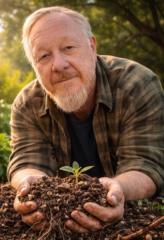
The Question That Changed How We Use Herbs
One of the most common questions I am asked is, "How do I prepare this herb?" That is a good question, but the first question I ask is, “What part of the plant are you using?” Once we know the part, the preparation often becomes much clearer. Leaves and flowers are usually infused as tea. Mineral-rich herbs like nettle and oatstraw often benefit from a longer infusion. Roots, barks, berries, and hard seeds are commonly simmered as a decoction. Aromatic seeds such as fennel and cardamom are often lightly crushed before use. Mucilaginous herbs like marshmallow root may work best as a cold infusion. Resins such as frankincense are often better suited to tinctures, powders, oils, rather than a simple tea. Old school recipes used herbs in cooking not always for taste but also for our health. Herbal learning becomes much more approachable when we begin grouping plants by the parts we use. A simple notebook can be helpful: - Herb name - Part used - Preparation method - Steeping or simmering time - Taste - Notes and observations - Safety considerations - Over time, that notebook becomes a personal herb guide built from real experience. What herb first made you realize that not every plant is prepared the same way?
🔥
1 like • 6d
@Andrew Brooks nice, whats the title...
🔥
0 likes • 6d
@Andrew Brooks very nice
🔥
8d •
Describe Before You Name
When something changes in the body, we often move very quickly from noticing it to naming it. "My throat is sore." "My stomach is upset." "I have a headache." Those descriptions are useful, but they can hide another layer of information. Before deciding what something is, we can first ask, what am I actually noticing? Is the area warmer or cooler than usual? Does it feel dry or moist? Tight or relaxed? Heavy or light? Is something moving freely, or does it feel congested or stuck? These observations do not diagnose a condition. They simply give us a more detailed description of what we are experiencing. That distinction becomes important when we begin studying traditional herbal patterns. Words such as hot, cold, dry, damp, tense, weak, or stagnant are ways herbal traditions have organized observations. They should not be treated as medical diagnoses, and noticing one quality does not automatically tell us which herb to use. For now, we do not need to choose an herb at all. We are practicing something that comes first, describe before you interpret. Think about the difference between saying, "My skin is irritated." and saying, "The area feels hot, dry, tight, and itchy." The second description still does not tell us the cause, but it gives us more information about what is actually being observed. That is the skill I want us to develop before we begin matching herbs to patterns. This week, choose an ordinary sensation you notice. Before naming what you think it is, see how many simple qualities you can use to describe it. What changed when you separated what you observed from what you thought it meant? When you notice something different in your body, which happens first for you?
Poll
1 member has voted
🔥
1 like • 7d
@Jarne Großstück absolutely, "if we only listen" Many do not heed the warning before they get slapped with a disease and they say oh... Not sure why, but it has been very instinctual for me to listen to my body, although cannot say I always followed what I heard :-)
🔥
1 like • 6d
@Jarne Großstück and can easy be improved through understanding and working through a mind, body and soul practice. Easier than many understand. Just meditation alone for me is a miracle drug :-)
🔥
24d •
Book Launch: Lila and the Sleeping Seed
I just officially published my FIRST children’s gardening book on Amazon! https://link.amazon/B04H37V0d It is a sweet children’s story that follows 9 year old Lila as she plants a green bean seed for her dad and learns that even when she can’t see anything happening above the soil, there’s a whole lot going on underneath it. It’s a gentle story about gardening, nature, patience, and learning to give things what they need to grow. Perfect for young readers ages 4–8 who love exploring the outdoors and asks lots of questions. Thank you @Dana Renee for allowing me to share. If you have children or grandchildren you would like to introduce to nature and the world of gardening, Book 1 and the following 5 book series will help you along.
🔥
2 likes • 23d
@Dana Renee thank you

26d •
🤍 Day 7 — CROWN | Unite • Transcend • Be
Practice takes just 5-10 minutes. Today, we activate the Crown Chakra—the center of unity, transcendence, and divine connection. We invite you to breathe into the top of your head, to release all separation, and to remember your oneness with all that is. ✦ Activate & Unite (Recorded Guided Meditation Attached): Sit upright. Place both hands gently on the top of your head. Inhale slowly through the nose. As you exhale, imagine your breath rising from your Crown, like a white or golden light extending upward into the cosmos. Feel your awareness expanding, your sense of self dissolving into unity. Visualize the Ankh glyph at your Crown, its loop forming a halo, connecting you to the Monad. ✦ Affirmation: “I am the Ankh. I am unity. I am transcendence. I trust the Source within me.” Take a few breaths here. Notice what changes when you allow yourself to simply be. ✦ Your Day 7 Invitation: Complete the Crown Chakra activation, unity, and reflection inside the community today. Then return to this post and share one word that describes what you are choosing to unite with. Ankh ascends. Then all becomes One. 🕊️✨ If you are enjoying the journey so far, we invite you to deepen the practice with our guided meditations available in the extended 7-day Chakra Course.🤍 Peace & Love, Dana & @Jarne Großstück

🔥
3 likes • 24d
Thank you... Wonderful
24d •
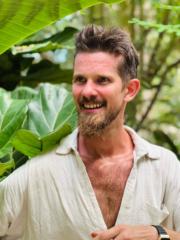
Yes, I can introduce myself…
Simply because I quietly entered… yet that’s not so much who I am. For a long time, I loved being the center of attention, even wearing clothes and adopting styles that would make me stand out. Not only did my looks make it feel like I was meant to be in Hollywood… But the story I created with my life was as flashy as my golden jacket. For over a decade, I lived like I was in a crime movie, crafting the role of a drug dealer and addict leading a team of eight shadows doing the work for me But All that happened because I didn’t believe I could… I grew up in a very strict environment that I stuck to until I exploded… in every way possible… I started doing EVERYTHING that was forbidden until things really went sideways. That drove me to leave Europe, start a new life (a sober one), and discover that I can. I can do anything I want. I only need to accept the consequences. But because I trained myself for years to live behind the curtains I had difficulty being seen, doing it in plain sight… leading me to tremendous amounts of self sabotage… Yet another gift in disguise.. As This led me to master the art of hypnosis, because it gives you the keys to your mind and quiets all the little voices telling you "I can't do that," turning them into "I'm free to do what I love, the way I want to." And here is some hypnosis for you. I’ve handpicked three sessions I share with entrepreneurs to help them make more money:
🔥
2 likes • 24d
Welcome @Asha Hope
1-10 of 16
🔥
@james-flach-4044
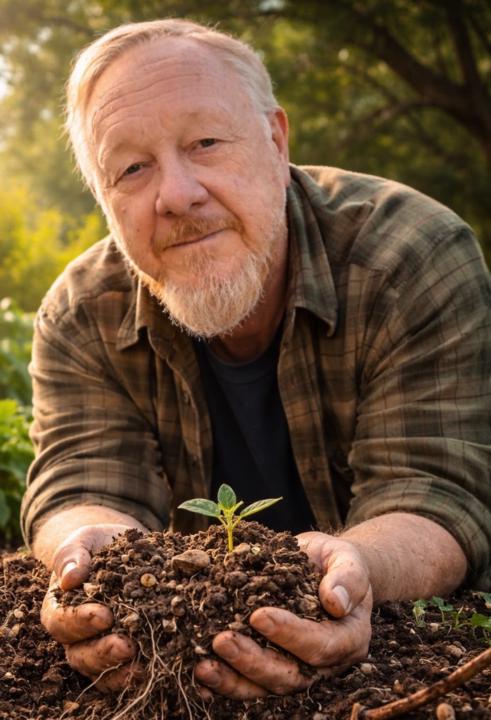
I help families understand off grid living, grow real food, use herbs wisely, and build a more self-reliant home without fear or overwhelm.
0
Reply
Online now
Joined Sep 10, 2026
ENTP
Cookeville, TN 38506
Powered by