Activity
Mon
Wed
Fri
Sun
Nov
Dec
Jan
Feb
Mar
Apr
May
Jun
Jul
Aug
Sep
Oct
What is this?
Less
More
Owned by Jim
Understand living systems through permaculture principles, regenerative farming, safe medicinal herb use, and calm practical family resilience.
Understand bees as living systems through observation, biology, evidence, and thoughtful stewardship of colonies, landscapes, and community.
Faith & Flowers
16
Free
Sticky Business
79
Free
8 contributions to Dakoda Herbals Academy

Aug 24 •
Sympathy & Antipathy in Culpeper’s Herbalism
Happy Monday!! When Nicholas Culpeper published The English Physitian in 1652, he presented plants as part of a living cosmos. Within his system, herbs, organs, bodily processes, and illnesses could all be associated with planetary influences! Two important principles in this approach were known as sympathy and antipathy: 🔥 Sympathy: working through correspondence - In sympathetic treatment, a plant governed by the same planet connected with an organ, bodily function, or condition might be used to support or strengthen it. - For example, an herb associated with Mars could sometimes be used sympathetically for something Culpeper also placed under Mars. The reasoning was that the plant and the condition shared a planetary correspondence. 🌹 Antipathy: working through opposition Antipathy followed a different idea: instead of working with the same planetary influence, the herbalist might choose a plant ruled by a planet considered contrary to the one associated with the illness. Culpeper repeatedly treated Mars and Venus as opposing influences. In The English Physitian, he describes Venus herbs as addressing Venus-related conditions “by sympathy” and certain Mars-related conditions “by antipathy.” In another example, he explains that a Venus herb could benefit the head through its antipathy toward Mars while working sympathetically upon parts governed by Venus. The English Physitian (1652), Graeme Tobyn’s analysis of Culpeper’s planetary assignments This wasn’t quite as simple as: Mars causes the condition, so always use Venus. Culpeper’s reasoning could also consider the affected part of the body, the planet associated with the disease, relationships between planets and signs, the qualities of the herb, and the individual circumstances surrounding the illness. His later astrological medical writing even describes conditions involving Venus and Mars as arising through one influence “by Sympathy” and the other “by Antipathy.” Semeiotica Uranica: An Astrological Judgment of Diseases

🔥
1 like • Aug 24
What I find interesting is how observation still shapes our understanding today. Culpeper was looking for relationships between plants, the body, illness, environment, and the larger world around him. Today we are more likely to look at plant chemistry, physiology, metabolism, and clinical evidence. The earlier herbal traditions often understood the plant within a broad web of relationships, while modern research frequently focuses more narrowly on particular compounds, mechanisms, and measurable effects. These modern tools give us much better ways to test past observations, although many traditional remedies and observations have fallen outside mainstream medicine's focus. That is one reason herbal knowledge is so interesting to me. The modern herbalist can respect those earlier observations, study them carefully, remain open to what modern evidence teaches us, and bring the two together into a better understanding of the plant. We are all in natures cycle and modern thinking feels they can control nature It leaves me wondering how many old herbal traditions contain a useful observation inside a theory many no longer accept, and how many of those observations may simply have been set aside rather than fully investigated. Personally, I would rather have an herbal book written before 1900 sitting beside several good modern references than rely entirely on either one. The older book may preserve observations we have forgotten, while the newer sources give us better tools for testing. What we typically find is that the observers of nature had the better understanding than much of the chemistry today..
Aug 18 •
Tuesday Botany Bite: What’s in a Scientific Plant Name?
Common plant names are wonderfully descriptive, but they can also be confusing! One plant may have several common names depending on the region, while completely unrelated plants may share the same common name. That becomes especially important when we are discussing edible or medicinal herbs, because confusing two species can have serious consequences. This is why it's important to learn botanical names. A plant’s scientific species name usually contains two words, a naming system called binomial nomenclature: ⭐️ Genus + specific epithet For example: - Vaccinium scoparium Vaccinium is the genus. It groups the plant with closely related species, including many blueberries, bilberries, cranberries, and huckleberries. - scoparium is the specific epithet. Together, Vaccinium scoparium identifies one particular species commonly known as grouse whortleberry. A few naming rules: - The genus begins with a capital letter - The specific epithet is lowercase - Both words are italicized when typed (Skool platform does't let me do that in these posts) - When handwritten, each word is traditionally underlined - After the full name has been written once, the genus may be abbreviated: V. scoparium You may also see “sp.” after a genus, such as Vaccinium sp. This means the plant belongs to that genus, but its exact species has not been identified or specified. “spp.” refers to multiple species within the genus. Plants are also organized into larger groups based on shared characteristics and evolutionary relationships: Kingdom → Order → Family → Genus → Species For our example: - Kingdom: Plantae - Order: Ericales - Family: Ericaceae, the heath family - Genus: Vaccinium - Species: Vaccinium scoparium Plant family names can offer helpful clues. Most botanical family names end in “aceae.” Once you begin recognizing family patterns, you may notice shared flower structures, leaf arrangements, fruits, or other characteristics among relatives. However, family resemblance alone is never enough to confirm that a wild plant is edible or medicinal. Identification should be made at the species level whenever possible, using multiple characteristics and reliable, current references.

🔥
2 likes • Aug 18
nope, they are all intimidating :-) but mandatory as you say to truly understand the herb you are using.
🔥
0 likes • Aug 19
@Alexandria Dierkes-Whitson :-)
Aug 13 •
The Ancient Apothecary: Egyptian Blue Lotus Wine 🪷
What if I told you the ancient Egyptians may have prepared ceremonial drinks containing their sacred blue lotus? Meet blue lotus, Nymphaea caerulea, more accurately known as the Egyptian blue water lily. Because its blossoms close and reopen in rhythm with the daylight, the flower became associated with the rising sun, regeneration, rebirth, and the renewal of life. It was also closely connected with Nefertem, the ancient Egyptian god of fragrance, healing, and the first light of dawn. He was commonly portrayed crowned with a blue water lily or emerging directly from one! Blue lotus imagery appears throughout ancient Egyptian culture. We see it carved into temples, painted in tombs, held by guests in banquet scenes, and included among the floral remains associated with Tutankhamun’s burial. Those banquet scenes often show people holding or smelling the flowers while drinking wine. This has led some scholars to propose that blue lotus may also have been infused into wine or other ceremonial beverages. However, the artwork alone cannot provide an exact recipe or prove that every depicted flower was placed in the drink. Then, in 2024, researchers published some of the strongest direct chemical evidence yet. Residue from a roughly 2,200 year old ritual vessel decorated with the face of the god Bes contained evidence of Egyptian blue water lily alongside Syrian rue, a plant from the genus Cleome, honey or royal jelly, human derived substances (I don't wanna know), and a fermented fruit based liquid. This does not prove that every Egyptian banquet included blue lotus wine. It does, however, demonstrate that the flower was physically incorporated into at least one complex ceremonial preparation, not merely represented symbolically in artwork. Blue lotus contains naturally occurring alkaloids and other compounds that may extract differently in alcohol than in water. Its chemistry is still being investigated, however, and the surviving evidence does not allow us to reconstruct the original preparation, dosage, or effects.

🔥
1 like • Aug 14
I'm in :-)
Aug 7 •
Plants of the Seven Planets, Part Two: Herbs of the Sun ☀️
“The Sun wasn’t merely a star to medieval herbalists. It was regarded as the king of the planets.” In our last post, we explored why the Sun and Moon were included among the seven classical planets. Now, we are beginning with the most radiant of them all: the Sun. But what made an herb a Sun herb? The Sun in traditional astrology In medieval and Renaissance astrology, the Sun represented: ☀️ Life and vitality ☀️ Light and warmth ☀️ Authority and courage ☀️ The heart ☀️ The vital spirit Although modern astronomy classifies the Sun as a star, earlier observers counted it among the seven “planets,” meaning the celestial lights that appeared to wander across the sky in relation to the fixed stars. Astrologers often distinguished the Sun and Moon from the other five planets by calling them the luminaries. Nicholas Culpeper connected the Sun closely with the heart and what seventeenth-century medicine called the vital spirit. He wrote: “The Vital spirit hath its residence in the heart…and is governed by the influence of the Sun.” Culpeper compared the Sun’s place in the cosmos with the heart’s place in the human body. Just as the Sun was believed to give life, light, and motion to creation, the heart distributed life throughout the body. This reflects the older idea of the human being as a microcosm, or a smaller reflection of the greater universe. What made a plant solar? It was not enough for a plant to grow in full sunlight or produce yellow flowers. Herbalists considered a combination of characteristics, including: ☀️ Appearance and color ☀️ Taste and aroma ☀️ Growth patterns and flowering season ☀️ Traditional medicinal reputation ☀️ Associations with warmth, vitality, or the heart ☀️ Folklore and astrological symbolism A solar herb might be described as warming, aromatic, uplifting, strengthening, or enlivening. Golden flowers, midsummer blooming, and a tendency to open or turn toward daylight could reinforce a solar association, but there was no universal checklist.
🔥
2 likes • Aug 7
I’m thinking saffron because I enjoy studying herbs used thousands of years ago and are still popular today.
🔥
0 likes • Aug 11
@Alexandria Dierkes-Whitson Yes... I am going to try to grow some indoors just to see how it grows this winter.
Jul 1 •
Weekly Materia Medica Series: Therapeutic Terms A-Z
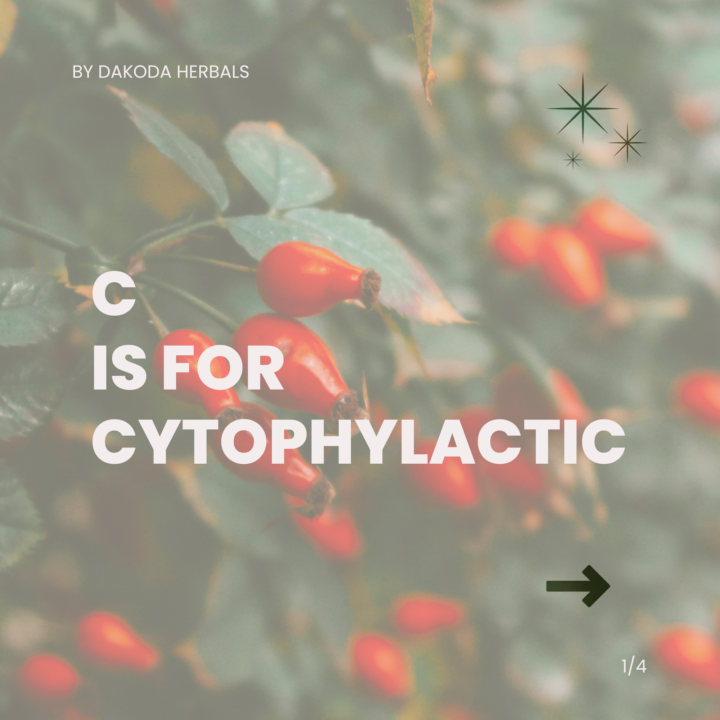
C is for Cytophylactic Welcome back to our Weekly Materia Medica: Therapeutic Terms A-Z series! One of the biggest hurdles when learning herbalism is all the unfamiliar terminology. My goal with this series is to break down these words into simple, practical concepts that you can actually remember and apply. This week's term is: Cytophylactic (sigh-toe-fill-AK-tik) The word comes from: - Cyto- = cell - -phylactic = protective So, a cytophylactic herb is traditionally described as one that helps protect cells and supports healthy tissue regeneration. Rather than magically creating new cells, these herbs are traditionally valued for supporting the body's own natural repair processes and maintaining healthy tissues. These herbs are often chosen to support: ✨ Skin health ✨ Tissue repair ✨ Healthy wound healing ✨ Connective tissue ✨ Overall cellular resilience Some classic examples include: Gotu Kola – Traditionally used to support connective tissue, collagen production, and wound healing. Rosehips – Rich in vitamin C, which plays an important role in normal collagen formation and tissue health. Lavender – Traditionally used topically to soothe irritated skin and support the healing environment of minor skin irritations. Frankincense – Traditionally prized in skincare and wound-care preparations for its soothing and skin-supportive properties. Let's discuss! Can you think of any other herbs that you would consider supportive for healthy tissue repair or skin health? Have you used any of these herbs yourself? Drop your thoughts below! 🌿👇 Stay tuned for nexts weeks term! As always, herbal traditions complement, not replace, professional medical care. Individual herbs have different safety considerations, so always research contraindications before use.
🔥
3 likes • Jul 1
Thank you for sharing... I focus on herbs for aging so fortunately I have used most above and several others. I take a frankincense supplement for joint health... rotate gotu kola in and out for the brain... rosehips about daily as it brings in a little sweetness and floral; others I use if you count moisturizing as skin health are oatstraw and marshmallow... first two that came to mind were calendula and plaintain... aloe vera is a classic burn healer and yarrow for tightening the skin like in bleeding... and then stinging nettle for mineral support and connective tissue. I look forward to the series.
🔥
1 like • Jul 3
@Tamara Flier hey Tamara
1-8 of 8
🔥
@james-flach-4044
I help families understand off grid living, grow real food, use herbs wisely, and build a more self-reliant home without fear or overwhelm.
0
Reply
Online now
Joined May 13, 2026
ENTP
Cookeville, TN 38506