Activity
Mon
Wed
Fri
Sun
Oct
Nov
Dec
Jan
Feb
Mar
Apr
May
Jun
Jul
Aug
Sep
What is this?
Less
More
Owned by James
Law Made Simple - Join Law Clinic’s Community to learn, share and gain essential legal knowledge! We have the tools available for your legal dispute!
Synthesizer
46.9k members • Free
66 contributions to Law Clinic Support Hub

9d •
🚔⚖️ Stopped by the Police? What Next?
Imagine that you're stopped by the police for alleged speeding or another road traffic offence. You might be asked to sit in the back of the police vehicle, where the interaction may be recorded, and the officer asks: 💬 “Do you know what speed you were doing?” Or perhaps drink or drug driving is suspected: 💬 “Have you had anything to drink?” 💬 “Have you taken any drugs or substances?” These questions may sound conversational, but remember that the officer may also be gathering evidence. An answer such as “I might have been doing 80 or so”, “I've only had two pints” or “I had one spliff” could potentially amount to an admission and become part of the evidence against you.... ⚠️ Don't panic — and don't feel that you need to talk your way out of the situation. Be polite — the police have a job to do. Stay calm, don't argue at the roadside and don't lie. Comply with lawful requirements and provide information you are legally required to provide. There is an important difference between complying with a legal requirement and volunteering explanations or admissions about the alleged offence. 🚔 The police vehicle doesn't necessarily have to be marked either. In Great Britain, police have a general power to stop vehicles, and an initial stop can involve an unmarked police vehicle. There are, however, specific rules concerning who can require certain roadside tests. For example, where a preliminary breath test is required on the basis of a suspected moving traffic offence, the constable imposing that requirement must be in uniform. 🚗 And something else many motorists don't realise: the stop might initially have nothing whatsoever to do with alcohol or drugs. Perhaps you have a defective brake light. Perhaps the officer observes a traffic offence. Perhaps an ANPR check raises an issue concerning the vehicle such as your insurance or tax has expired. A routine traffic stop can therefore potentially develop into a wider investigation..... If you are lawfully required to provide a breath specimen or roadside drug test, asking for a lawyer does not give you the right simply to refuse it.
1 like • 4d
@Imran Latif thank you! Many people say far too much at the time due to panicking. Some apologise especially if another vehicle was involved. Far better to wait and speak to a lawyer before incriminating yourself any further…
21d •
⚖️ Have a Legal Question? You Can Ask Me Directly on JustAnswer
Some of you may not know that, alongside running this community, I have been answering legal questions through JustAnswer since 2016. Over that time, my profile has now reached more than 17,000 satisfied customers. It has given me the opportunity to help people with an enormous variety of legal problems—from relatively straightforward questions to some extremely complicated disputes. 👨⚖️ What can you ask about? My work covers a broad range of UK and Irish legal issues, including consumer disputes, employment problems, landlord and tenant matters, contracts, debt and money disputes, property issues, civil litigation and court procedure, family matters and many of those situations where you simply think: “I don't know what my legal position is or what I should do next.” 💬 One of the advantages of asking online is that you can explain what has happened in your own words, receive an answer and then ask follow-up questions if something needs clarification. Sometimes people don't actually need to instruct a solicitor to conduct an entire case. They simply need someone to explain: ⚖️ what the law says; 🧭 what their realistic options are; 📄 what they should do next; and 🚨 what they should definitely not do. That's also very much the philosophy behind this Skool community—making the law easier to understand and helping people make informed decisions before a problem becomes unnecessarily expensive. ❓ So, if you have a UK or Irish legal question you'd like to put to me personally, you can find my JustAnswer profile here: 👉 Ask JimLawyer on JustAnswer: https://www.justanswer.co.uk/law/expert-jimlawyer And please don't feel that your question is too small, too complicated or something you “should already know”. I've been a solicitor for many years, and one thing I've learned is that there is rarely such a thing as a silly legal question. Quite often, asking the right question early can prevent a much bigger problem later. ⚖️
1
0

27d •
Contract Dispute
Hi everyone, this is my first time using Skool, so apologies if I haven’t posted this in exactly the right place. I’m hoping someone can give me some guidance regarding an MMA gym membership contract and a potential serious injury. I recently joined an MMA gym on what I understand to be a 12 month contract. Unfortunately I sustained a fairly serious knee injury while training MMA. I initially took some time off to let it recover and then tried returning to training. Unfortunately, when I went back, I injured the same knee again. I’m now being referred for an MRI as we speak, as there is concern that I may have torn/blown my ACL. At the moment I’m not in a position to continue MMA training. I’ve contacted the gym about the situation and have also provided them with a doctor’s note confirming the potential injury and next steps. However, I’ve been told that I’m still expected to pay for the full 12 month membership, despite the injury preventing me from training MMA. I’m not trying to avoid paying something I legitimately owe. My concern is whether it’s reasonable or legally enforceable to require me to pay for an entire year’s membership when a significant injury sustained doing the activity has left me unable to use the service. I’d really appreciate some guidance from anyone familiar with UK consumer law, gym membership contracts or unfair contract terms. In particular: - Can a gym legally insist on the entire remaining 12-month payment in these circumstances? - Does a serious injury/medical inability to train normally provide grounds for cancellation? - Does providing a doctor’s note strengthen my position? - Are there any particular UK consumer rights or regulations I should be looking at? - What would be the best next step if the gym as the gym are very slow and seems reluctant to give me more details unless I cancel my direct debit and then they are quick to tell me they will take it to enforcement. I’m currently waiting for the MRI referral/scan, so I should hopefully have further medical evidence regarding the extent of the injury.
1 like • 25d
Sorry to hear of the issue and I hope you recover from the injuries soon. As for where you stand, there is a strong basis for challenging the gym’s position, particularly if it is saying that you must continue paying every remaining monthly instalment despite medical evidence that a significant injury prevents you from using the service. Under sections 62–64 of the Consumer Rights Act 2015 (CRA), a consumer contract term must be fair and transparent. Section 62 provides that an unfair term is not binding on the consumer. The fairness test asks, broadly, whether the term, contrary to good faith, causes a significant imbalance in the parties' rights and obligations to the consumer's detriment. Schedule 2 to the CRA contains the indicative list of terms which may be regarded as unfair. Particularly relevant is Schedule 2, Part 1, paragraph 5, concerning a term requiring a consumer who fails to fulfil their obligations to pay a disproportionately high sum in compensation. The wider Competition & Markets Authority (CMA) guidance is also relevant: excessive cancellation charges and terms allowing a trader effectively to retain more than is reasonably justified by its loss are susceptible to challenge. There is also case law authority specifically concerning gym memberships. In Office of Fair Trading v Ashbourne Management Services Ltd [2011] EWHC 1237 (Ch), the High Court found a number of minimum-term gym contract provisions unfair. Of particular relevance, terms requiring consumers who terminated early to pay the balance of the remaining monthly payments were found unfair in the contracts considered by the court. The subsequent CMA evaluation of the gym-sector enforcement action expressly identifies as problematic a one year minimum membership without a right to terminate where circumstances change, including illness or injury. The CMA has also stated that gym contracts are now commonly cancellable where a member cannot use the gym because of injury. That does not mean that every 12 month gym contract is automatically unenforceable or that an injury automatically extinguishes the contract. The actual membership terms need to be examined.
1 like • 22d
Yes, I think you have done the right thing by going back to them and asking them to address the specific points raised. Their response does not really answer the Consumer Rights Act issue; it simply restates their position that they will pause the membership but ultimately expect the full balance to be paid. For the moment, I would keep the Direct Debit active while you are awaiting the MRI and their substantive response. That avoids giving them an unnecessary argument that you have simply defaulted on the contract. The MRI and any subsequent medical evidence could be important. In particular, if your doctor or specialist is able to confirm that you are medically unable to participate in MMA for the foreseeable future, that would strengthen the argument considerably. If they continue to avoid the questions or simply repeat that the full balance is payable, the next step would be a more formal complaint challenging the relevant contractual term under the Consumer Rights Act 2015 and asking them to provide their final position. |At that stage we can also consider whether it is appropriate to stop further payments and formally dispute any balance they seek to recover. For now, I would await their response and the medical evidence rather than cancel the Direct Debit immediately.
29d •
🤖💼 Will AI replace us at work?
This got me thinking and made me worry.... Artificial Intelligence is developing at an extraordinary pace, no doubt about it. It can already draft documents, analyse data, write computer code, deal with customers, create images and perform tasks that once required skilled professionals. So the big question is: will AI eventually replace us at work? ⚖️ Take the legal profession. AI can already assist with research, draft letters, summarise documents and analyse evidence. But lawyers still provide something much harder to automate: judgement, negotiation, advocacy, strategy and human understanding. The same could apply to doctors, accountants, teachers and many other professions. Perhaps the real risk isn't simply AI replacing people. It may increasingly be people who know how to use AI replacing those who don't. 🏭 We've been through technological revolutions before. Machinery transformed farming, factories automated manual work, computers replaced huge amounts of administration and the internet completely changed retail, banking and communications. Jobs disappeared—but entirely new jobs and industries were created. 🤖 The difference with AI is that we're increasingly automating thinking, not simply physical labour. And when robotics and AI are combined, both physical and cognitive work could potentially be affected. 💷 Elon Musk has an even more radical prediction. He believes AI and robotics could eventually produce goods and services in such enormous quantities that work becomes optional. He has talked about a future of “universal high income” rather than merely universal basic income. 📉 Musk's economic argument is fascinating. If AI and robots dramatically increase the supply of goods and services faster than the supply of money increases, he predicts substantial "deflation", in other words, many things become progressively cheaper. He has even suggested that, eventually, money itself could cease to be particularly relevant. But there is an obvious counterargument. 🏠 AI might make manufacturing extraordinarily cheap, but it cannot create unlimited land in London, another beachfront property in Cornwall or infinite natural resources. As long as desirable things remain scarce, we'll presumably still need some mechanism for deciding who gets them.
2
0
Aug 5 •
🏡💼 Work From Home Opportunities – How Do You Separate Genuine Businesses From Scams?
Since the pandemic, millions of people have started looking for ways to earn an income from home. Some opportunities are genuine (see the one at the end of this post). However, many are not.... As a lawyer, I've seen people lose huge sums of money to "business opportunities" that were never what they claimed to be. So, before you part with any money, here are a few things to consider. 🚩 Red Flag No. 1 – "Guaranteed Income" Be cautious of anyone promising: 💷 "Guaranteed earnings" 💷 "£5,000 a month with no effort" 💷 "Financial freedom in weeks" There is nothing wrong with promoting earning potential... But no genuine business can guarantee what you will earn. Income usually depends on your own effort, skills and commitment. 🚩 Red Flag No. 2 – Pressure To Act Immediately Scammers often rely on urgency. You'll hear things like: ⏳ "Only available today." ⏳ "You'll miss out." ⏳ "Sign up now before it's gone." A legitimate opportunity should give you time to: ✔️ ask questions ✔️ read the information ✔️ carry out your own research ✔️ decide whether it's right for you. 🚩 Red Flag No. 3 – You Don't Understand The Business Before joining anything, ask yourself: 👉 What product or service is actually being sold? 👉 How does the business make money? 👉 Is there genuine customer demand? 👉 Is it regulated where appropriate? If someone cannot clearly explain the business model... That's a warning sign. 🚩 Red Flag No. 4 – Large Upfront Payments Some businesses charge a modest joining fee for training, administration or starter materials. However, be cautious where you're expected to hand over: 💳 hundreds or even thousands of pounds before you've even started. Always ask: 👉 What exactly am I paying for? 👉 Is it refundable? 👉 Is there a written agreement? 🚩 Red Flag No. 5 – Crypto & Investment Opportunities One of the fastest-growing areas of fraud involves: 📈 cryptocurrency 💹 forex trading 🤖 AI trading bots 📱 investment groups on social media
1
0
1-10 of 66
@james-easson-3362
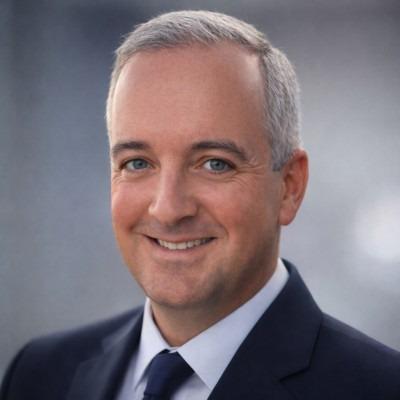
Solicitor & Founder of Law Clinic Support Hub — helping you resolve your legal disputes quickly and effectively to help you avoid legal action!
Active 22h ago
Joined Oct 20, 2025
London, UK