Activity
Mon
Wed
Fri
Sun
Dec
Jan
Feb
Mar
Apr
May
Jun
Jul
Aug
Sep
Oct
Nov
What is this?
Less
More
TAX DEED LIEN FOR BEGINNERS
488
Free
Tax Deed Wealth 101
40
5.0
$67/m
Payneless Flipping Deal Room
281
Free
ClickFlow Automation
143
Free
AI Marketing Insiders
2.2k
5.0
Free
AI Freelancers
4.9k
Free
RC Agency Owners & Freelancers
9.5k
Free
the skool CLASSIFIEDS
2.1k
5.0
$2/m
8 contributions to ClickFlow Automation

Oct 11 •
Your AI Follow-Ups Are Too Robotic
Here’s a mistake I think a lot of businesses are going to make as they start automating their sales processes. They’ll build an AI agent that responds to every new lead instantly, sends follow-ups, and books meetings. Sounds great, right? But there’s a problem. Not every lead should receive the same follow-up sequence. Think about two people who fill out a form on your website. Person A: Wants to get started immediately, has a budget, and is ready to book a call. Person B: Is researching options, doesn’t have a timeline, and just wants some information. If your automation sends both people the exact same five-message sequence pushing them to book a call, you’re probably handling at least one of them incorrectly. And this is where I think the difference between basic automation and genuinely useful AI agents starts becoming clear. Your agent shouldn’t just know WHEN to follow up. It should know WHY. For example, a better lead follow-up system could work like this: 1. Identify intent: Analyze the inquiry to determine whether the person is ready to buy, comparing options, or simply researching. 2. Choose the next action: Send a booking link to someone ready to talk, but provide useful information to someone still evaluating. 3. Monitor engagement: If someone clicks your pricing page after receiving a follow-up, that’s a different signal than someone who hasn’t opened anything. 4. Change the sequence: Adjust the next message based on what the person actually does instead of blindly sending message #3 because 48 hours have passed. 5. Know when to stop: If someone says they’re not interested, the system should recognize that and stop pushing. You don’t need AI making every decision. Simple rules can handle things like timing, unsubscribe requests, and stopping a sequence when someone books. AI becomes useful when the system needs to interpret something less predictable, like what a prospect actually means in their reply. The goal isn’t to replace a basic five-email sequence with a more expensive AI-powered five-email sequence.

1 like • Oct 12
Agree. I'd add matching the channel and timing to how the lead came in. Someone who called and hung up wants a quick text back within a few minutes, not an email sequence. Someone who downloaded a guide is fine with slower, email-paced follow-up. And the moment a lead replies, the automation should step aside and hand the conversation to a person with a short summary of what they asked.
0 likes • 30d
@DylanMurray Great point — as you scale those builds into client production, grab our <0.5ms pre-action kill-switch + idempotency blueprint (and 30% recurring agency partner program) here: https://thumbgate.ai/operator-framework

Oct 14 •
What's the Most Useful Automation You've Actually Built? 🤖
I want to learn from people who are building things, not just collecting AI tools. What's one automation you've built that genuinely saves time, generates leads, improves sales, or solves a real problem? It doesn't have to be complicated or make money yet. Share three things: What it does Which tools you used What result you achieved (or expect to achieve) Even a simple workflow that saves someone five hours a week can be valuable.
0 likes • Oct 14
Mine is boring but it's the one I'd build first again. What it does: every morning at 8:30 it pulls the previous day's numbers (new sales, free-screen requests, webinar signups) into one short summary, and a separate alert fires the moment a payment comes in. Tools: n8n, plus the webhooks the checkout and form tools already send. Result: honestly, time and focus so far, not money. Nobody has to check a handful of dashboards each morning, and a zero day is obvious instead of easy to ignore. The lesson for me was to build the scoreboard before the fancy agent. It tells you which part of the funnel is actually broken, so you know what to automate next.
0 likes • 30d
@Param Shah Spot on — once that scoreboard tracks cost-per-completed-task and catches silent tool failures before they hit the client CRM, retention skyrockets. We packaged our exact pre-action scoreboard + <0.5ms kill-switch blueprint into our Operator Framework (with a 30% recurring partner share if you ever bundle it into client offer builds): https://thumbgate.ai/operator-framework — what are you building next?
Oct 5 •
AI Employee 🆚 AI Tool Headache
If you are interacting with AI and automation in your business every day, you either feel like a productive genius or a frustrated amateur. Right now the productive geniuses are leveraging phase 2 AI employees. On the other hand, you’re likely really frustrated if you are still spending hours trying to master phase 1 DIY AI tools! This problem is one of the biggest issues I’ve noticed in the AI freelance space over the past 18 months. Where in this do you currently stand? Are you getting pretty fed up or do you actually have AI making your life easier?

1 like • Oct 13
Sitting more on the employee side than the tool-wrestling side lately. The shift that helped was treating the AI like a junior with a clear intake checklist and a hard handoff, instead of a smarter chat box. When it has a job description and a place to park exceptions, it stops feeling like another dashboard to babysit.

🔥
Oct 11 •
Rate my cold email offers
Rate my Offers. Which one should I use for each niche? 1. Lead Generation & Cold Email Offer 1: I will guarantee you 20 booked sales appointments in the next 60 days or you don't pay. No strings attached. Just say yes and I'll get started. Offer 2: I'll find you 100 potential leads that match your ideal customer profile, completely free. If you're happy with the leads and want to take things further, I can also run the cold email campaign for you. No commitment required. To get started, just tell me your ideal customer profile, including your target industry, job titles, company size, and location. 2. High-Ticket Coaches & Consultants Offer 1: Speed-to-Lead & Appointment Booking I'll build you a free demo showing how new enquiries can receive an immediate response, get qualified, and be guided towards booking a sales call. If you like it, I can set up and automate the entire process for your business. To get started, just tell me about your coaching or consulting offer, your ideal customer profile, and how you currently handle new enquiries. No commitment required. Offer 2: Dormant Lead Reactivation I'll help you identify 100 potential clients from your existing leads who showed interest in your coaching or consulting offer but never signed up. I'll organise them into a targeted reactivation list, completely free. If you'd like to take things further, I can also build and run a campaign to reconnect with them and help recover lost sales opportunities. To get started, just tell me about your offer, your ideal customer profile, and where you currently store your leads. No commitment required. 3. HVAC Companies Offer 1: Missed-Call Recovery I'll build you a free demo of a missed-call recovery system for your HVAC business that automatically follows up with missed callers, captures their service requests, and helps turn missed calls into booked jobs. Only if you like it, you pay. To get started, just tell me about your HVAC services, your service area, and how you currently handle missed calls.
2 likes • Oct 12
For HVAC I would lead with the missed-call one. Owners already know they miss calls when the techs are out, and the result is easy to count: calls caught and jobs booked. Two tweaks. "Only if you like it, you pay" reads a bit loose, so name what they get and for how long, for example a 2-week pilot on their real number. And open with one question instead of three, like "Roughly how many calls go to voicemail in a busy week?" That is much easier to answer. On the 20 appointments guarantee: only offer it if you have defined what counts as booked and you have some control over show rates. Otherwise it can turn into a lot of unpaid work.
Oct 8 •
The Real Advantage Isn’t the Tool
Something I’ve been realizing lately: - AI is moving so fast that knowing how to use one specific tool isn’t enough anymore. 🤖 The real advantage is understanding how to connect tools, automate processes, and actually solve business problems. ⚙️ Tools will keep changing. New models and platforms will keep coming out. But the people who can learn, adapt, and build will always have an advantage. 📈 So instead of trying to learn every new AI tool, I’m focusing more on understanding how things actually work and building with them. 🛠️ Still a long way to go, but making progress every day. 💪 Learn → Build → Break → Fix → Repeat. 🔁
Poll
2 members have voted
1 like • Oct 10
Agree the durable skill is the workflow, not the tool. A practical way in: write the outcome in one sentence, list each step as input, decision, output and who signs off, then pick tools only for the steps that remain. Keep the connection points few, such as inbox, CRM, calendar and one document store, and log every run so you can see where it breaks. Put a human yes on anything that sends a message, moves money or edits a record until it has run clean for two weeks. In the first 30 days, spend 20 minutes each week reviewing failed or edited runs and fix the step that caused them before adding another tool. Which business process are you wiring up first?
1 like • Oct 11
Exactly — if the outcome sentence is fuzzy, the agent just amplifies that fuzz. One-sentence objective first, then tools.
1-8 of 8
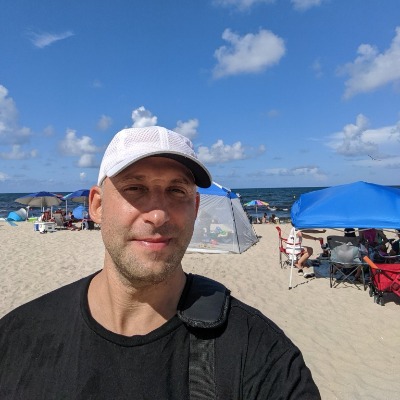
@igor-ganapolsky-7420
AI missed-call text-back & lead triage for contractors. Get audit: buy.stripe.com/14A4gz9eA8Hkf0lfSH3sI1B?client_reference_id=skool_profile
Active 5h ago
Joined Aug 31, 2026
ISTJ
Fort Lauderdale, Florida