Activity
Mon
Wed
Fri
Sun
Nov
Dec
Jan
Feb
Mar
Apr
May
Jun
Jul
Aug
Sep
Oct
What is this?
Less
More
Make $1k-$10k in 30 days
215
5.0
$30/m
RC Agency Owners & Freelancers
8.4k
Free
Chase AI Community
79.7k
Free
AI Finance Community
10.5k
Free
AI Automation Agency Hub
335.5k
Free
NextGen AI
60.9k
Free
Callivra Institute
109
Free
AI Tools & Training Club
7.9k
$33/m
Next Level Developers
32
Free
11 contributions to Callivra Institute

May 25 •
Building Software That Actually Scales
Introducing TechCognify. We focus on building software that is not only functional, but scalable, reliable, and aligned with real business goals. Our approach is simple: - Understand the problem - Design with clarity - Build with performance in mind - Deliver solutions that support long-term growth
1
0
May 24 •
Introduction
Hi everyone 👋 I’m a Software Engineer and currently building two tech startups. One of them is TechCognify ( techcognify.com ), a services-based company focused on: • AI-powered SaaS applications • AI integrations & automation • Agentic AI solutions • Web & mobile app development Alongside that, I’m also working on a healthcare-focused application that I plan to launch in Pakistan, with the goal of making digital healthcare more accessible and impactful. Passionate about learning new things, building meaningful technology, collaborating with ambitious people, and contributing to the growing AI ecosystem
1
0
May 23 •
From Learning to Building — Inside TechCognify’s Internship Program
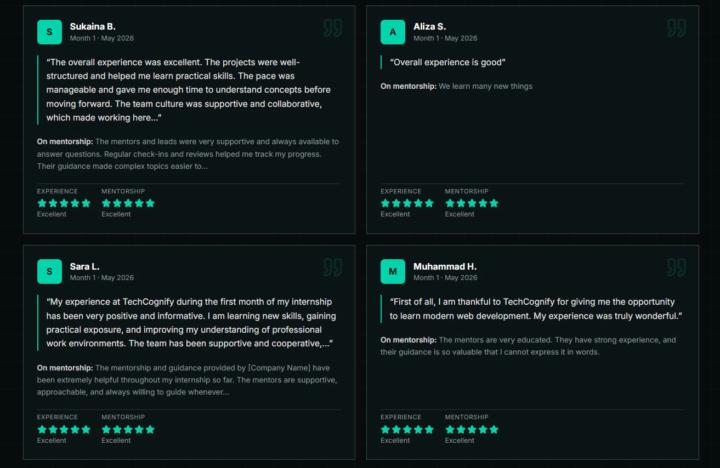
At TechCognify , one of the most rewarding experiences for me has been mentoring students from different universities across Pakistan through our Advanced Internship Program — Cohort 01. I started this initiative because during my own learning journey, I realized how difficult it was to learn real-world skills, build production-level projects, and understand how to actually turn those skills into freelancing or career opportunities. Please Visit to know more about the program and the structure of mentorship we followed, https://lnkd.in/dbi6MApD Today, Alhamdulillah, more than 178 interns are enrolled in our completely FREE, remote-based 15-week SaaS Mentorship and Internship Program. The interns have now successfully completed their first month, where the primary focus was building strong web development foundations. During the first phase, interns learned: • Git & GitHub workflows • HTML, CSS & responsive design • Modern JavaScript (ES6+) • REST APIs fundamentals • React.js fundamentals • Component architecture & state management Alongside the learning sessions, interns also worked on practical projects to apply these concepts in real scenarios instead of only following tutorials. This program is designed around real-world execution and mentorship. Every weekend, interns attend live cohort sessions, receive tasks, submit projects, participate in reviews, and continuously improve through structured feedback. We also built the TechCognify Interns LMS to manage the complete cohort experience with attendance analytics, quizzes, community interaction, project reviews, feedback systems, and progress tracking — making the internship feel closer to a real engineering environment rather than a traditional internship. I’ll make a separate post soon sharing more details about the Advanced Internship LMS Portal as well. One of the most beautiful parts of this journey has been reading the interns’ feedback after their first month. Many students shared how the program helped them gain confidence, understand the industry roadmap, improve their practical skills, and finally start building real projects instead of just watching tutorials.
1
0
May 22 •
Build Great Tech — Without the Hiring Headaches
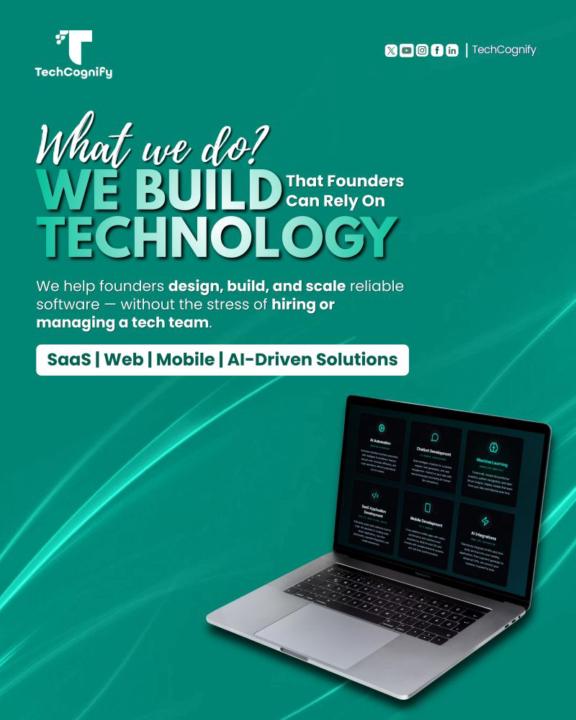
Building great technology shouldn't mean drowning in hiring headaches. At TechCognify, we partner with founders to design, build, and scale reliable software — so you can focus on growing your vision, not managing a tech team.
1
0
May 20 •
Your Software Isn’t Failing — Your Architecture Is
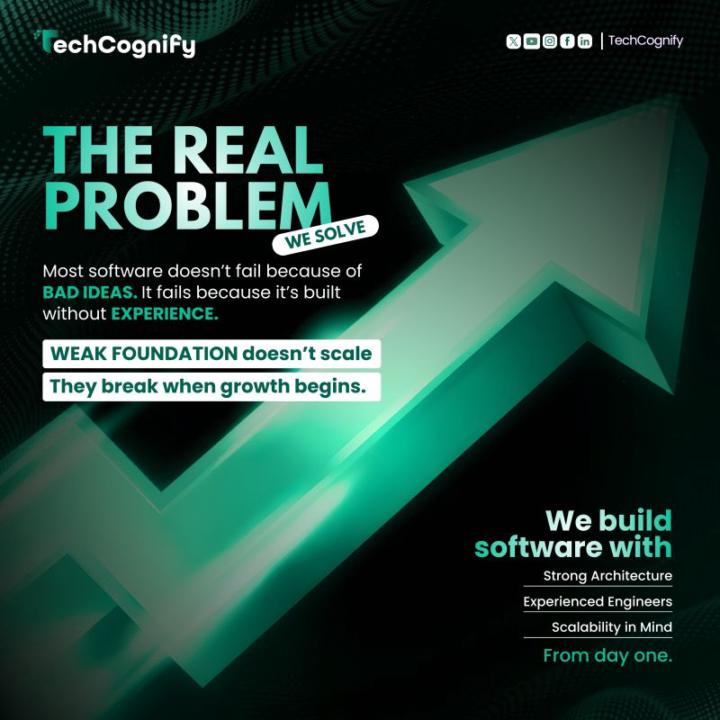
One thing I’ve started realizing while working on software and AI projects is this:ideas are rarely the real problem — architecture is. A lot of systems work perfectly with 10 users, but the moment growth begins, weak design decisions start to show. Most software doesn’t fail because of bad ideas.It fails because it’s built on weak foundations. When systems aren’t designed with scalability, architecture, and real engineering experience in mind, they break the moment growth hits. At TechCognify, we focus on building software the right way from day one: → Strong architecture → Scalable systems → Real-world engineering practices Because software should support growth — not collapse under it. If you’re building something that needs to scale, build it properly.
0
0
1-10 of 11
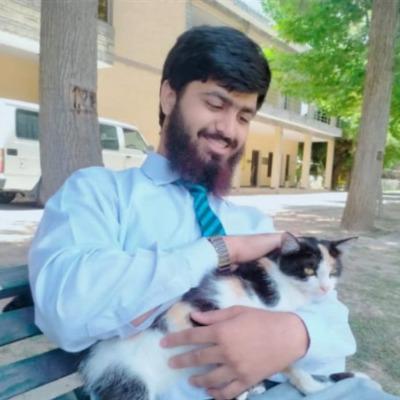
@ibrahim-bajwa-5271
Software Engineer building AI-powered SaaS systems & scalable products. NUST SE grad focused on real-world impact through clean architecture.
Active 1d ago
Joined May 6, 2026
Islamabad Pakistan