Activity
Mon
Wed
Fri
Sun
Oct
Nov
Dec
Jan
Feb
Mar
Apr
May
Jun
Jul
Aug
Sep
What is this?
Less
More
Amigoscode Academy
118 members • $129/month
Amigoscode
2.1k members • Free
31 contributions to Amigoscode

Jul 26 •
🚀 First Release: Resonance – Visual System Design Simulator
Hey everyone! 👋 I'm excited to share the first public release of Resonance. Resonance is a visual system design simulator that connects to GitHub repositories, reverse-engineers architecture, and enables real-time simulation with AI-powered optimization suggestions. The goal is to make it easier for developers and architects to design, analyse, and better understand distributed systems through an interactive visual interface. Current features • 🎨 Visual drag-and-drop system design editor • 📊 Real-time simulation with detailed architecture reports, including: - Overall architecture score - Reliability - Performance - Security - Cost - Explainability - Actionable recommendations • 🔍 Architecture validation and bottleneck detection • 🐳 Docker Compose export • 🌗 Dark & Light themes • 👥 Teams (Beta) • 📋 Templates (Beta) Built with - React 19 - Node.js + Express - React Flow - Zustand - Tailwind CSS - Vite What's next - Smarter AI-powered architecture recommendations - Better cloud cost estimation - Improved GitHub repository analysis - Higher simulation accuracy - Real-time collaborative editing This is still an early release, and I'd genuinely love to hear what you think. If you have ideas, spot bugs, or have suggestions for improving the simulation engine or overall experience, I'd really appreciate your feedback. GitHub: https://github.com/malcommathela/Resonance Live Demo: https://resonance-web-eight.vercel.app Thanks for checking it out! Looking forward to your thoughts and suggestions. 🙌


🔥
1 like • Jul 28
Looks good👌

🚀
🔥
Oct '25 •
Welcome and Introduce yourself here 🔥
👋 Hi! Welcome to the Community Step 1: Introduce yourself in this thread below! (✄ Copy/paste template 👇) Where are you from? Tell us something about you? What do you hope to achieve here? Which platform brought you here? IMPORTANT Step 2: Engage with others. Like at least 5 introductions to unlock most of the content and start building connections. Step 3: Read the pinned posts as they include important guidelines and resources to help you get the most out of this community. 🚨 Please do not promote paid services (mentorship, courses, other communities, etc). Doing so will result in a ban. We’re glad to have you here and looking forward to your introduction! Don't forget to completed this poll
Poll
511 members have voted

🔥
0 likes • Jul 15
@Pravin Patel Sure, check dm
🔥
0 likes • Jul 15
@Kevin Toro welcome to the community

Jul 10 •
We often don’t realize how much we change until we look back.
We often don’t realize how much we change until we look back. From being a confused student to working in the tech industry -this is my journey so far. I graduated in Electronics and Communication Engineering (ECE), but I always had a strong interest in Technology and Software. During college, I was exploring many things without clear direction. I was curious, but still figuring out my path. Today, I work as a Program Analyst . Over time, I was able to turn my interest into a career in tech. Along with my work, I still enjoy exploring deeply - tech, creative ideas, Real Projects, and more . I’m not an expert in everything, but I enjoy learning something new every day. A big thanks to Amigoscode, to provide free learning resources. This is not a success story - just a simple journey of growth and learning. https://medium.com/@tharveshmuhaideen/not-perfect-just-evolving-53dced0f010e
🔥
1 like • Jul 13
Thanks for sharing
🚀
🔥
Sep '25 •
Important Resources and Links
→ Platform - Amigoscode 2.0 - Amigoscode 1.0 → Merch - Amigoscode Merch → Socials - Amigoscode Youtube Channel - Lets connect on LinkedIn → Join the team - Coming Soon → Amigoscode Academy - Join waiting list → Current Giveaways - Macbook pro (1) - Mac Mini M4 (1) - MX Mouse and Keyboard (3) - 32 Inch Monitor with Arm (1) The the above items apply here. T&Cs apply. → Freebies - 3 months FREE Jetbrains Licence
🔥
0 likes • Jul 6
@Nelson Djalo

🔥
0 likes • Jun 27
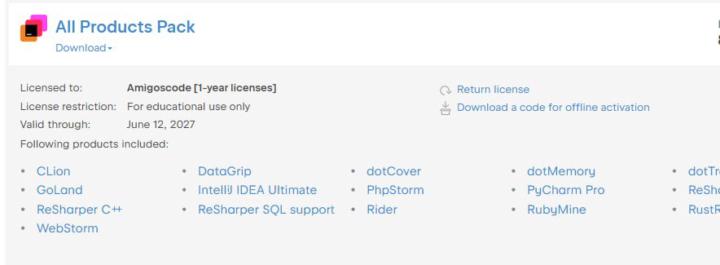
@Key Phearom Are you a student? if you have your student's email apply here
1-10 of 31

Active 6h ago
Joined Aug 19, 2025
Powered by