Activity
Mon
Wed
Fri
Sun
Nov
Dec
Jan
Feb
Mar
Apr
May
Jun
Jul
Aug
Sep
Oct
What is this?
Less
More
Owned by Gus
We help builders & founders cut through Web3 noise - learn fast, network, and ship blockchain products blockchain users love 🐋
AI Visual Production Lab
6.1k
Free
The RoboNuggets Network (free)
85.4k
Free
Dopamine Digital
8.2k
Free
Web Agency Accelerator (FREE)
15.3k
Free
Template Skool
3.6k
5.0
$39/m
data3
97
Free
Bitcoin
1.4k
Free
Skoolers
153.1k
Free
43 contributions to Web3 Builders Hub

Apr 8 •
Building a blockchain-based web platform 🚀
We’re looking to collaborate with experienced developers/teams who have worked on real-world blockchain projects. If you’ve built in this space, let’s connect. 🤝

0 likes • Apr 8
Send me a message!
Mar 27 •
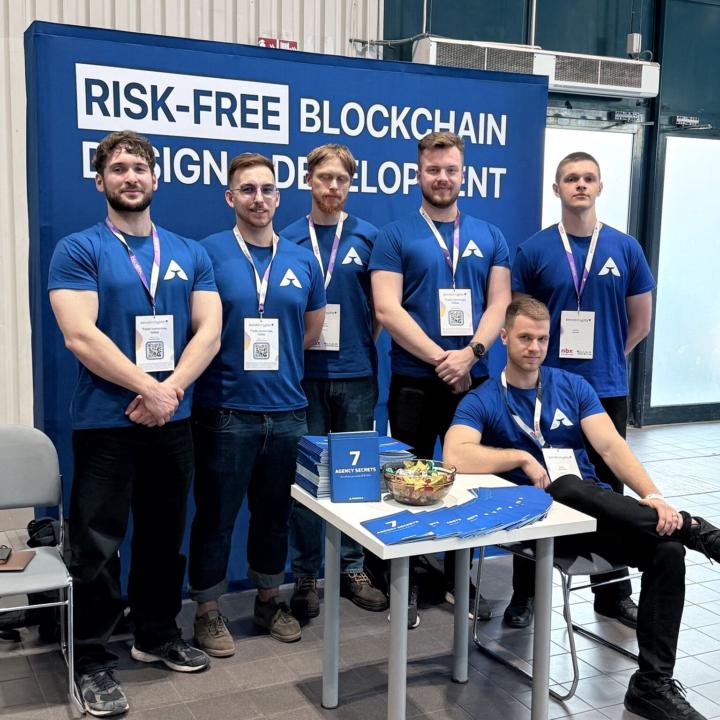
First time sponsoring Next Block Expo
First time sponsoring Next Block Expo - and wow, it did not disappoint 🐳 Every conversation we had was genuinely great. The energy, the people, the projects... way better than we expected going in. To everyone who grabbed one of our guidebooks - best of luck building something awesome. I hope it actually helps. And if you missed it, you can still grab a free copy here: https://beawhale.io/secrets/
0 likes • Mar 28
@Mateo Carvella it was almost unusable 🙃
Mar 22 •
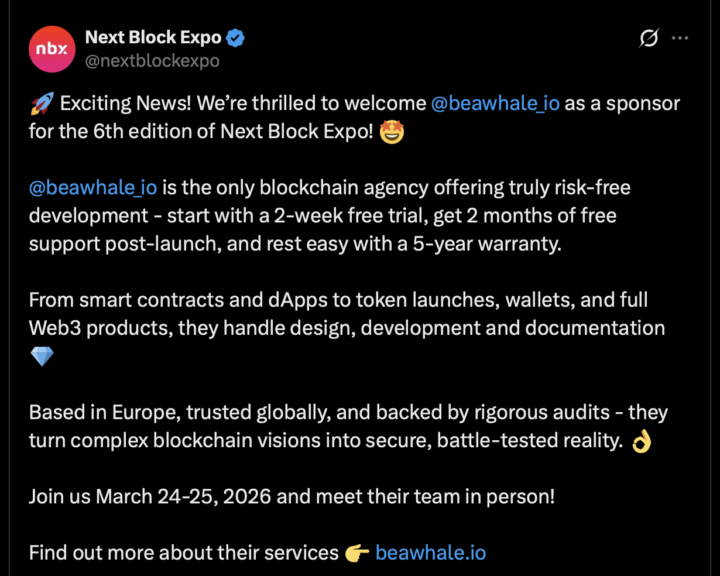
We're sponsoring Next Block Expo
We'll be at Next Block Expo this Tuesday and Wednesday (March 24-25) in Warsaw. BeAWhale is one of the sponsors this year and we've got a booth set up. If you're going, come find us. I want to meet some of you in person instead of just reading your threads about memecoin losses. Seriously though, if you're building something in web3 and want to talk shop, grab a coffee, or just say hi, hit me up here or DM me and we'll set something up. Warsaw is about to be packed with builders.
0 likes • Mar 22
@Erik E we’ll have a booth!
Mar 19 •
How LendaSat Raised Pre-Seed Capital
LendaSat just closed a pre-seed round from Fulgur Ventures, Initial Capital, and Ark Labs. Here's what they built: You hold Bitcoin and need cash. Your options? Sell and get taxed. Or hand your keys to some centralized platform and hope they don't pull a Celsius on you. LendaSat killed that tradeoff. You put up BTC as collateral, borrow stablecoins, and keep your own keys the entire time. Multisig handles the trust. Not a company. They also built Lendaswap. Atomic swaps between BTC and stablecoins across chains. No bridges. No wrapped tokens. The trade either happens completely or not at all. Here's the smart part: they built Lendaswap on top of Ark Labs' Arkade protocol instead of rolling their own infra. Ark Labs liked it so much, they became an investor. When your tech partner puts their own money in, that tells you something. But the real signal? Traction. They didn't show up with a whitepaper and a dream. 1,000+ users. Over $1M in loans processed. They proved demand before asking for a dollar. If you're building and thinking about raising, this is the playbook. Don't invent a new blockchain. Take existing infra, solve a real pain point, and ship something that works. Then talk to investors who already bet on your thesis. That's why the money flowed. source: https://x.com/lendasat/status/2033826720252399674


Mar 16 •
Is anyone actually worried about miners switching to AI?
Bitcoin mining companies are quietly moving their operations to serve AI data centers instead. Core Scientific, Hut 8, Iris Energy, all pivoting. Apparently AI companies pay 2-3x more for the same energy and infrastructure. If enough miners bail, the hash rate drops and the network gets less secure. Nobody seems to be talking about this
2 likes • Mar 16
This is honestly less scary than people make it sound. yeah some big miners are pivoting to AI but bitcoin has been through way worse. the ones who stay will be more profitable because of it. and lets be real, there will always be people mining bitcoin. the network adjusts, thats literally what its designed to do
1-10 of 43

Active 89d ago
Joined Aug 20, 2025