Activity
Mon
Wed
Fri
Sun
Dec
Jan
Feb
Mar
Apr
May
Jun
Jul
Aug
Sep
Oct
Nov
What is this?
Less
More
Owned by German
I guide you in transforming your mindset, overcoming mental blocks, and turning your potential into real-world results in personal and professional.
5 contributions to Mindset Shift Hub

3d •
Addicted to stress
Of all addictions, perhaps the most curious is an addiction to stress, as it is an addiction that does not involve the consumption of any substance. The only things we "consume" are decisions—decisions that draw us into a whirlwind from which it can be extremely difficult to escape. This is partly because we fail to see the genuine benefit of breaking free, and partly because others—who feed off our energy—have no interest in us doing so. While often associated with work in its various forms, the consequences of this addiction extend well beyond the professional sphere, spilling over into our personal lives. To emerge from a stressful life situation, one must take stock of the circumstances causing the stress and begin to redirect one’s actions—aiming to restore balance and break the cycle. The warning signs that pose a risk to our health are easy to spot: - Living in a state of constant hypervigilance. - Difficulty slowing down, which leads to feelings of guilt whenever we are idle or resting. - Taking on tasks driven by self-imposed fears. Perhaps most curious of all is the "successful person" persona that those addicted to stress often adopt—a mask that, ironically, casts them in the role of a victim, as they find themselves driven to be hyper-productive, often much against their own will. Ultimately, those addicted to stress must learn to set boundaries, embrace rest, and recognize the inherent value of their own lives. By doing so, they can stop the professional and personal burnout that leads to illness. While it is not always easy to identify exactly what—or who—is influencing our lives, with patience, it is possible to untangle these complexities and return to living a full, aligned life.
0
0

5d •
Orthorexia
There are as many ways to eat as there are people, and among them, new approaches constantly emerge—appearing from nowhere, their origins unknown. Orthorexia—an obsession with eating "healthily"—has entered our lives. It is difficult to pinpoint the root of such an intense obsession: the drive to consume only foods perceived as "pure," while rejecting others deemed otherwise. What is certain is that when we adopt an all-or-nothing, totalitarian mindset, we isolate ourselves from others. This often leads to feelings of guilt, especially in a society where almost every celebration revolves around food and drink. Furthermore, someone struggling with orthorexia may spend hours planning their "healthy" meals, becoming rigid and inflexible—even with themselves. Just as we are not meant to spend our lives counting calories, we are not meant to obsess over the "purity" of the food we consume. Ultimately, if taking care of your body requires neglecting your mind, you are doing yourself a disservice. To lead a truly healthy life, both must function in harmony—free from the self-imposed anxieties we so often create.
0
0

9d •
The way to start the day
Some time ago, someone asked me how someone who wants to stand out should start their day. Since no one had ever asked me that before, I didn’t know how to answer. Today, having attended a conference and given it some thought, here is my response. How a person begins their day depends on many variables: their occupation, the environment in which they start their day, the resources at their disposal, and so on. There are many arguments in favor of waking up very early—to take advantage of the quiet—or heading out for exercise while the streets are still asleep, or choosing specific foods to eat upon waking. What I find most revealing is the fact that every individual has a unique biorhythm; consequently, each person functions best at specific times—and this is non-negotiable. We are all different, and what works well for one person might not work the same way for another. Accepting this is the first step toward understanding and taking care of ourselves. Our biorhythms shape how we view life; therefore, we should listen to ourselves to identify the most productive times for each activity—following the rhythm dictated by our own internal clock, regardless of what others might be doing. That is my take on it.
0
0

10d •
Tie your life to a goal
Tie your life to a goal Of all the reasons to anchor your life to a goal, the least important—ironically—may be the actual attainment of that goal. So, where does the significance of anchoring one’s life to a goal truly lie? When we anchor our lives to a goal, we gain an advantage over those who have not undertaken this same exercise; yet, what is truly significant is what unfolds as we travel the path from the beginning toward that intended destination. It is then—and only then—that we see everything pass before our eyes, as if it were a film—some moments good, others perhaps less so. One might assume this happens to everyone, but it does not. By having a major goal, smaller goals begin to align with it; this brings clarity, a deep sense of fulfillment, and relief. Ultimately, anchoring your life to a goal is about everything that happens to you while you are in pursuit of that major goal—whatever that goal may be.
0
0

12d •
I’m back
After some time away, I’m back. This time, I hope the experience lasts longer, and I also hope to approach it differently. I believe Skool is a great place to showcase what we do while simultaneously providing help. However, things will be different in many ways this time around. There will be fewer posts, and the overall approach will be much more relaxed for me. Let’s begin.
0
0

1-5 of 5
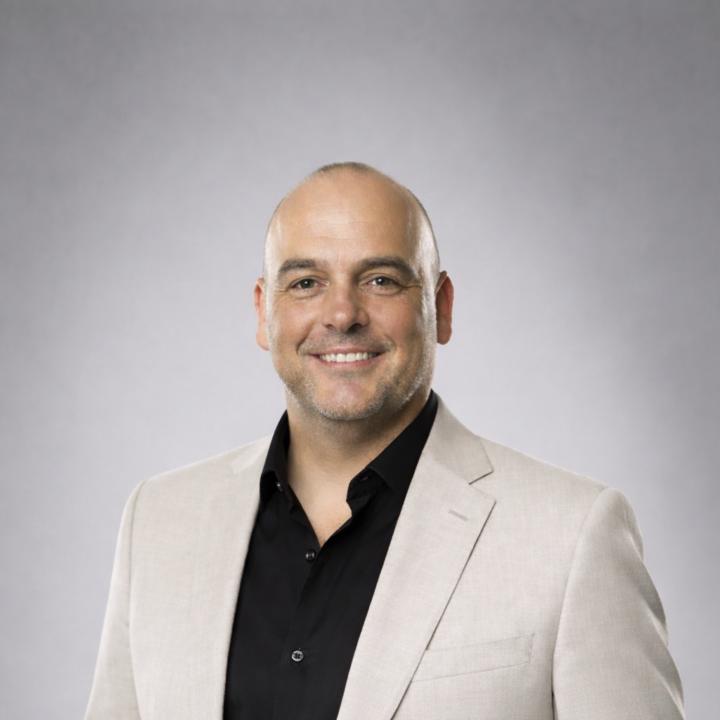
@german-herran-6863
Life Coach/Mentor/Speaker I guide individuals, professionals, and entrepreneurs to transform their careers step by step. Learn to master your life.
Active 9h ago
Joined Oct 26, 2026
Spain