Activity
Mon
Wed
Fri
Sun
Sep
Oct
Nov
Dec
Jan
Feb
Mar
Apr
May
Jun
Jul
Aug
What is this?
Less
More
Memberships
Clief Notes
43.7k members • Free
6 contributions to Clief Notes

53m •
Introduction
Hi everyone 👋 I just joined and I'm excited to be here. I'm looking to build a solid foundation in AI rather than just chase the latest tools. Looking forward to learning from everyone, applying what I learn, and contributing along the way. Happy to be part of the community
1 like • 10m
@Brett Coburn How do you find here ?
1 like • 9m
@Brett Coburn Have you gone through the videos on just still looking around

👑
Jul 1 •
Welcome to Clief Notes. Here's where to start.
1. Go check out 📚Navigating The Course to see how to get around and what's here. 2. Start with The Foundation. Concepts, folder architecture, prompting framework. Everything else builds on this. 3. Check in at the bottom of each lesson. Polls, discussion posts, other members working through the same stuff. Use them. 4. When you're ready to build real things join in on our Biweekly competitions and win some real cash. ⭐ Competitions Mega Thread 5. If you are wanting to dive into the masterminds, grab all the past templates, artifacts and resources. Upgrade and head into the The Vault for Premium and The Drawing Room (VIP) for VIP 6. Post your work. Ask questions. Help others when you can. What are you here to build?
1 like • 14m
@Beash Kanaan Thanks man God bless
1 like • 13m
@Beash Kanaan Okay man i feel that

1d •
inspired by a video I watched about a footage crawler
Hi! I'm new here and wanted to ask a genuine question — not sure if this is already solved somehow or if it's something I'd need to build from scratch. I'm exploring an idea for Dad Labs (a community for dads learning to use AI) — inspired by a video I watched about a footage crawler: reducing hours of video into searchable text descriptions using extracted frames plus a local vision model, all organized through folders/markdown. The application I have in mind is different from the one in the video (which was a 9TB professional archive) — I'm thinking something much smaller: helping families organize the years of video they've accumulated (weddings, first steps, etc.) that they never have time to sort through. I don't know if this is something the community already has as a template, or if it's more of an end-to-end project I'd need to research and build myself. I'd rather ask than assume — is there something similar already documented here, or any reference you'd recommend to start understanding the actual technical structure (folder organization, the markdown file format, etc.)? Any guidance is welcome, and if this is an obvious question for anyone who's been here longer, apologies — I'm just getting started.
1 like • 1d
@Marc Sep Great idea. I haven't seen a ready-made template for exactly this use case, but the overall approach (frame extraction + vision model + searchable metadata) is definitely achievable. I'd be interested too if anyone has an open-source reference or project that covers the folder structure and markdown indexing side of it.
1d •
My super software factory looks like ...urs?
Have been fiddling with ICM, Hermes, GSD, BMAD, taskMaster etc. They all sound perfect and logical on their own but feel "out of control" somehow so put it inside of ICM. I tried to make sense of them all and cook up an ICM here: .icm/ ├── CLAUDE.md # Upgrade safety gates, rollback hooks, and CLI routines ├── .icm.env # NEW: Central environment vars feeding variables to scripts │ ├── 00-gsd-wave-governor/ # CONTEXT & SPREAD CONTROL │ ├── contract.md # Rules: Blast-radius mitigation, branch naming, strict file locks │ └── active_wave.md # Tracks the current migration delta and target files │ ├── 01-discovery-and-party/ # LEGACY ANALYSES & DEBATE │ ├── contract.md # Rules: Analysis must document side-effects before code editing │ ├── codebase_discovery.md # Static analysis logs, dependency graphs, and tech debt maps │ ├── 00-party-room/ # BMAD Party Mode: "Refactor vs. Wrap" architectural battles │ │ ├── system_prompt.md # Personas (Winston/Arch, John/PM, Safety-QA Specialist) │ │ └── migration_consensus.md # Binding agreement on the upgrade strategy & fallback path │ └── 01-feedback-loops/ # Regression and breaking change post-mortems │ ├── 02-taskmaster-decomp/ # MIGRATION STEP DECOMPOSITION │ └── todo/ # Micro-tasks focused on localized refactoring steps │ └── 03-bmad-assembly-line/ # IMPLEMENTATION & REGRESSION TESTING │ ├── 01-architect-spec/ # BMAD Role: Designing code deltas & backward compatibility │ ├── 02-dev-workspace/ # BMAD Role: Executing precise, isolated modifications │ └── 03-qa-sandbox/ # BMAD Role: Core regression suite, smoke tests, validation
1 like • 1d
@Theo Boomsma It fine I love you website but i was not able to check through the second link
2 likes • 1d
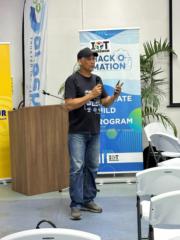
@Theo Boomsma Great to meet you What you’re building in Suriname sounds exciting. Combining a FabLab, IoT, and a startup incubator creates a strong foundation for innovation. Looking forward to learning more about your projects and the impact you’re creating.

6d •
One ICM System or One Per Customer?
A question for those using ICM to provide software or consulting services: When you work with multiple customers, does one ICM system support all of them, with separate customer configurations, requirements, data, and outputs? Or do you create and maintain a separate ICM structure for each customer or software product? I’ve been thinking about this through the way I create my own products. I reuse many of the same standards, checks, scripts, and production methods, but different product types may still need different schemas and workflows. A devotional is not built exactly like a prayer card set, even though they share part of the same underlying system. I’m curious whether software providers (or consultants) approach this similarly. Do you maintain a common core and adapt it for each customer, keep every customer implementation completely separate, or use some combination of the two? I’m still learning how others structure this, so I would genuinely appreciate hearing what has worked for you—and where separation becomes important.
1 like • 1d
@Carla Bosteder Great question. I think a hybrid approach often works best maintaining a strong core framework for consistency while allowing customer-specific configurations where requirements, data, and workflows differ. The challenge is finding the right balance between scalability and flexibility.
1-6 of 6