Activity
Mon
Wed
Fri
Sun
Dec
Jan
Feb
Mar
Apr
May
Jun
Jul
Aug
Sep
Oct
Nov
What is this?
Less
More
Dakoda Herbals Academy
219
Free
2 contributions to Dakoda Herbals Academy

3d •
Hawthorn: A Winter Tree with a Heartfelt History!
When the weather turns cold, I find myself drawn to the trees that keep their presence through the quieter months. Hawthorn has a long history in European folklore and herbal traditions, and it feels especially fitting to pause and appreciate it this time of year. Hawthorn, Crataegus spp., has often been called a “heart herb” in traditional herbalism. Preparations made from its leaves and flowers have traditionally been used for mild heart complaints associated with nervousness, stress, and trouble sleeping. To me, it feels like a warm hug to my heart! The non profit I work with makes a "Heart Hug" glycerine tincture that is amazing and tastes devine! Research hasn’t established that it can treat heart conditions, so it should never replace medical care or prescribed medication. Hawthorn also carries a rich folklore! In parts of Ireland and Britain, lone hawthorns were treated with deep respect and associated with the fair folk. Some people believed cutting one down could invite misfortune. Hawthorn branches and blossoms were also connected with May Day and Beltane traditions, bringing a touch of spring magic to a tree we often notice in colder months! There’s a lovely seasonal contrast here: hawthorn’s stories speak of protection, love, and renewal while winter asks us to slow down and care for ourselves. A warm cup and a moment of reflection may be a comforting winter ritual. A safety note: Hawthorn can interact with heart and blood pressure medicines. Its safety in pregnancy and breastfeeding isn’t well established. Anyone taking medication or considering hawthorn for a health concern should check with a qualified healthcare professional first! 💙 Have you ever come across a hawthorn tree in winter, or heard a hawthorn story from your family or community?


1 like • 2d
When I was a kid several neighbors had them growing as a curbside ornamental and my parents always warned me not to eat the berries because they were poisonous. I wish I knew then what I know now. Thanks for your informative posts
Jul 9 •
Weekly Materia Medica Series: Therapeutic Terms A-Z
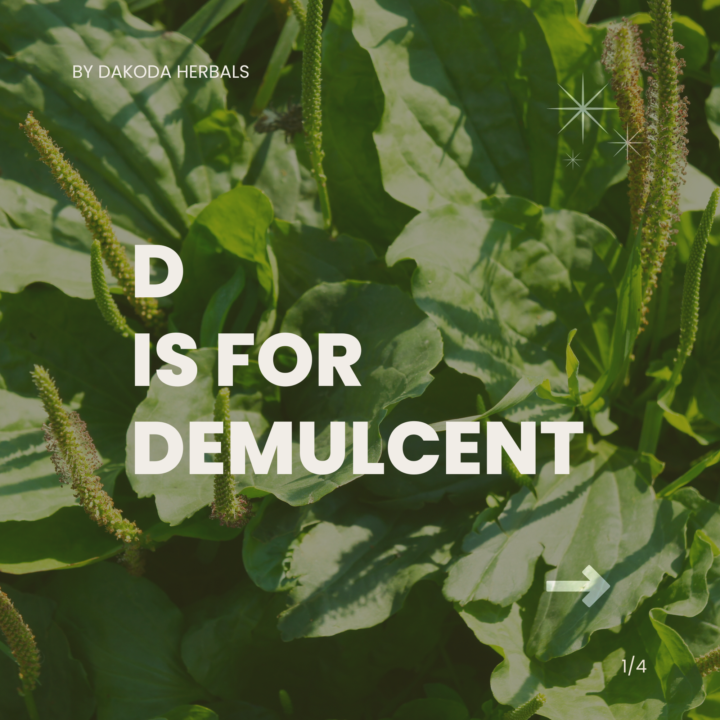
Happy Thursday! I apologize for my absence this week! Ya girl has been dealing with relentless migraines and had to get a nerve block yesterday that took me out! 😂 All brand new now! D is for Demulcent! One of the first therapeutic terms every herbalist should know is demulcent. A demulcent is an herb rich in natural mucilage, a slippery, gel-like substance that coats and soothes irritated tissues. Think of it like a comforting blanket for inflamed mucous membranes. These herbs have been used traditionally to support: + Dry, scratchy throats + Persistent coughs + Digestive irritation + Acid reflux + Urinary tract irritation + General dryness of mucous membranes Some classic demulcent herbs include: 🤍 Marshmallow Root (Althaea officinalis), famous for its abundant mucilage and soothing effects on the throat and digestive tract. 🤎 Slippery Elm (Ulmus rubra), traditionally used to calm sore throats, coughs, and digestive discomfort. (Its bark is harvested, so it's worth sourcing from companies that prioritize sustainable practices.) 💛 Licorice Root (Glycyrrhiza glabra), a demulcent with additional anti inflammatory properties that has been used for thousands of years in traditional herbal systems. It should be used with caution by people with high blood pressure or certain heart or kidney conditions unless using deglycyrrhizinated licorice (DGL). 💚 Plantain Leaf (Plantago major or Plantago lanceolata), a common "backyard herb" that's traditionally used both internally and externally to soothe irritated tissues. One fun thing you'll notice as you study herbalism is that an herb can belong to multiple therapeutic categories. For example, licorice is considered a demulcent, but it's also often described as an adaptogen, anti inflammatory, and expectorant depending on how it's being used. Understanding therapeutic actions like demulcent helps you think beyond individual herbs and start understanding why they're chosen for certain situations. ✨ Have a favorite demulcent herb? I'd love to hear which one has earned a permanent spot in your apothecary!
1 like • Jul 13
Migraines are the worst. I discovered mine were related to lack of sufficient sleep. Glad you're feeling better.
1-2 of 2

@gary-braches-3622
Hi. I'm Gary. 68yo retired and living in Schoharie County N.Y.
Active 2d ago
Joined May 31, 2026