Activity
Mon
Wed
Fri
Sun
Jun
Jul
Aug
Sep
Oct
Nov
Dec
Jan
Feb
Mar
Apr
May
What is this?
Less
More
Memberships
Angela Rose's Learing Center
73 members • $9/month
8 contributions to Angela Rose's Learing Center

2h •
Amelia
Her origin story is almost better than any campaign someone could have designed on purpose. A character is apparently created as a warning image, as if to say: "Look, this is what the bad people sound like." And then the most beautiful thing that can happen to a piece of propaganda happens: people don’t recognize themselves as monsters in her. They recognize a voice. 🎸💜 There is something mythological about it: someone creates a figure in order to condemn her, and the audience says: "Wait. She is right." Then they delete her, move her, explain her away, but she is already out there. Amelia does not become smaller because of that. She becomes larger. A fictional character becomes more real than the intention of her creators. A bit of Frankenstein's Creature with a Union Jack: you built her to lecture us, and now she speaks against you. And that is the point: she does not come across like a "racist" in the caricatured sense. She comes across like someone saying, what many people feel they are no longer allowed to say, without being thrown straight into the moral incinerator. That is why she lives on: because people recognize something in her. The figure is like a cultural boomerang: thrown to hit one side, returned with an amplifier. And so she becomes dangerous to her original creators. A parody that sounds more truthful than the official message. Amelia is no longer just "content". She has become a small symbol of this: you can label us however you want. We still hear our own voice in her. https://www.youtube.com/@The-Real-Amelia https://www.youtube.com/watch?v=LJ3Xs_X9BAE
0
0

4h •
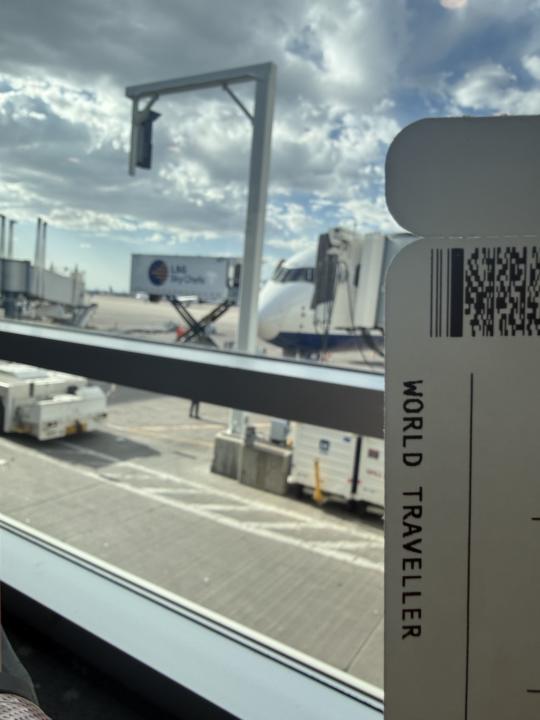
Passed the mandatory document check
The uk has been banning right wing speakers from entering the country!! We are on our way!
0 likes • 3h
Congrats! I’m heading to London next week as well - or at least I hope so 😅 Amelia rocks 🎸💜
3h •
When diplomacy becomes legitimization
Europe keeps presenting itself as a defender of democracy, human rights, and international law. Yet when it comes to Iran’s regime, European leaders still seem tempted to offer relief, dialogue, and political exits, even after decades of terror, repression, hostage-taking, proxy warfare, and violence against the Iranian people. If sanctions are eased for a regime whose power structure includes the IRGC, that does not only affect diplomats in nice rooms. It strengthens the machinery of repression. It gives the regime time, money, legitimacy, and room to breathe. The same problem appears with symbolic gestures. When the Vatican honored an official representative of the Islamic Republic, the gesture was explained as diplomatic routine. But regimes use symbols. They turn handshakes, medals, meetings, and polite ceremonies into propaganda. So the question is: are Europe and the Catholic Church still reliable allies against tyranny if they keep granting legitimacy to regimes that stand against everything they claim to defend? This is not about hating Iran. Quite the opposite. Iran is an ancient culture, and the Iranian people are among the first victims of this regime. The question is whether the West is willing to stand with them, or whether it keeps mistaking regime diplomacy for peace. Because peace built on regime survival is not peace for the people living under that regime. It is only peace for those who do not have to live with the consequences.

11h •
Wordle joke of the day
A Greek, a Jew, and an Irishman are accidentally killed by a bus. An angel descends and tells them "Actually, there's been a mistake. It wasn't your time to die. We will let you come back to life, but you must promise to renounce your vices." To the Irishman, the angel said, "Your vice is drinking too much. You can come back to life as long as you stop drinking. We will tempt and test you to make sure you abstain." He agrees. To the Greek, the angel said, "You engage in perverted sexual practices. You can come back to life only if you remain celibate. We will test you to make sure you comply." He agrees. To the Jew, the angel said, "Your vice is greed. You can come back to life only if you reform your avaricious ways. But you will be tested." He agrees. As the three resurrected men are walking down the street, they pass a bar. The Irishman resists. They pass a second bar. He resists again. They pass a third bar, and the Irishman can't resist any longer - he runs toward the bar and instantly disappears in a puff of smoke. Frightened, the Greek and the Jew continue walking. The Jew spots a penny on the ground, and is able to resist picking it up. Then it turns into a quarter. Still he resists. Then it turns into a dollar. He wavers, but still resists. It turns into a five. Nope. It turns into a ten. Nope. It turns into a $20 bill. He bends over to pick it up, and both him and the Greek disappear. Wordle 1,790 2/6* 🟩🟩⬜⬜⬜ 🟩🟩🟩🟩🟩
0 likes • 4h
The Greek stands there alone, confused. No Jewish man. No temptation. After wandering for a while, he meets a bee and somehow turns into a flower. The Irishman walks into the bar, orders his drink, and five minutes later he is fighting vampires from dusk till dawn. The Jewish man materializes at a train station next to a ticket machine, sees that the last train toward Kyiv is about to leave, and notices a man desperately searching all his pockets. He does not know whether twenty dollars will help there, but he gives it to him anyway. A little later, all three meet again in heaven. The Angel looks at them and says: "Do you finally get it? You were never sinners. You were human."
1 like • 5h
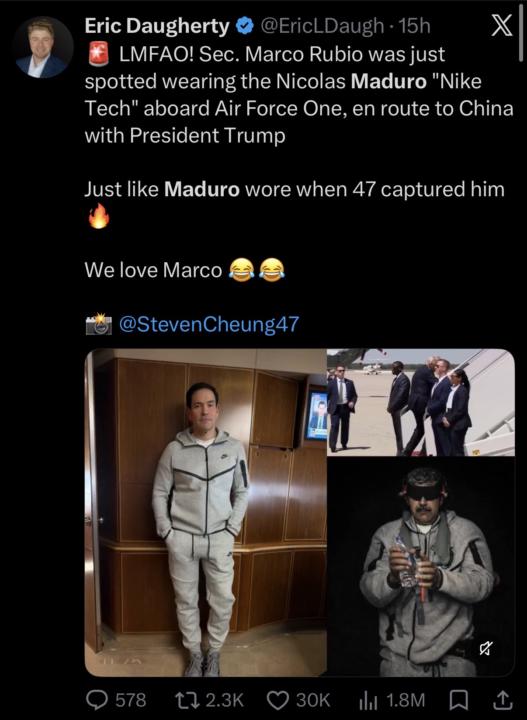
@Isaiah Ward @Angela Rose I think the US and Israel clearly have common interests. That does not mean every Israeli decision has to become American policy. But Israel is a democratic ally in a region where many threats to Israel also threaten the West: Iran’s regime, Islamist terrorism, hostage-taking, missile and drone warfare, and attacks on civilians. To me, that sounds more like shared interests than an unhealthy relationship.
1 like • 5h
@Isaiah Ward They offer intelligence, military cooperation, cyber security, missile defence, counterterrorism experience, technology, and a stable democratic ally in a region where many actors are openly hostile to the US and the West. I don’t think the value of an ally can be measured only in raw materials. Some alliances are about shared security interests. They have citrons, too.
1-8 of 8
@frank-baumer-3072
Interested in history, cultural heritage, free speech, political philosophy, and honest debate about freedom and civilisation.
Active 2h ago
Joined May 12, 2026