Activity
Mon
Wed
Fri
Sun
Aug
Sep
Oct
Nov
Dec
Jan
Feb
Mar
Apr
May
Jun
Jul
What is this?
Less
More
Memberships
Physiology First University
207 members • Free
6 contributions to Physiology First University
29d •
Weekly Recap: What's Happening at Physiology First
Team, I want to start sharing a Sunday night recap of what's happening across the organization. This week: • @Darren Bailey owner of Physiology First Riverina launched Physiology First Football - an opportunity for teens to learn the Physiology First Foundations through sport. Amazing work, Darren👏 The question is...what kind of ball is it? I'm a dude from N.J and still trying to get my head around "football" in the U.K. 🏈? ⚽️? 🏉? Help me out🙏🏽 • We had meetings with business partners all week re: the franchise model we're rolling out. It's a "business in a box" model combining sauna/plunge/strength and conditioning/ yoga and biotech - and the world has never seen anything like it before. If will redefine how we think about health, fitness, performance, and human potential. More details soon! • We finished the "done for you" professional development program for schools around the world. It will be available in all languages🌎 See a vid of me presenting the curriculum in Portuguese below😎 Physiology First Fellowship members will have proprietary revenue sharing opportunities on this $5k - $10k program. • The Physiology First Fellowship begins next week. A new model for health and human development. The next generation health practitioner. For those interested in investing in the new program and turning that investment into revenue, impact, and opportunity leave your legacy in health send me a DM. • We put out feelers for a 21 day Summer Reset Challenge for teens across the globe to help them unplug from technology, build healthy habits, and create a blueprint for lifelong mental and physical health. The response from parents so far has been inspiring! We will likely have enough traction to launch it and run a mid-July to mid-August program both virtually and in-person at our Manchester, UK campus. Tons of opportunities to support these teens after the challenge in your community! Let's pump this program and help teens enter the summer (or, in Australia, the Winter Reset) with the skills to put their physiology, first.

1 like • 29d
@David Bidler only one time slot? as it will be midnight for me.
0 likes • 27d
@David Bidler 3:30pm -5pm UK time
May 31 •
Dr. Swati: 30 Day Breath Awareness Pilot
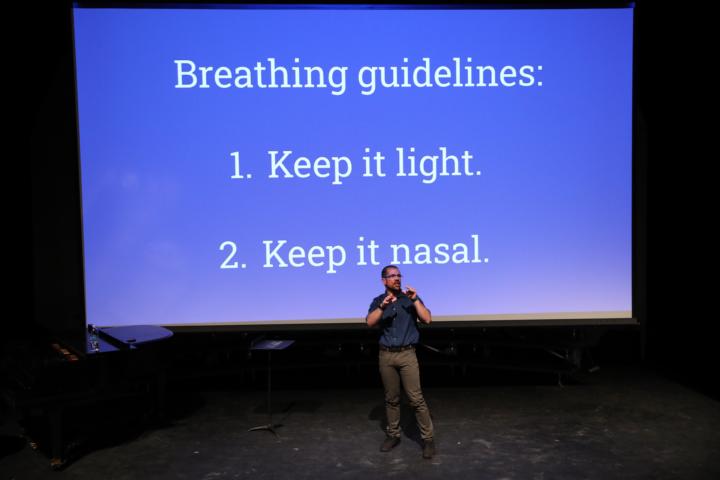
Team, As mentioned earlier this week we're going to help @Swati Thakur bring the Physiology First Approach to 500 medical students. Let's have some fun designing the best possible approach to implementation in this unique and high impact setting. Here's where I would suggest starting. Step One: Announce a Foundations of Breath lecture. Online, in-person, or hybrid depending on logistics of bringing everyone together. Step Two: @Swati Thakur opens the lecture with her "why" and earns the trust and ear of the room. She shares 3 core principles from our Foundations of Breath module. For a group this size I would share the simplest principles from the module: Breathe through the nose, breathe lightly. 📸 Me presenting exactly these principles to a large group of students. Co2 tolerance testing, breathing biomechanics, personalized breath training work in small groups - simple, easy to implement principles in large groups. She could then offer the following digital resources from Physiology First. A digital copy of my book, Breathe to Perform and our Breathe to Perform app w/ audio tracks as an accompaniment to the lecture. https://breathe-perform-physiologyfirst.replit.app/about She could close by letting everyone know they are invited to be part of a 30 day Breath Awareness Pilot Program - informal and designed to help them reduce stress, heighten awareness, and build a more conscious relationship to their breath. 30 Day Breath Awareness Pilot Program🫁 Can 3 Simple Breathing Principles Shift Resting Physiology in Medical Students? “This informal pilot explores whether 30 days of breath awareness is associated with measurable changes in resting heart rate, respiration rate, stress, focus, and energy.” Use a 3-day baseline, then a 24-day practice period, then a 3-day final reassessment. Days 1–3: Baseline Just measure: • Morning resting heart rate
1 like • Jun 1
@David Bidler thanks for sharing this plan. At once I can address around 100 students because they have different timings and schedules. So I will do it in different phases. Starting with the first 100 students whenever possible. Also you mentioned 3 breath principles. What's the 3rd one. And can mouth taping at night be included at this stage? Also calculating respiratory rate on their own won't be accurate because as we become conscious of our breath the rate also changes. So maybe asking a friend to record it. Google form idea is great. I was also thinking the same. This will be a great pilot study to start. The University exams here are in July for these students.so have to see how I can best execute this.
May 25 •
What do you need from me?
Team, As we enter approach another school year where public, private, and alternative schools are screaming out for support - particularly in physiology-based education, resilience, and capacity building programs - we have an opportunity to reach a generation of students with critical tools at a critical time. I'll be making a major push to drive practitioners in all aligned fields to our programs. We have the opportunity to create a category, build an industry, and impact the future of health at large. I'm making some shifts in the framework of how we talk about this program (removing the language of "certification" as it tends to attract people more interested in "completion" rather than lifelong learning and evolution) - and talking specifically about bringing together the world's best educators and practitioners to build a new approach to educating and empowering kids, families, and communities. My aim is to attract only those educators and practitioners who aim for personal excellence - and who are committed to building programs so good - so undeniably better than the alternative - that they disrupt the status quo by simply being too good to ignore. If you can communicate like a pro, hold training experiences that bring the science to life in a way that inspires, empowers, and puts a smile on every attendees face, and assess the simplest metrics of physiology (starting with free/no-tech and evolving from there) you are embodying the Physiology First Approach and bringing the evolution of health to life. Let me know what resources you need from me in order to be successful and I will be sure to add them to the platform. I'm going to be largely offline this coming week as I'm spending some time with my partner on a short holiday to Lisbon. Once she flies back to Manchester I'll be staying in Portugal for a bit to work specifically on further developing the platform and our practitioner offerings. I'll share some things that you can expect beginning on June 1st and ask you to let me know of any additional resources that you need so I can be sure to get them to you as we get ready to accelerate all efforts to reach as many students and families as possible this year!
1 like • May 25
Perfect! It will be exciting to take some real action now. I would be needing the Email and DM scripts.
May 23 •
Module 2: Breathing. Barefoot Training, and Body Awareness is live for our Professional Development Team!
Team, I hope that everyone is having an inspired weekend! This week's module gets to the heart of our Physiology First Approach. Breathing, Barefoot Training and Body Awareness is now live on the Professional Development/Certification platform. Access link below for your convenience: https://david-bidler-s-school.teachable.com/purchase?product_id=6743923 You'll learn to operate your own physiology with a greater level of skill and awareness, and gain strategies for helping clients of all ages do the same. An important thing to consider: First, no matter where you are in the program, you are not behind. This work takes patience, and a long game mentality. This week seems in-depth at first, but most of the learning happens through two things that you are already doing - breathing and walking. Focus on the practical application videos, enjoy the learning process, and let me know what you need from me. Appreciate you all and looking forward to your thoughts on the module at our Deep Dive this Thursday at 3pm EST. David
0 likes • May 24
@Jennifer Smith thank you
1 like • May 24
@David Bidler thanks, will apply it. I have around 500 students which I can work with. Just need to go out there. Can I join the ongoing cohort live meetings? I missed most of the lives during my cohort!
Mar 9 •
Simplifying the platform🧠💪🌱 The future of Physiology First Online
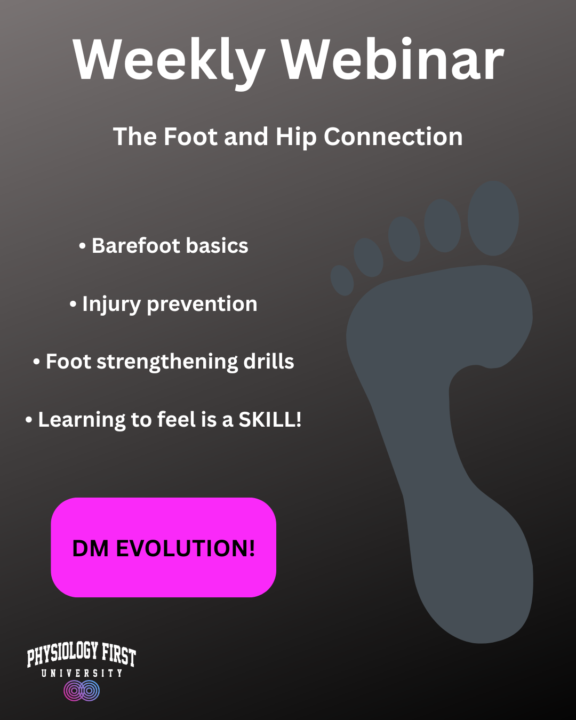
Team, One of my goals as we build out the online platform is to simplify the portal to enhance member engagement and experience. Here's what I want all members to gain from being here. Physiology First Online Learn How Your Body Actually Works. A global community learning physiology through weekly experiments, live masterclasses, and real-world practice. Why do we need Physiology First Online? Nobody teaches us how our body works. We learn algebra. We learn history. But almost nobody learns: • How breathing affects anxiety • Why foot mechanics affect knee injuries • How sleep controls hormones • How metabolism drives energy and focus • How movement shapes brain development Most people spend their lives guessing about their health. Physiology First Online exists to change that. Welcome to the World’s First School for Understanding Your Own Physiology. Instead of overwhelming you with endless information, we guide you through one powerful concept each week. Every week you will: • Learn a physiology concept • Run a real-world experiment • Join a live masterclass • Discuss what you experienced with the community This isn’t passive learning. It’s applied physiology. My goals for the growth of the platform: Clarifying the Weekly Lesson Plan: Step 1 Watch the Weekly Masterclass Every week we break down one powerful concept in human physiology. Simple. Practical. Science-driven. Step 2 Run the Weekly Experiment Examples: • Nasal breathing challenge • Barefoot walking protocol • Cold exposure experiment • Morning sunlight experiment • Sleep optimization protocol You learn by doing, not just listening. Step 3 Share Results With the Community Thousands of members exploring the same experiments together. You’ll never feel like you’re learning alone. Simplifying the Structure Inside the Physiology First Membership Weekly Physiology Masterclass🎥 A live deep dive every week into breathing, metabolism, movement, sleep, hormones, and human performance.
2 likes • Mar 10
Amazing! Yes we need more interaction to implement. Thank you @David Bidler for doing this.
1-6 of 6
@swati-thakur-3874
Medical doctor and educator from India. I'm also a NGH Certified Clinical Hypnotherapist and offer holistic solutions for well-being.
Active 2d ago
Joined Sep 14, 2025
Powered by