Activity
Mon
Wed
Fri
Sun
Jul
Aug
Sep
Oct
Nov
Dec
Jan
Feb
Mar
Apr
May
Jun
What is this?
Less
More
Memberships
The Free Reiki Basics Course
1.1k members • Free
Modern Reiki
37 members • $30/m
28 contributions to Modern Reiki

Dec '25 •
Holiday stress and a racing heart
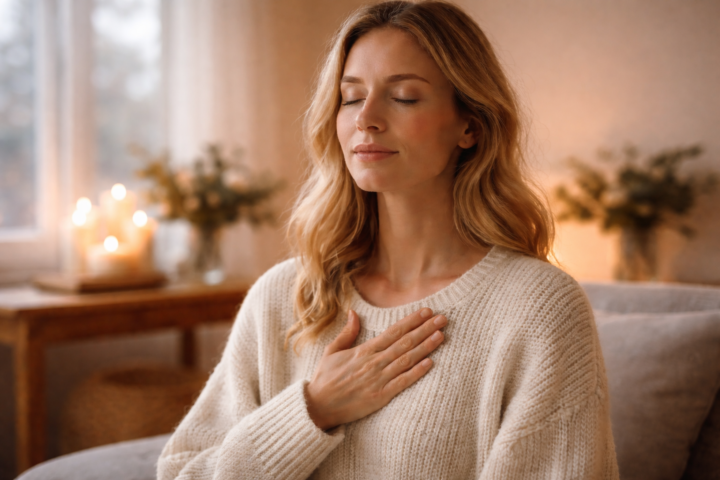
How to lower your heart rate through breath and the nervous system? The holiday season brings warmth and connection, but also busyness, expectations, and constant stimulation. For many people, this shows up as an elevated heart rate, restlessness in the body, and the feeling of always being “on.” This is not a weakness, but a completely normal biological response of your nervous system. By understanding how this system works, you can also consciously guide it back into calm. The autonomic nervous system: two natural states Your autonomic nervous system regulates processes you do not consciously control, such as heart rate, breathing, and recovery. It consists of two complementary systems that continuously alternate. 1. 🫁The sympathetic nervous system - action & alertness🫁 This system becomes active during stress, pressure, or a sense of urgency. - Increases heart rate and breathing rate - Sharpens focus and alertness - Prepares the body for action - Temporarily suppresses recovery and digestion This system is essential for daily functioning. Problems arise only when it remains active for too long. Something that often happens during the holidays. 2. 🫁The parasympathetic nervous system - rest & recovery🫁 This system is responsible for relaxation, repair, and regeneration. - Lowers heart rate and blood pressure - Deepens the breath - Activates digestion and the immune system - Brings the body back into balance True rest arises when this system takes the lead. Breathing as the switch Your breath is a direct gateway to the nervous system. - Fast, shallow breathing; sympathetic activation - Slow breathing with a longer exhale; parasympathetic activation Especially the exhale sends a signal of safety. By lengthening it, you invite the heart to slow down. ❤️Attention follows energy❤️ What you give your attention to gains influence. By gently bringing your focus to the heart area, you amplify the calming effect of the breath. There is nothing you need to visualize or “do right.” Simply being present with the rhythm that emerges is enough. The heart naturally adjusts.
0 likes • Jan 4
@Justin Peach Sounds like perfect practice 😉
1 like • Jan 4
@Birte Bender Those quiet days matter.
Nov '25 •
The Mamos: What an ancient Colombian tradition teaches us about consciousness
I recently listened to a podcast where, for the very first time, I heard about the Mamos, the spiritual leaders of the indigenous peoples of Colombia who spend the first seven years of their lives largely in darkness.Their way of living felt ancient, grounded, and deeply aligned with what I know from energetic work. This is what I further discovered about the Mamos, and also why their perspective feels so familiar to anyone who works with the principles we learn in Reiki: awareness, silence, feeling, and using the body as a compass. - Who are the Mamos? - The Mamos come from the Kogi, Arhuaco, and Wiwa peoples of the Sierra Nevada de Santa Marta in Colombia.They call themselves the “Elder Brothers”, not to be above anyone, but because they see their role as guardians of the Earth, while the modern world (the “younger brothers”) has largely lost its connection with nature and inner consciousness. A Mamo is: - a guardian of energetic and ecological balance - a listener to subtle information - a guide for the community - someone who lives in ongoing dialogue with the Earth What struck me most is that their entire tradition is rooted in awareness, presence, and deep listening, concepts that resonate strongly with energetic practitioners. - Why a future Mamo spends seven years in the dark - One of the most extraordinary aspects of their tradition is the upbringing of a future Mamo, for the first seven years of life, the child is raised largely in darkness. 1. Activation of the pineal gland Darkness stimulates the pineal gland, often called the “third eye”, which, according to the Mamos, opens the inner vision. Instead of seeing with the physical eyes, the child learns to perceive with intuition, energetic sensitivity, and inner knowing. 2. Learning to perceive with the body Without constant visual and external stimuli, the child learns to feel the world instead of only observing it.The body becomes a finely tuned instrument capable of sensing energy, intention, rhythm, and imbalance.

1 like • Nov '25
Thanks for your reply @Vanessa Lopez, appreciate it!

1 like • Nov '25
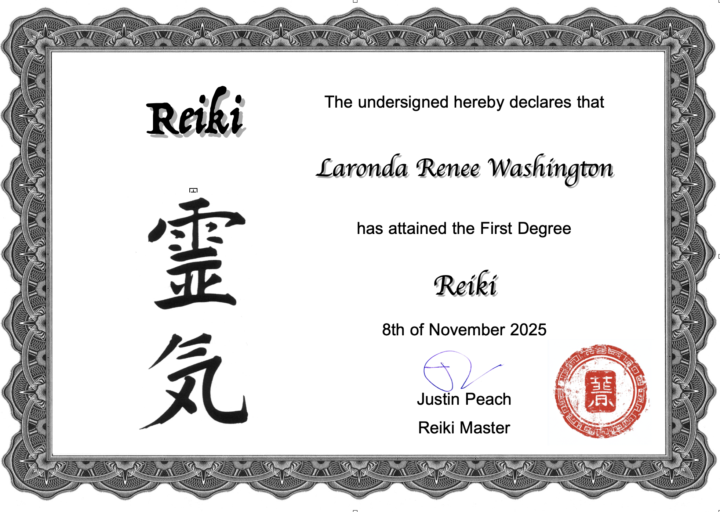
Congrats @Renee Washington
Oct '25 •
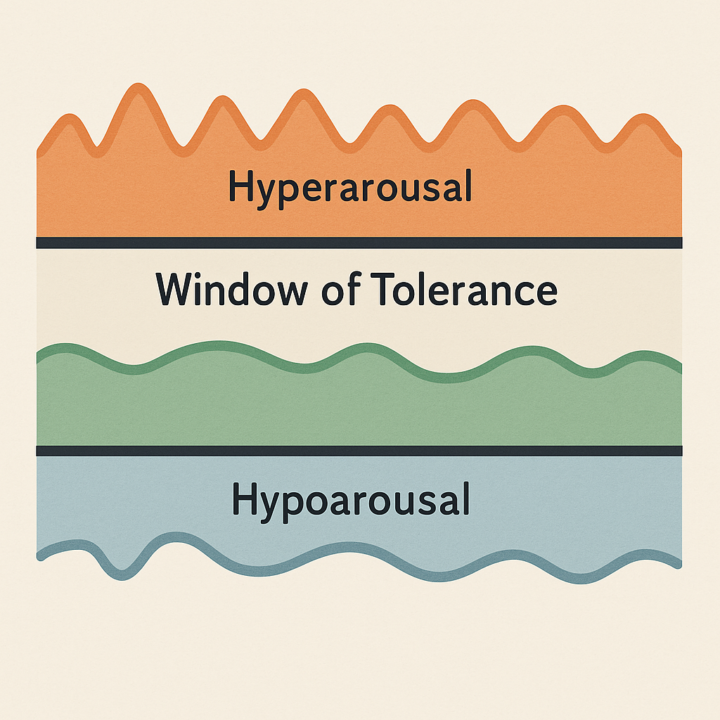
Window of tolerance - a bridge between psychology and spirituality
Last week I was listening to a podcast, and a word came up that I had never heard before: “window of tolerance.” The idea behind it may sound familiar to some or even all of you, but perhaps not in connection with this specific term. With everything that was being said about how people think and react, I wanted to learn more. I’d love to share it with you, because it might even be a concept you can use, or at least a helpful way of describing what you already notice, in your own Reiki sessions. The term comes from psychology, but it connects beautifully with what we often observe in spiritual practice. 🧠Psychological perspective🧠 The “window of tolerance” can be seen as the framework of balance. It’s the zone where our nervous system can process emotions, stimuli, and stress in a healthy way. Inside this window simply means you’re in a state where you feel regulated: calm, clear, and connected with yourself and your surroundings. But sometimes we end up outside this window. Usually, one of two things happens: 1. Above the window (hyperarousal): you become overwhelmed. Anxiety, panic, anger, or chaos take over. Your nervous system is “too highly tuned.” 2. Below the window (hypoarousal): you shut down. You feel numb, empty, or disconnected from yourself. Your nervous system is “tuned too low.” ❗Important to note: being above the window doesn’t mean you’re at a higher state of consciousness. It refers to stress and overstimulation: like an engine running too fast in the red zone. And below the window is more like the engine stalling. In both cases, you’re out of balance. 💡Therapy, breathwork, yoga, or mindfulness can help expand this window, giving the nervous system more capacity and resilience. 🧘Spiritual perspective🧘 From a spiritual perspective, this window can be seen as an energetic field where your soul, body, and spirit are working together in harmony. - Inside the window your energy flows freely. You feel love, peace, and connection. - Above the window your energy flows too fast. This is not a “higher vibration,” but more like chaos or overstimulation. - Below the window the energy gets blocked. You feel cut off from your power and inner light.
1 like • Oct '25
Thank you @Fardau Jansma, I really like how you draw the parallel with Ayurveda. It adds such a meaningful layer, especially with the role of nutrition. Beautiful to see how different traditions point us back to the same core principle: balance in the middle.
1 like • Oct '25
Thanks @Ayse Arslan for your reaction! Gentle is such a nice word you chose.
0 likes • Oct '25
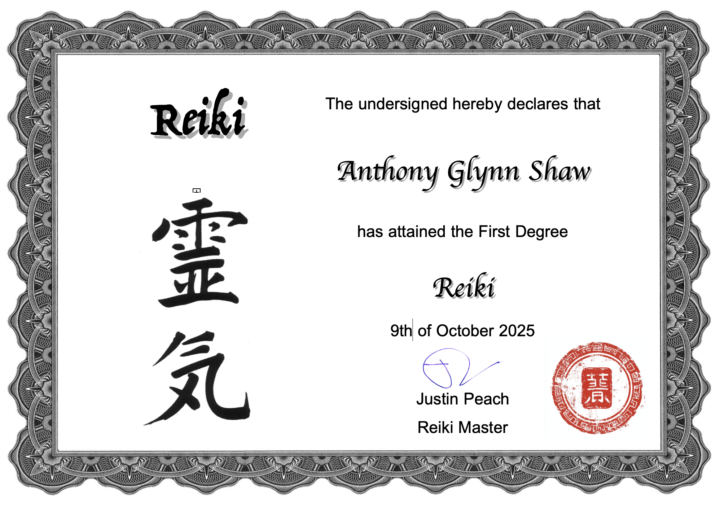
What a beautiful step in your Reiki journey! Congratulations on Reiki 1, @Anthony Shaw
1-10 of 28

@evren-smukyan-9034
Hi, I'm Evren, and I believe in the power of holism to bring body, mind, and energy into balance for personal and professional growth.
Active 40d ago
Joined Dec 28, 2024
Powered by