Activity
Mon
Wed
Fri
Sun
Aug
Sep
Oct
Nov
Dec
Jan
Feb
Mar
Apr
May
Jun
Jul
What is this?
Less
More
Owned by Edward
Exploring Britain’s hidden history, dark mysteries, forgotten places, strange crimes, weird folklore, haunted locations and unexplained events.
Master the fundamentals of Statement Analysis. Spot deception, weak denials, and hidden meaning in everyday language.
Memberships
Sing Therapy Studio 🌸
11 members • Free
Skoolers
165.8k members • Free
15 contributions to How to Spot a Liar

25d •
Three Is A Magic Number
The copywriter's 'rule of three' rests on a simple observation: people are drawn to patterns of three. Three examples feel more complete than two; three adjectives more persuasive than one. Stories, speeches and advertisements all exploit this tendency. The mind seems to settle comfortably into a trio. Perhaps it is not surprising, then, that the number three should surface elsewhere—in places less straightforward than marketing copy. Among interviewers and deception researchers, three has acquired a more dubious reputation. It is sometimes called the 'liar's number'. For years, the American statement analyst Mark McClish noticed a recurring detail in deceptive statements. When people were required to invent a number, they often settled on three, or on a number beginning with three. The observation was informal rather than scientific, a pattern glimpsed repeatedly across interviews. Yet it persisted often enough to attract attention. In 2009, McClish conducted a series of studies into deceptive language. Their primary purpose was not to examine numbers at all, but numbers nevertheless emerged as a curious feature of the data. In one experiment, one hundred participants were asked to write an account of a day in their lives. The morning section was to be truthful. The afternoon—from 1 p.m. until 6 p.m.—was entirely fabricated. The evening returned to truth. McClish hoped to compare honest and deceptive language and identify the ways in which people altered their narratives when inventing events. The results yielded no universal linguistic fingerprint. Participants changed their style when lying, but each did so differently. Vocabulary, sentence structure and emphasis varied from person to person. Yet another pattern appeared unexpectedly. When participants introduced times into the fictional section of their stories, they showed a marked preference for 3:00 or 3:30. Almost half of the participants—48 per cent—selected one of these times as the first new time reference in their fabricated account. Other times were mentioned far less frequently. Given only five broad options between 1 p.m. and 6 p.m., the finding was hardly definitive. Even so, the clustering around three o'clock was striking enough to invite notice.

Jun 4 •
The Evolution of Criminal Statement Analysis in Modern Investigations
On a foggy November morning in 1888, detectives investigating the Whitechapel murders pored over letters allegedly sent by Jack the Ripper. They examined handwriting, word choice, spelling errors and tone, searching for clues about the writer’s identity. More than a century later, investigators would still be analysing language in criminal investigations, but with very different expectations of what words could reveal. The history of criminal statement analysis is, in many ways, the history of changing beliefs about truth. For Victorian detectives, a confession was often the ultimate prize. Criminal investigations revolved around extracting admissions, exposing contradictions and identifying suspicious behaviour. Statements were viewed less as sources of information than as tests of honesty. If a suspect hesitated, changed their story or appeared nervous, investigators often interpreted those behaviours as signs of guilt. The twentieth century brought a more complicated picture. A series of notorious miscarriages of justice demonstrated that innocent people could confess to crimes they had not committed. Cases such as the Birmingham Six and the Guildford Four in the United Kingdom revealed how flawed interviewing practices and investigative pressure could produce unreliable statements. These cases forced police forces and researchers to ask an uncomfortable question: what if a confession was not necessarily the truth? In response, criminal statement analysis began to evolve. Psychologists turned their attention to memory, communication and credibility. Rather than focusing solely on whether a person appeared deceptive, investigators increasingly examined how an account was constructed. Did it contain specific sensory details? Was the sequence of events coherent? Could independent evidence support the statement? One of the most significant changes came with the introduction of the PEACE model of investigative interviewing in England and Wales during the 1990s. The goal shifted from obtaining confessions to gathering accurate information. Investigators were encouraged to build rapport, ask open questions and test accounts against evidence rather than assumptions.¹
1
0

Jun 1 •
Case Study: Michael Jackson
The investigator often arrives after the event. The witness has gone home. The scene has been photographed, measured and sealed. Yet one form of evidence remains untouched, preserved exactly as it emerged from the mind: the words. Unlike fingerprints, words cannot be dusted for. Unlike DNA, they cannot be extracted in a laboratory. Yet they carry their own traces. Every pronoun, every omission, every unnecessary qualification reveals something about the speaker’s perception of reality. The challenge is knowing how to read them. This is the foundation of Statement Analysis: the principle that people reveal themselves in language. Few cases demonstrate that principle more dramatically than Michael Jackson’s. For decades, arguments about Jackson’s guilt or innocence have raged through courtrooms, documentaries and newspaper columns. Witnesses have been challenged, motives dissected and timelines reconstructed. Yet one source of evidence remains uniquely personal: Jackson’s own words. Statement Analysis begins with a simple observation. Truthful people tend to answer allegations directly. They deny the act itself. Deceptive language often moves away from the central issue, shifting instead towards emotion, reputation, consequences or perceived injustice. Again and again, analysts found this pattern in Jackson’s public statements. Consider one of his most widely quoted denials: “I am totally innocent of any wrongdoing.” To most, the sentence sounds emphatic. The word totally amplifies the denial and projects certainty. Yet Statement Analysis is less interested in strength than specificity. The allegation was not “wrongdoing”. It was child molestation. A direct denial addresses the accusation itself: I did not molest any child. Jackson’s statement does something different. It rejects a broad category while avoiding the specific allegation. To the statement analyst, that distinction matters. Another example emerged in Jackson’s repeated focus on the consequences of the accusations rather than the accusations themselves.
2
0

May 24 •
Case Study: Russell Brand
Statement Analyst Peter Hyatt’s verdict on Russell Brand was severe, almost Victorian in its certainty. Watching Brand’s public denials after the allegations against him emerged, Hyatt said the comedian’s language “indicates guilt of a criminal sexual assault.” He described him, too, as “an excellent study in the language of NPD,” shorthand for Narcissistic Personality Disorder, and remarked that Brand “sexualises everything.” The comments were characteristic of Hyatt’s trade: he is a statement analyst, a reader not of faces or gestures but of syntax, pronouns, omissions, repetitions — the small frayed threads of speech from which he believes hidden truths can be drawn. Brand’s response to the allegations had the extravagant quality of his stage persona. He denied wrongdoing emphatically, insisting that all his relationships had been “absolutely, always consensual,” but he did so in language swollen with performance: references to media conspiracies, to attacks by powerful institutions, to the corruption of public life. It was this excess that interested Hyatt. In his view, truthful people move plainly through a denial; deceptive people circle around it, ornamenting and defending themselves. Hyatt has often argued that guilt leaks into language indirectly, through self-justification and unnecessary persuasion. To Hyatt, Brand’s speech was full of such leakage. He seemed less concerned with the allegations themselves than with preserving the myth of Russell Brand — the Brand brand — the libertine mystic, the redeemed addict, the hunted outsider. Rather than answer accusations with spare factual rebuttals, he turned instinctively towards grand narratives of persecution and identity. Hyatt interpreted this not simply as evasion but as narcissistic framing: the self placed immovably at the centre of events, criticism experienced not as inquiry but as assault. The reference to NPD sharpened that interpretation. Narcissistic Personality Disorder is associated with grandiosity, theatricality, a hunger for admiration, and a diminished capacity for empathy. Hyatt was not diagnosing Brand clinically; he was identifying what he saw as narcissistic patterns in his rhetoric. Brand’s speech, in Hyatt’s reading, was saturated with self-conscious performance. Even in denial, he appeared to sexualize, dramatize, and aestheticize his own conduct. The allegations became part of the ongoing spectacle of Russell Brand.

May 19 •
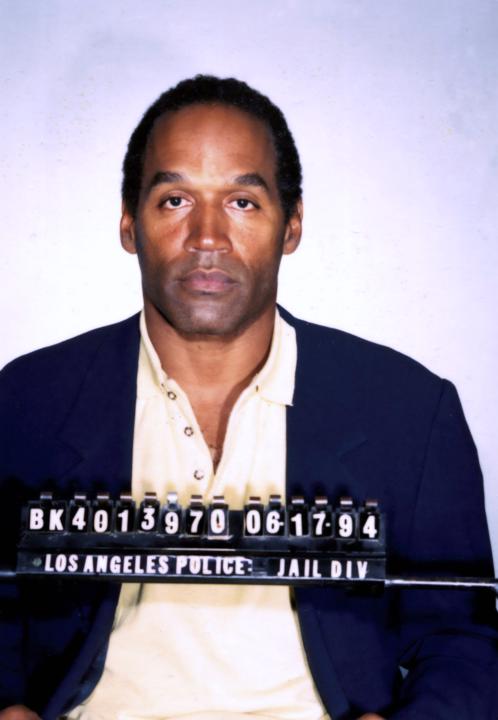
Case Study: O J Simpson
The murders of Nicole Brown Simpson and Ronald Goldman produced an unusual kind of investigation. Detectives gathered blood evidence from the walkway at Bundy Drive and traced fibres through the Ford Bronco; but another inquiry unfolded simultaneously, quieter and more intimate, conducted not through physical evidence but through language. O.J. Simpson’s statements were examined line by line, not only for information, but for psychological commitment. Investigators listened for the places where certainty weakened, where responsibility shifted, where language itself appeared to resist the truth. Statement analysis begins with a simple premise: truthful people speak differently from deceptive people. Memory moves naturally in sequence. Experience produces sensory detail. Innocent subjects deny accusations directly because they experience no internal conflict in doing so. Deceptive subjects, by contrast, often narrow their denials, distance themselves linguistically from actions, or substitute emotion for fact. Simpson’s language drew attention almost immediately because of what analysts regarded as its careful positioning. Again and again, he denied the accusation obliquely rather than directly. One of his most repeated statements was: “I would never, ever hurt Nicole.” The sentence sounded emphatic. To statement analysts, however, its structure mattered more than its emotion. It was not a direct denial of murder. He did not say: I did not kill Nicole. Instead, he framed the issue in terms of character and intention. “Would never” projects into morality and self-image rather than fact. “Hurt” softens the reality of what occurred. Such language is significant because truthful denials tend to be simple, immediate and specific. Analysts also noted Simpson’s preference for emotional framing over factual rebuttal. He spoke frequently about love, tragedy, stress, media attention and the collapse of his life. Yet when approaching the murders themselves, the language often became compressed. Statement analysis pays close attention to this phenomenon. When a subject moves toward a critical event, truthful memory generally expands naturally with sensory detail and temporal sequence. Deception often produces the opposite effect: brevity at the crucial point, followed by explanation elsewhere.
2
0
1-10 of 15

@edward-higgins-1760
Statement analyst. Writer exploring Britain’s hidden histories: folk horror, true crime, ghost stories, strange broadcasts and the eerie past.
Active 2d ago
Joined May 13, 2026
London