Activity
Mon
Wed
Fri
Sun
Oct
Nov
Dec
Jan
Feb
Mar
Apr
May
Jun
Jul
Aug
Sep
What is this?
Less
More
Owned by Ankhara
Learn breathwork techniques to reduce anxiety, regulate your nervous system, access flow states of consciousness, and create lasting transformation.
The Cutoff: Family Repair Lab
4 members • $5/month
Skoolers
157.7k members • Free
IRL Jacksonville
4 members • Free
High Impact Healer - Free Comm
963 members • Free
Love Keepers United
7 members • Free
💖 Love Yourself to Health 💖
109 members • Free
The Art Of Going Live
238 members • $12/month
Oracle Connections
4.9k members • Free
BWC Collective
188 members • $44/month
9 contributions to Sacred Writing
May 13 •
‼️ Attention Portal Pals‼️
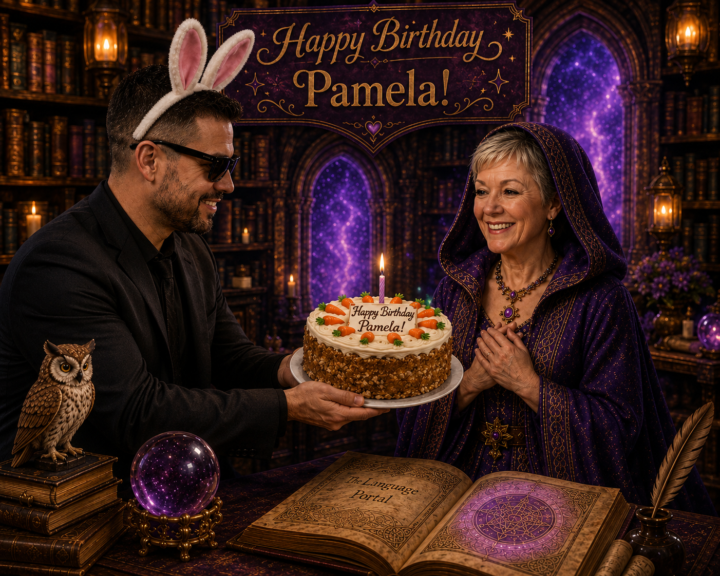
Today (5/13) is a very special day! It is our beloved and beautiful Pamela Lynch’s birthday! To honor Pamela, in the comments please drop her a GIF and/ or share “One True Sentence” about her that makes you smile! Let the fun begin!!!🎉🎉🎉🎉🎉
6 likes • May 13
@Pamela Lynch is my favorite Librarian!
6 likes • May 13
@Pamela Lynch

Apr 27 •
Hey Pam! What does 111 mean again? 😂
@Pamela Lynch I just saw 111 and it was SO glaringly obvious that it was a message it's not even funny lol. Can you remind me what 111 means again in numerology? 😂

3 likes • Apr 27
It means you won one once again

Apr 3 •
Wordsmithing with Ankhara
What a brilliant and fun call with @Ankhara Akeru, as we played with words. I received such wonderful insights from Ankhara's perspective.. (I was going to use the word "lessons," but now that has a different resonance for me.) Have a listen and you'll understand. No spoiler alerts. We'd love to know your thoughts.

2 likes • Apr 3
@Rena Nicole thank you fam!
4 likes • Apr 3
@Rebecca B 🤣🤣🤣🤣👁️
Apr 3 •
It's About Damn Time
I've been talking about starting a podcast for three years. I had a talk show back in 2014-2015 and did 50 shows. Twenty are still live under Conscious Business Conversations over on Soundcloud. It was a thing. And now it's back. More conscious than ever. Isn't it true that we underestimate what we can do in a decade. - Ended a talk show called Conscious Business Conversations ten years ago. - Founded SourceCode Publishing in 2018. - Published 12 books (and helped 25 authors get published) with two WIP to be published soon. - Co-led a Heart-centred writing retreat in Bali in 2019. (Who'd love that again?) - Studied three levels of Numerology in 2020. - Embodied my gift to open the Language Portal for creators. - Did a Soul Talk multiple times at the Women's Spirit Festival. - Reimagined what the writing process is and created The Language Portal Model. - Launched multiple courses and events. The latest, Write From Source, is available in the VIP tier. Now The Language Portal Podcast has launched and the starting the line-up is: @Ankhara Akeru tomorrow (April 3) at 11:00 am PT @Rena Nicole Thursday, April 9 @ 1:00 PM PT @Elizabeth O'Carroll April 14 at 7:30 PM PT @Jennifer Fitzpatrick TBA @Lisa Black TBA @Katinka van Kan TBA We over estimate what we can do in one year but underestimate what we can do in ten years. What are your top ten things that you've achieved in the last ten years? Share at least one in the comments below!

5 likes • Apr 3
lets goooo!
2 likes • Apr 3
@Pamela Lynch my pleasure
Apr 3 •
Frequency Friday: Language carries frequency
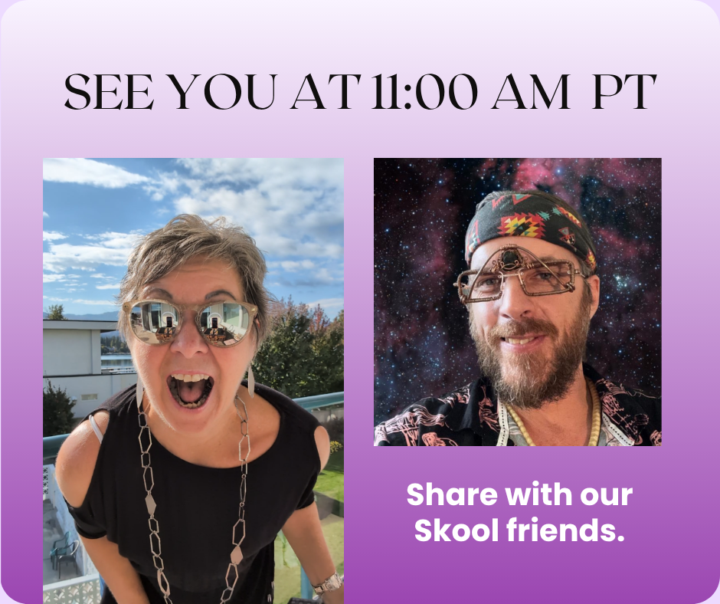
I love the synchronicity of this landing today, as I prepare to record my first podcast conversation with @Ankhara Akeru . We’ll be exploring language not only as communication, but as something far more alive—something that reveals meaning, shapes perception, and opens new ways of seeing both our inner and outer landscape. In my work inside the Language Portal, writing is not about finding better words. It’s about entering a state where the words carry the right frequency. I’m curious what this brings up for you. Come and join us for today’s conversation on Wordsmithing with Ankhara. There will be space to ask questions, share your insights, and explore the deeper meaning behind the words we use.
4 likes • Apr 3
@Pamela Lynch this will be FUN
1-9 of 9
@ankhara-akeru-4016
Skool Mayor of Jacksonville> Entheo Breath Founder> Ankh Alchemist> Ancestral Awakener> Crystal Guardian> Psychedelic Ponderings> Codeologist> Father
Active 2d ago
Joined Mar 28, 2026
ISFJ
Jacksonville, FL, USA