Activity
Mon
Wed
Fri
Sun
Sep
Oct
Nov
Dec
Jan
Feb
Mar
Apr
May
Jun
Jul
Aug
What is this?
Less
More
Owned by Dr.
Piano Improvisation Space: monthly concerts. Learn focus. Connect with next level thinkers/artists. eXploring the frontier of the unplayed song.
Bring your promising company to the frontier and partner early enough to make meaningful real-world contributions. Turning expertise into ventures.
Memberships
AIpreneurs Mastermind
96 members • $58,000/year
Submissionarts Academy Online
378 members • Free
REVENUE REVOLUTION
10.6k members • Free
Astronomy Club
421 members • Free
Skoolyard 🧃
1k members • Free
AI Tools & Training Club
7.9k members • $97/month
AiGenC {AI-Generation-Change}
24 members • Free
Working Creatives
272 members • Free
🔥 THE FIRE GAMES 🚀
1.2k members • Free
5 contributions to MedTech

Jan 6 •
What have you seen? Gait Movement Monitoring
I came across a MedTech startup seeking advice on their commercial ready solution for gait monitoring post surgery. The use cases varies but market success in any is unclear. We can think of post orthopaedic surgery monitoring and this can be segmented further. Also post stroke rehabilitation. I am curious to hear your thoughts. What have you seen? How can Gait movement monitoring/data be valuable to providers? Or is it more of a consumer health path?

🔥
2 likes • Jan 11
I can provide you some useful use cases. I would need to see how well it works first. We used to do some of this back at JPL. @Kamal Lutfi
🔥
1 like • Jan 13
@Joseph Isosaki the Jet Propulsion Lab in Pasadena.
Dec '25 •
Continuous Pregnancy Ultrasonic Monitoring with Hologram
I have been thinking about this idea, as we are expecting. What if we could build a wearable belt with ultrasound that is safe enough for 3-5 minutes ultrasonic energy to create a hologram projection for the baby inside the mom's belly? @Joseph Isosaki what are the ultrasonic transducer technical requirements to build such a thing? Or is it even technically feasible?
🔥
3 likes • Jan 11
Interesting request. Ultrasound might be the wrong visualization tool. I can think of some less energetic options that could be made consumer friendly. Since we are a public group, I am not sure innovating them here makes sense. If you end up with a clearer need, I can get back to you with some potentially safer visualization options. @Kamal Lutfi
🔥
Dec '25 •
Advise or Experience
Anyone out there have experience with https://nectarpd.com/ or https://www.fusion-biotec.com/? They came recommended to me as a development partner for medical devices. It would be useful to have a list here of this and similar options to consider. Past experience with some of them, positive or negative is also useful. Probably they and others would like to say hello to this group, once @Joseph Isosaki is ready. (after a milestone like 25 + members?)
🔥
1 like • Dec '25
What scale of budget is appropriate for both of these options? We can talk by DM, if better.

Dec '25 •
Community Surgical Robotics Research Project...
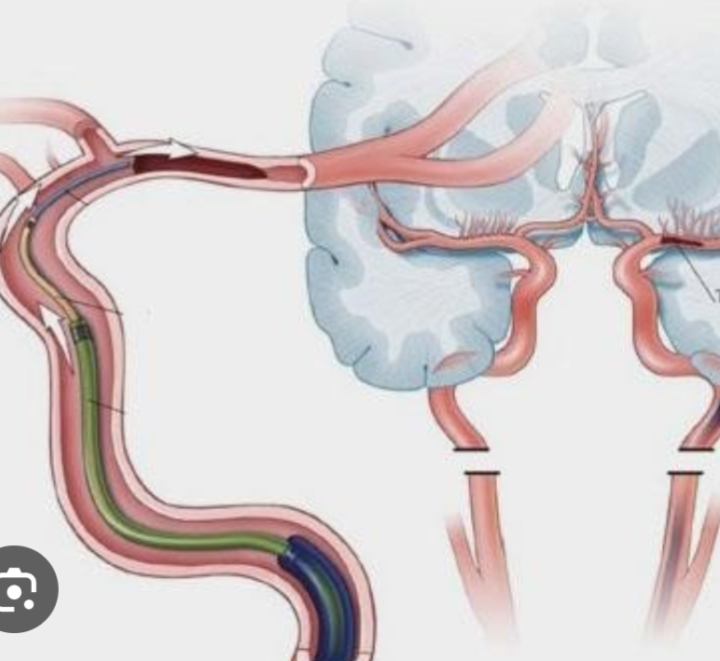
... Let's compile everything we know about Endovascular & Neurovascular Robotics... ... Looking at you @Pin-Hao Cheng :) So folks, I'm looking to research this space extensively and then I'll do a community call to work through findings in depth [target next week best case]. Any podcasts, YouTube videos, market assessments, and publications can be linked below in the comments.
🔥
1 like • Dec '25
Is this the type of info you are looking for? Techniques from Neuralink's precise, robotic brain surgery can inspire and be adapted for endovascular/neurovascular robotics, particularly in enhancing micromanipulation, visualization (like Neuralink's light feedback), and miniaturized robotic control for navigating complex vessels, moving towards remote, AI-assisted procedures for strokes and aneurysms. While Neuralink focuses on intracortical implants, its methods for extreme precision and automated insertion are transferable, as robotic endovascular systems (like CorPath) already exist and are evolving to integrate similar advanced control and imaging. Key Areas of Adaptation & Synergy: 1. Ultra-Precision & Miniaturization:Neuralink's robot places microscopic threads; this precision is crucial for navigating tiny brain arteries.Endovascular robotics can adopt similar micro-actuators and control systems to guide catheters and guidewires with sub-millimeter accuracy, overcoming miniaturization challenges. 2. Advanced Visualization & Feedback:Neuralink's light-based feedback for real-time positioning is a sophisticated form of visual guidance.Endovascular systems can integrate such advanced optical feedback (like endoscopy) with AI to enhance real-time imaging and device positioning within vessels, potentially detecting microvessels invisible on standard scans. 3. Robotic Control & Automation:Neuralink uses highly automated robotic insertion.Endovascular robots (like those used for coiling aneurysms) already translate surgeon joystick movements into precise linear/rotational catheter control, but future systems can incorporate more of Neuralink's automation for faster, more consistent procedures. 4. Material Science & Device Design:Neuralink uses biocompatible materials like graphene/CNTs.Similar materials and flexible designs could enhance neurovascular tools, allowing for softer, more compliant microcatheters that better navigate tortuous vessels. 5. AI Integration & Telestroke Potential:Both fields aim to leverage AI for analysis and decision-making.Neuralink's robotic precision combined with endovascular platforms could enable remote "telestroke" interventions, where specialists control robots to treat strokes or aneurysms miles away.
Dec '25 •
Hey friends!
This is a fun experiment... So introduce yourself in the comments below! - Your background - How you wandered into medTech - One thing you're hopeful about in the future
🔥
2 likes • Dec '25
@Joseph Isosaki nothing out of the ordinary.
🔥
2 likes • Dec '25
@Joseph Isosaki Thanks for suggesting. I also plan to be in Europe that week, but different country (border of France and Germany). Let me know how it goes. Any useful materials you can pull from these conferences and share here would be great. Their ticket cost and timing are both barriers that you can help us overcome, by simply bringing info and connections back to us.
1-5 of 5

🔥
@drjay
eXploring Skool and expanding the possible frontier of business with community.
Online now
Joined Dec 5, 2025
USA
Powered by