Activity
Mon
Wed
Fri
Sun
Aug
Sep
Oct
Nov
Dec
Jan
Feb
Mar
Apr
May
Jun
Jul
What is this?
Less
More
Memberships
Lifestyle growth & older women
34 members • Free
52 contributions to Lifestyle growth & older women


0 likes • May 26
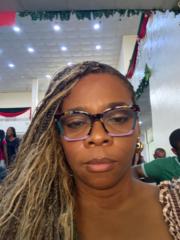
Yes ooo Super Sis... 🏋️🤸🤸🤸
May 10 •
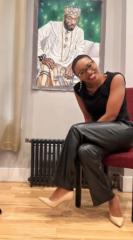
Healing is Accessible
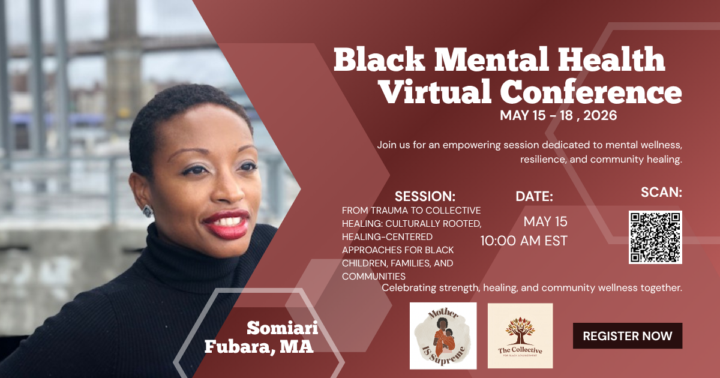
There is a question I keep returning to in this work: What does healing look like when it isn't something we do alone? On May 15, I'll be sitting with that question at the Black Mental Health Virtual Conference, in a session close to my heart: "From Trauma to Collective Healing: Culturally Rooted, Healing-Centered Approaches for Black Children, Families, and Communities." For nearly two decades, my work has lived at the intersection of trauma recovery and cultural belonging, grounded in the conviction that healing is not an individual project. It is held in relationships, rooted in ancestry, and carried forward by community. So much of what shows up as "trauma response" is, more honestly, the body's intelligent answer to a world that has not always been safe. The frameworks I've come to trust, and that I'll be sharing, start there: with the wisdom in our communities, the wisdom in our bodies, and the practices that bring us back to one another. If this work calls to you, as a clinician, educator, caregiver, or someone holding your own healing, I would be honored to have you in the room. May 15 | 10:00 AM EST | Virtual Registration link in the graphics. #BlackMentalHealth #TraumaInformedCare #HealingCenteredEngagement #CommunityHealing
0 likes • May 18
AMAZING..SOMIARI..THIS IS AWESOME👸🏾💃🥰SUPER PROUD OF YOU SIS & YOU KNOW IT👏👏👏
0 likes • May 19
Welcome To The Group..Somiari Darling 💃👸🏾💕❤️🎀
May 18 •
I Discovered..My Artistic Side 🎨 🖼 ✨️👸🏾👩🎨🤣🥰
Did you know that: Exploring your artistic side boosts cognitive health, reduces stress, and sharpens your brain as you age? Well, thank God for the opportunity we got during our ABSUMSA MEDICAL ALUMNI CONVENTION..We, Abia State University Medical Doctors in the UK 🇬🇧 decided to have a Break Out Session..Co-ordinated by Dr Chinenye Orjioke ( a Friend & Classmate of mine who is also a Member of the Association). She came up with this idea instead of just having the whole Medical & Health Talks 👄 throughout the Morning Session of the Convention.. And we loved it..Dr Gloria @Gloria Harrison Also has her lovely painting to show us..🖼💕

0 likes • May 18
@Somiari Fubara You ..My Darling Sis, I know you love to draw and paint 🎨 too👩🎨🖼✨️
May 18 •
Give iT Up For GRANDMAS...👸🏾💐🥰👏🌟
Dr Gloria ..Thank you for inviting me to attend your Grandson's 1st Birthday 🎂 👑🙏💙🎈.It was a nice and warm gathering of family & friends..Family is indeed Everything🙌🎊💕🌟
0
0
May 18 •
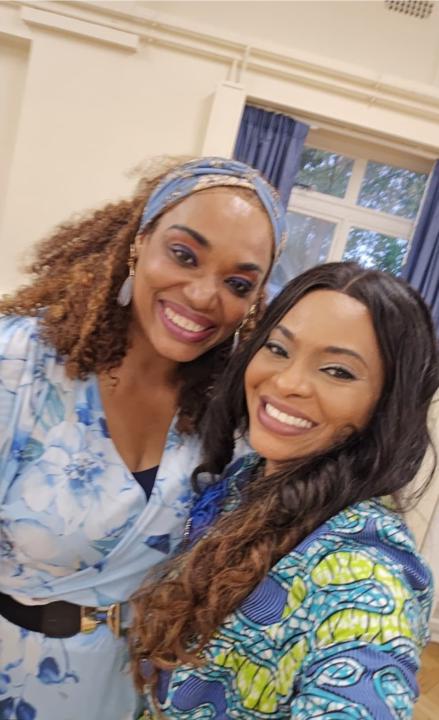
Events and Experiences With Our Fellow Beautiful Skool Class Sisters💃💃
Meeting Up With Chidinma @Chidinma Nwahiri for the First Time and We Hit it Off!! Check Us Out and Rate Our DANCE Moves💃💃..Why Do Mothers Like To Party More Than The Celebrants??🤣🤣🤣Dr Gloria na You Do This One ooo. GRANDMA of The Celebrant MAL, The BOSS @1 Year Old.🎊💙👑
0
0

1-10 of 52

@dr-chioma-beverly-konyeaso-3435
Medical Doctor, Senior Pharmacovigilance Specialist, Financial Care Specialist, Event Planner, Stylist, Personal Shopper, Public Figure & Mentor ...
Active 45d ago
Joined Feb 8, 2026
UK