Activity
Mon
Wed
Fri
Sun
Aug
Sep
Oct
Nov
Dec
Jan
Feb
Mar
Apr
May
Jun
What is this?
Less
More
Memberships
AI Money Lab
84.5k members • Free
The Content Revenue Lab
1k members • Free
Gold Circle Academy
77 members • Free
267 contributions to Gold Circle Academy

15h •
DAY 174; THE HEURISTICS GAME
Folder; *Heuristics/Impressions* Today, we are going to talk about something very cognitive. And if we understand this, it would highly impact the way we move in life. We all understand that humans mostly love shortcuts. And our brain also love shortcuts. So technically, We love *heuristics.* What does this mean for you and I? This means that; *We can't play in life avoiding to engage with the many heuristics available.* And more importantly heuristics are a way to help reduce the otherwise resistance we might face when moving in the world. A food for thought; If we heard someone speaking for the very first time or dare I say multiple times. And he spoke so relaxed, confident and articulate. We will without a doubt think ourselves agreeable to him. View his message as quite substantial and see him as put together. Another food for thought. Let's say we go to a hangout for a first time and then we meet a new man. Then on his wrist we see a Rolex, a real one of course. Immediately without a doubt, we might think him rich. The Rolex has become a heuristic for wealth status Another food for thought; Who would we listen to and most likely take his advice. 1) The man speaking from the stage 2) Or the man speaking beside you. All things being equal. 95% of us will go for the one speaking from the stage because that serves as a heuristics for credibility, who knows his stuff more etc. Perchance or perhaps the one sitting and speaking beside you might have more substance than the one speaking from the stage. But surprisingly that is cognitive load that we will have to grapple with. The good news is that there is so many heuristics in this world that , we can apply for our good. But as we know, heuristics will get us into the room, moving with the other person but substance is what will keep us there. So let us work on both structurally using the heuristics at the same time entrenching our substance. If you appreciate contributions like these; check our WhatsApp channel: https://whatsapp.com/channel/0029Vb5SFJVJ3jv5mEbVHo1M

0 likes • 14h
Thought-provoking perspective. First impressions can open doors, but lasting trust comes from character, competence, and consistent value. Thanks for sharing!
15h •
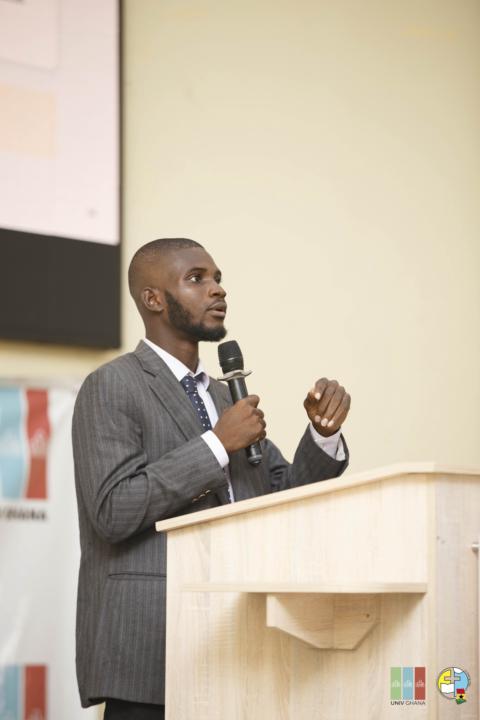
My Professional Speaking Journey
On 27th June, 2027 at the University of Ghana;I had the opportunity to present on the INFGCP Framework in contribution to Building Bridges; The Art Of Dialogue which was the theme for the 2026 Univ Ghana Conference
0 likes • 14h
Congratulations on this milestone! Wishing you continued success as your voice inspires meaningful dialogue, bridges perspectives, and creates lasting impact. 👏🎉
1d •
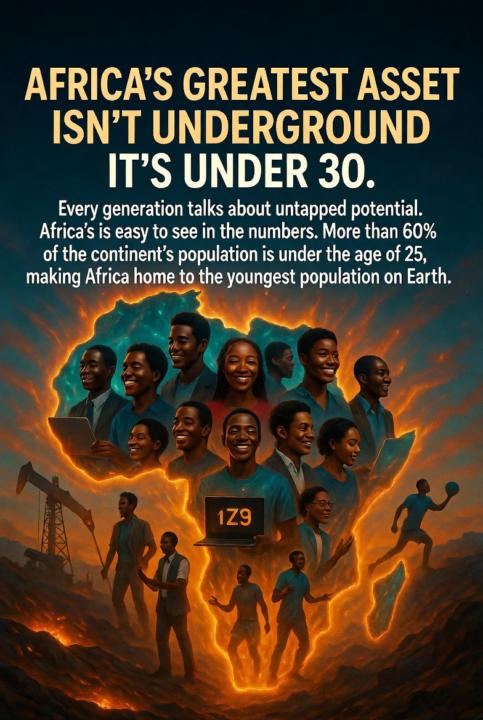
AFRICA'S GREATEST ASSET ISN'T UNDERGROUND IT'S UNDER 30
Every generation talks about untapped potential. Africa's is easy to see in the numbers. More than 60% of the continent's population is under the age of 25, making Africa home to the youngest population on Earth. Today the continent is home to roughly 532 million young people aged 15 to 35, over 22% of the global youth cohort that will shape the future of work. And unlike almost everywhere else, this bulge isn't shrinking. While youth populations are declining across the rest of the world, Africa's is expected to keep growing well into the 2070s. That scale is the headline, but it's only half the story. This is also, on average, a healthy young population one entering adulthood with more access to basic healthcare, vaccination, and nutrition than any prior African generation. Pair sheer numbers with rising health outcomes and you get something rare: a demographic dividend most of the world can no longer generate for itself. A WORKFORCE THE WORLD WILL NEED By 2035, more young Africans will enter the workforce each year than in the rest of the world combined. Meanwhile, aging economies China, Japan, South Korea, much of Europe are running short on workers. Historically, that kind of gap has been filled by whichever region had the labor to offer. Africa's youth population has the potential to power global growth the way China's did a generation ago. But a young population is not automatically a productive one. A youth bulge can become either a demographic dividend or, without jobs and investment, a source of unemployment and instability, the outcome depends far more on investment than on demographics alone. The difference between the two futures is entrepreneurship: whether young Africans can build enterprises, not just search for jobs that don't yet exist in sufficient numbers. ENTREPRENEURSHIP IS ALREADY THE DEFAULT In much of Africa, entrepreneurship isn't an aspiration it's the norm. The continent already has the highest rate of entrepreneurship in the world, and small and medium enterprises account for roughly 80% of jobs. From mobile money agents in Nairobi to fashion brands in Lagos to logistics startups in Accra, young Africans are building the informal and formal economy simultaneously, often without the safety nets entrepreneurs elsewhere take for granted.
0 likes • 1d
Today the continent is home to roughly 532 million young people aged 15 to 35, over 22% of the global youth cohort that will shape the future of work.
1d •
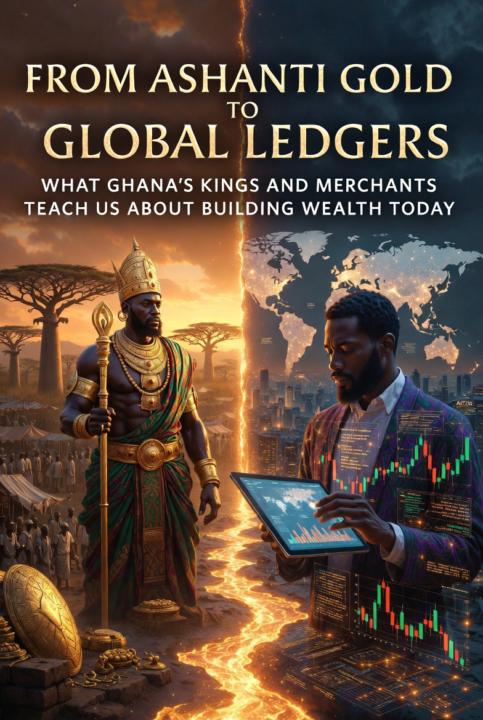
FROM ASHANTI GOLD TO GLOBAL LEDGERS: WHAT GHANA'S KINGS AND MERCHANTS TEACH US ABOUT BUILDING WEALTH TODAY
A THRONE BUILT ON TRADE Long before "economic empowerment" became a conference panel topic, it was a lived reality on the Gold Coast. The Ashanti Empire one of the most sophisticated political and economic systems in pre-colonial Africa didn't rise on conquest alone. It rose on gold, kola nuts, and control of trade routes that stretched from the forests of what is now Ghana up through the Sahara to North Africa and beyond. The Asantehene, the king of the Ashanti, was not merely a political ruler but the head of an economic apparatus. Royal stools weren't just symbols of authority, they represented control over land, labor, and the gold that made the region legendary. Akan goldweights, small brass figures used to measure gold dust in trade, are still studied today as one of history's most elegant systems of commercial standardization. Every weight told a proverb, a value, a warning against dishonest dealing. Commerce and culture were never separate the marketplace was moral as much as material. Merchants often organized in guild-like networks moved goods across enormous distances, building relationships that functioned like early trade alliances. Wealth wasn't hoarded in isolation. It circulated through family systems, chieftaincies, and community obligations, creating a model where prosperity was meant to lift the collective, not just the individual. THE RUPTURE - AND THE LESSON INSIDE IT The transatlantic slave trade and colonial extraction disrupted these systems violently, redirecting African wealth outward for centuries. This history is not a footnote it's the single largest forced transfer of labor, knowledge, and capital in human history, and its effects still shape economic gaps between Africa, its diaspora, and the rest of the world. But here is what often gets lost: the interruption was not evidence of economic incapacity. It was the deliberate dismantling of systems that were already working. Ghana's precolonial economy proves that African commercial sophistication predates European contact it wasn't imported, it was interrupted.
0 likes • 1d
For entrepreneurs, investors, and community leaders across Africa and the diaspora, this history offers more than pride it offers a working blueprint.
1d •
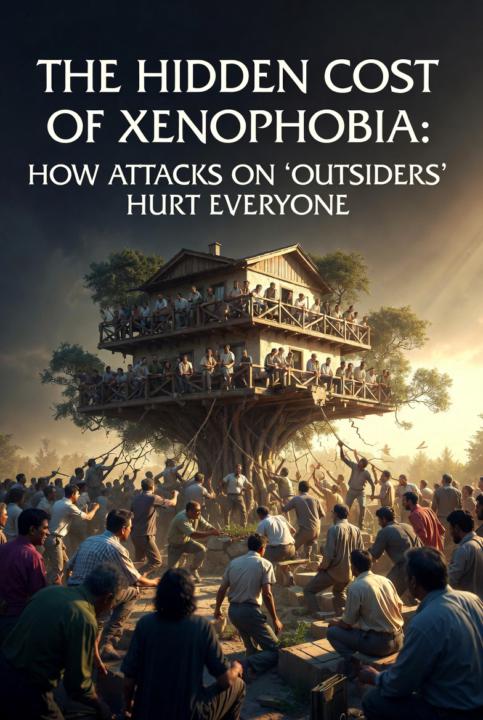
THE HIDDEN COST OF XENOPHOBIA: HOW ATTACKS ON "OUTSIDERS" HURT EVERYONE
Xenophobic attacks don't just harm the individuals targeted they leave deep scars on communities, economies, and the social fabric that holds nations together. HERE'S A LOOK AT THE REAL COST. IMPACT ON BUSINESSES DESTRUCTION OF LIVELIHOODS FOREIGN-OWNED SHOPS, restaurants, and small businesses are often the first targets during xenophobic unrest. Looting, arson, and vandalism can wipe out years of savings and investment in a single night, leaving owners with nothing to rebuild from. LOSS OF JOBS FOR LOCALS TOO MANY MIGRANT-OWNED BUSINESSES EMPLOY LOCAL CITIZENS. When these businesses close, local employees lose their income as well. Xenophobia doesn't just punish "foreigners" it takes jobs away from the very communities it claims to protect. SCARED-OFF INVESTMENT XENOPHOBIC VIOLENCE DAMAGES A COUNTRY'S REPUTATION. Foreign investors and international partners grow wary of instability, and this can slow trade, tourism, and economic growth for years after the initial incidents. DISRUPTED SUPPLY CHAINS MIGRANT ENTREPRENEURS OFTEN FILL GAPS in local markets running spaza shops, wholesale supply networks, or import businesses. Attacks disrupt these networks, leading to shortages and higher prices for everyday goods in affected communities. 👉IMPACT ON PEOPLE ✅- Loss of life and physical harm. The most immediate and tragic cost of xenophobic violence is injury and death. Victims are often ordinary people simply trying to earn a living. ✅- Psychological trauma Survivors carry lasting fear, anxiety, and trauma. Many live with the constant worry that they could be targeted again simply because of where they're from. ✅- Displacement Families are often forced to flee their homes and communities, losing not just property but also their sense of safety and belonging. ✅- Erosion of social trust Xenophobic violence deepens divisions between communities, breeding suspicion and hostility that can last for generations, making it harder to rebuild trust once the violence subsides.
0 likes • 1d
Xenophobic attacks don't just harm the individuals targeted they leave deep scars on communities, economies, and the social fabric that holds nations together.
1-10 of 267

@jerry-adams-6884
I am Jerry Adams. /An Entrepreneur & Manufacturer of organic skincare products/ based in Accra-Ghana.
Active 9h ago
Joined Jan 14, 2026
Ghana