Activity
Mon
Wed
Fri
Sun
Jul
Aug
Sep
Oct
Nov
Dec
Jan
Feb
Mar
Apr
May
Jun
What is this?
Less
More
Owned by Debby
Memberships
Pop, Lock & Profit Accelerator
27 members • Free
WealthyHER
1.2k members • Free
Midlife Reimagined
33 members • Free
LimitlessLife
343 members • Free
RT
Rise & Thrive
5 members • Free
The Grounded Parents Circle
19 members • Free
The Content Collaborator
19 members • Free
SheOwned-It
15 members • Free
MeEra: JoyfulGrowthJourney
7 members • Free
7 contributions to The Content Collaborator

May 11 •
Monday Motivation
Energy is Contagious Whether you realize it or not, your energy speaks before you say a word. It fills the room, fuels your work, and affects every interaction you have. Positive energy lifts others. Negative energy? It drains the room. The good news? You control the vibe you bring.Feeling low? Take a walk. Call someone who makes you laugh. Tackle a small win to boost momentum. Remember: You don’t have to fake joy — but you can choose to show up in a way that helps everyone breathe easier. This week, be the energy you want to attract. Start with yourself...then share it generously. DIY Tip of the Week: Clean your outdoor light fixtures! Bugs, dirt, and weather wear them down fast. A quick scrub with soap and water can brighten your porch, improve curb appeal, and extend bulb life. Words of Wisdom “Your energy introduces you before you even speak.” – Unknown “You can’t pour from an empty cup. Take care of yourself first.” – Norm Kelly “You attract the energy you give off. Spread good vibes.” – Unknown “Positive energy knows no boundaries.” – Lu Wei“ How you do anything is how you do everything.” – T. Harv Eker


0 likes • May 11
Working on cleaning and purging the garage. Need to start shifting the energy in the house to get it up for sale.
0 likes • May 12
@Tracy Glochau we have a huge house to purge. It will take time. And you are right. It will feel good when we are done!
May 4 •
May the Fourth Be With You...
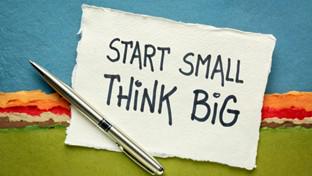
The Power of Starting Small Big dreams can feel… heavy. Especially when you’re staring down a mountain of tasks, expectations, or change. It’s easy to feel paralyzed by everything that needs to be done, and end up doing nothing at all. But here’s a little truth to tuck in your back pocket: You don’t need to have it all figured out to take the first step. In fact, small steps are usually where the magic begins. Progress isn’t always loud. Sometimes it looks like making one call. Tidying one drawer. Saying no to something that drains you. Or simply starting the thing you’ve been putting off — for five minutes. Momentum loves motion. So this week, stop waiting for the perfect plan. Choose one thing. Do it. Then repeat. DIY Tip of the Week: Dust your ceiling fan blades before they start working overtime this summer. A pillowcase makes it easy: slip it over the blade, wipe, and trap the dust without it flying everywhere. Words of Wisdom: “Start where you are. Use what you have. Do what you can.” – Arthur Ashe “You don’t have to see the whole staircase, just take the first step.” – Martin Luther King Jr. “The secret of getting ahead is getting started.” – Mark Twain “Small deeds done are better than great deeds planned.” – Peter Marshall “Success is the sum of small efforts, repeated day in and day out.” – Robert Collier
0 likes • May 4
Great post Tracy!
Mar 9 •
Monday Motivation
Optimal Performance Through Singularity of Focus: In today’s fast-paced, multitasking world, achieving peak performance often feels like an uphill battle. Yet, high achievers, from elite athletes to top executives, share a common trait: singularity of focus. This ability to concentrate deeply on one task or goal at a time is the key to optimal performance and sustained success. When you direct your full attention to a single objective, distractions do not dilute your mental energy. Research shows that multitasking reduces productivity by as much as 40%, while deep, uninterrupted focus enhances efficiency, creativity, and mastery. Repeatedly focusing on one skill or goal leads to deeper learning, greater retention, and increased expertise. A focused mind is less prone to stress and being overwhelmed, allowing for better decision-making under pressure. Something to Think About: When you harness the power of singularity of focus, you not only achieve optimal performance but also experience greater fulfillment and success. In a world full of noise, those who master deep concentration rise above the rest. Weekly Activity: This week, each day, create a Distraction-Free Zone. Eliminate interruptions by setting boundaries, turning off notifications, and dedicating specific time blocks for deep work. Define your most important goal and align your daily actions with it. Resist the urge to juggle multiple projects and commit to completing one before moving to the next. Training your brain to stay present through techniques like meditation can improve your ability to focus. Words of Wisdom: "Clarity precedes success." – Robin Sharma "The successful warrior is the average man, with laser-like focus." – Bruce Lee "Concentrate all your thoughts upon the work in hand. The sun’s rays do not burn until brought to a focus." – Alexander Graham Bell "Most people think they lack motivation when they really lack clarity." – James Clear "It is those who concentrate on but one thing at a time who advance in this world." – Og Mandino

0 likes • Mar 9
@Tracy Glochau I too try and get done the stuff I have to do. It doesn’t always work but I give it a shot. I am really trying to slow my life down and clear my time to focus on creating and purging our house as we want to downsize. I am aiming for the end of April or before to have my one accounting job back to a place where I only spend between 10-15 hours a month. And I still do taxes. I used to do about 20+people’s taxes, some complicated. I stopped doing that a few years ago but I still do some famlies. I’m hoping to knock all of those out in the next two weeks on coaching days. I feel hopeful so your motivation this morning grounded me. Thank you for your inspiration!
1 like • Mar 10
Thank you Tracy. Reading your posts and listening to your messages is motivating for me!
Feb 23 •
Monday Motivation
The Rule of One: Life is full of ups and downs, and no matter how disciplined we are, there will be days when we miss the mark. Whether it’s skipping a workout, indulging in junk food, or failing to meet a daily goal, slipping up is part of being human. But there’s a simple principle that can help you stay on track and avoid turning a minor setback into a major derailment: The Rule of One. The Rule of One states that it’s okay to miss a day of your routine- it’s human and forgivable. However, missing two days in a row sets the stage for a new habit: the habit of quitting. One day off is a slip; two days off is the beginning of a downward spiral. This rule applies to any area of life: - Diet: You can indulge in dessert today but get back to healthy eating tomorrow. - Exercise: Skip one workout if needed, but don’t skip the next one. - Work Goals: Fall short on one day’s productivity? Pick up the slack the next day. The key is to acknowledge the slip without judgment and commit to breaking the streak of inactivity before it becomes ingrained. Something to Think About: The Rule of One is a simple but powerful guideline for staying consistent in the face of life’s inevitable setbacks. By forgiving yourself for occasional slips and recommitting the next day, you cultivate resilience, discipline, and the ability to stay on track no matter what. Progress isn’t about never falling; it’s about getting up every time you do. Don’t let one missed day define you. Let your comeback do that instead . Weekly Activity: Which goal or activity did you commit to do daily on January 1? Are you still committed to the goal? Have you missed a few days? No worries, let’s get started again Words of Wisdom: Success is the sum of small efforts, repeated day in and day out." — Robert Collier "It’s not whether you get knocked down, it’s whether you get up." — Vince Lombardi "What you do every day matters more than what you do once in a while." — Gretchen Rubin "Chains of habit are too light to be felt until they are too heavy to be broken." — Warren Buffett

1 like • Feb 23
Kaiezen - Japanese practice of moving forward a little bit each day. That's where I am. It doesn't overwhelm me as much so I can keep going.
Feb 9 •
Monday Motivation
Be Ruthless About What Doesn’t Matter In a world that glorifies busyness, it’s easy to feel overwhelmed by endless demands, distractions, and obligations. But the truth is, not everything deserves your time, energy, or attention. If you want to thrive, you must be ruthless about what doesn’t matter. - Identify your core values, goals, and priorities. If an activity, relationship, or habit doesn’t align with these, it’s expendable. - Every "yes" to something unimportant is a "no" to something that matters. Learn to decline invitations, tasks, and obligations that don’t serve your purpose. - Social media scrolling, gossip, and mindless multitasking steal your time and attention. Set boundaries and be intentional about how you spend your day. - Avoid overthinking small decisions. Automate, delegate, or streamline repetitive tasks so you can concentrate on what truly requires your input. It’s easy to confuse being busy with being productive. Instead of working harder, work smarter by prioritizing actions that yield tangible results. Saying no to some things allows you to say more often to the most important things. Something to Think About: Ruthlessness is not about being cold or uncaring, it’s about being intentional. By letting go of what doesn’t matter, you free yourself to pursue a life of purpose, joy, and success. The most powerful word in your arsenal is "no." Use it wisely and watch how much more meaningful your "yes" becomes. Weekly Activity: Do you find yourself saying yes to too many things and running out of time for you? This week, try saying no to anything that is not essential. Words of Wisdom: "Success doesn’t happen by chance. It happens by choice, by decision, and by action." — Tony Robbins "If you want to live a happy life, tie it to a goal, not to people or things." — Albert Einstein "If you want to be successful, you must respect one rule: Never lie to yourself." — Paulo Coelho "You have to decide what your highest priorities are and have the courage—pleasantly, smilingly, unapologetically—to say no to other things. And the way you do that is by having a bigger yes burning inside." — Stephen Covey
1 like • Feb 9
Tracy, the title of this post is really strong and a great hook to want to read more.
0 likes • Feb 9
@Tracy Glochau great idea.
1-7 of 7

@debby-doig-2776
Magical Mischief Maker, Thought Leadership, Coach, Global Leadership Trainer
Active 17h ago
Joined Jan 19, 2026